Background
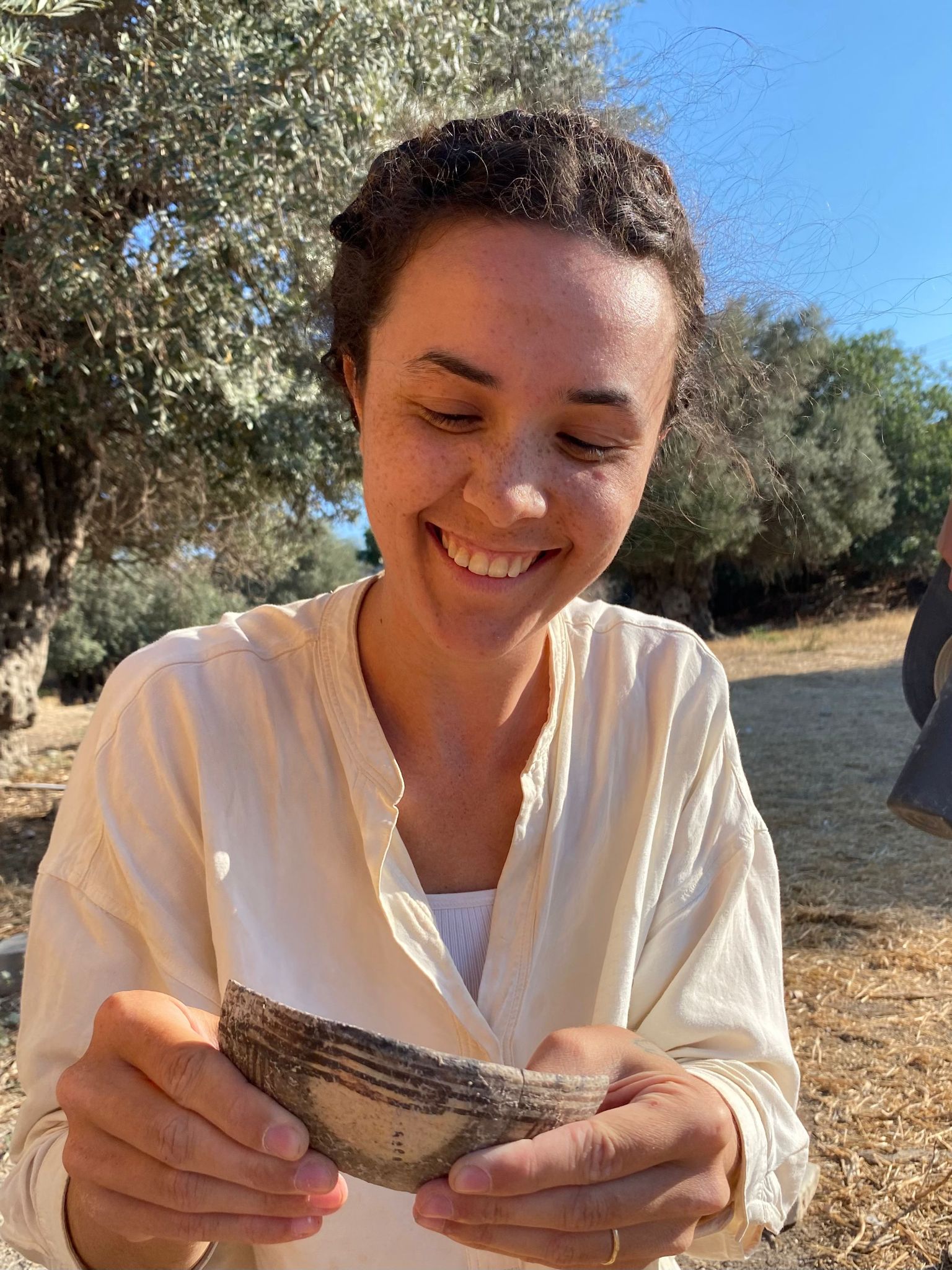
The Kalavasos and Maroni Built Environments (KAMBE) Project is an interdisciplinary project that seeks to investigate social change and interaction in an urban environment in Late Bronze Age Cyprus.[1] During the 2023 excavation season, I worked at the site of Kalavasos-Ayios Dhimitros in the Vasilikos River valley near the south-eastern coast of the island to assist in collecting excavation data.
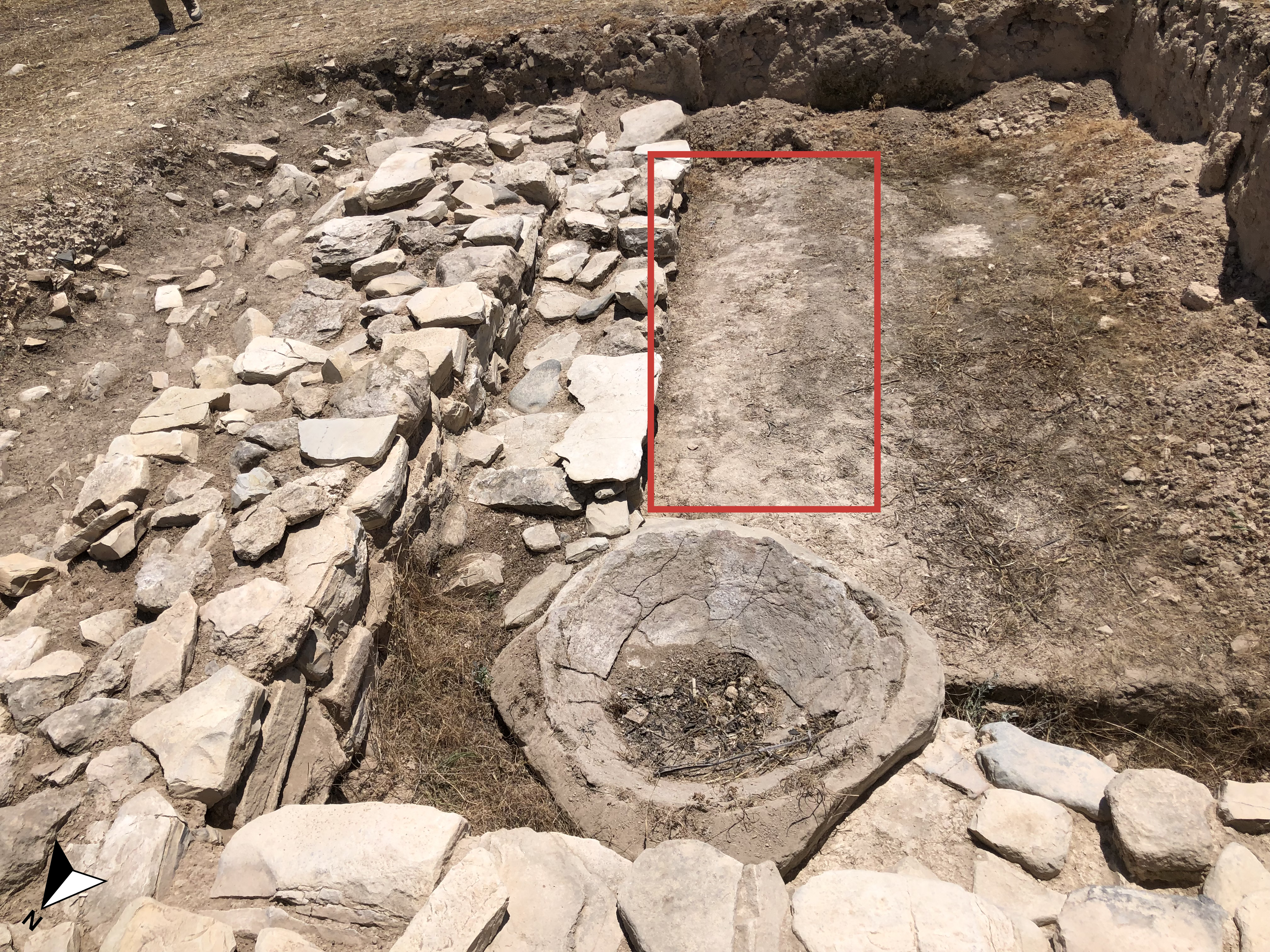
Two trenches were excavated during the 2023 excavation season. One trench was a continuation of previous work originally begun in 2012[2] in Unit 7 Building XVI Room 2. This room is one of two smaller rooms on the north end of the building which adjoin to a central square room. One other smaller room adjoins to the court’s south side (see Fig. 1, below).[3] Previous excavation had already exposed the south half of Room 2 and some of a circular stone feature in its north-west area. I primarily worked to excavate Unit 7 Building XVI Room 2 with the goal of articulating the circular stone feature and removing material to floor level.
Methods
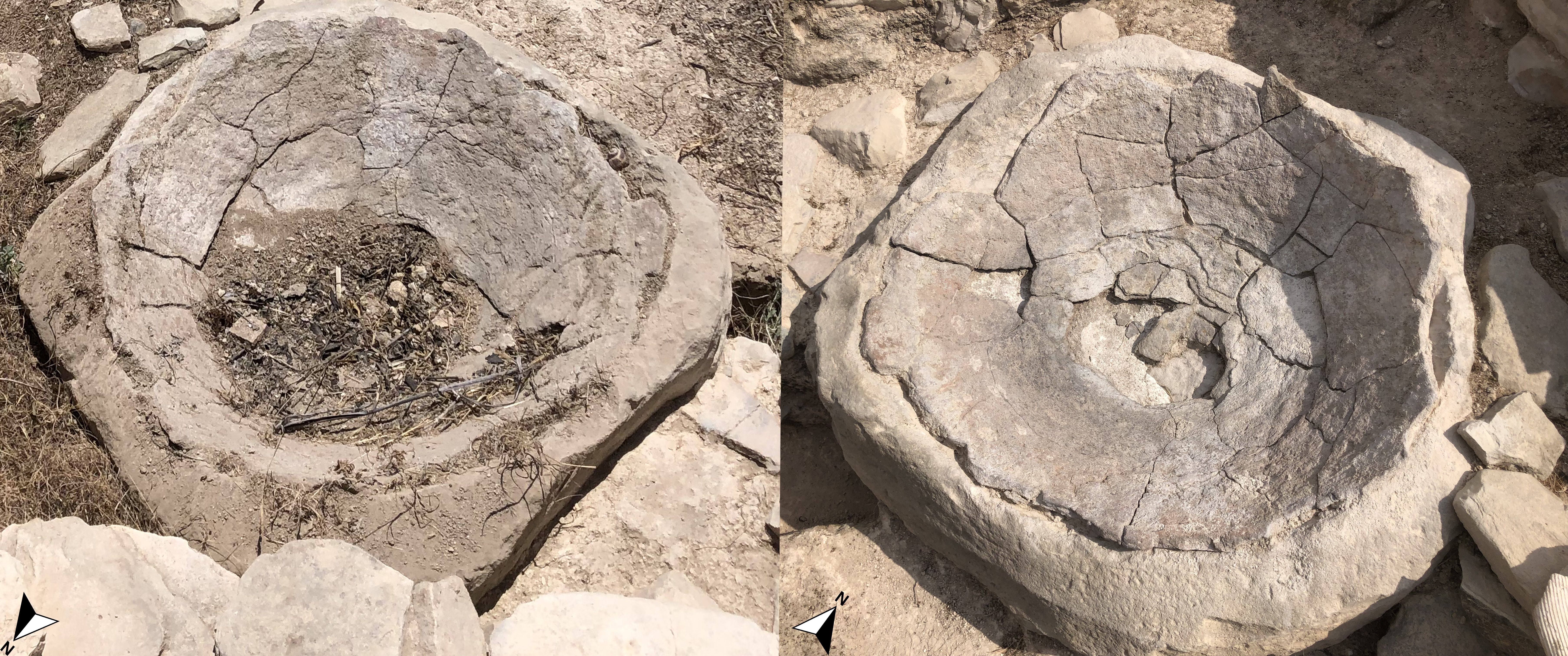
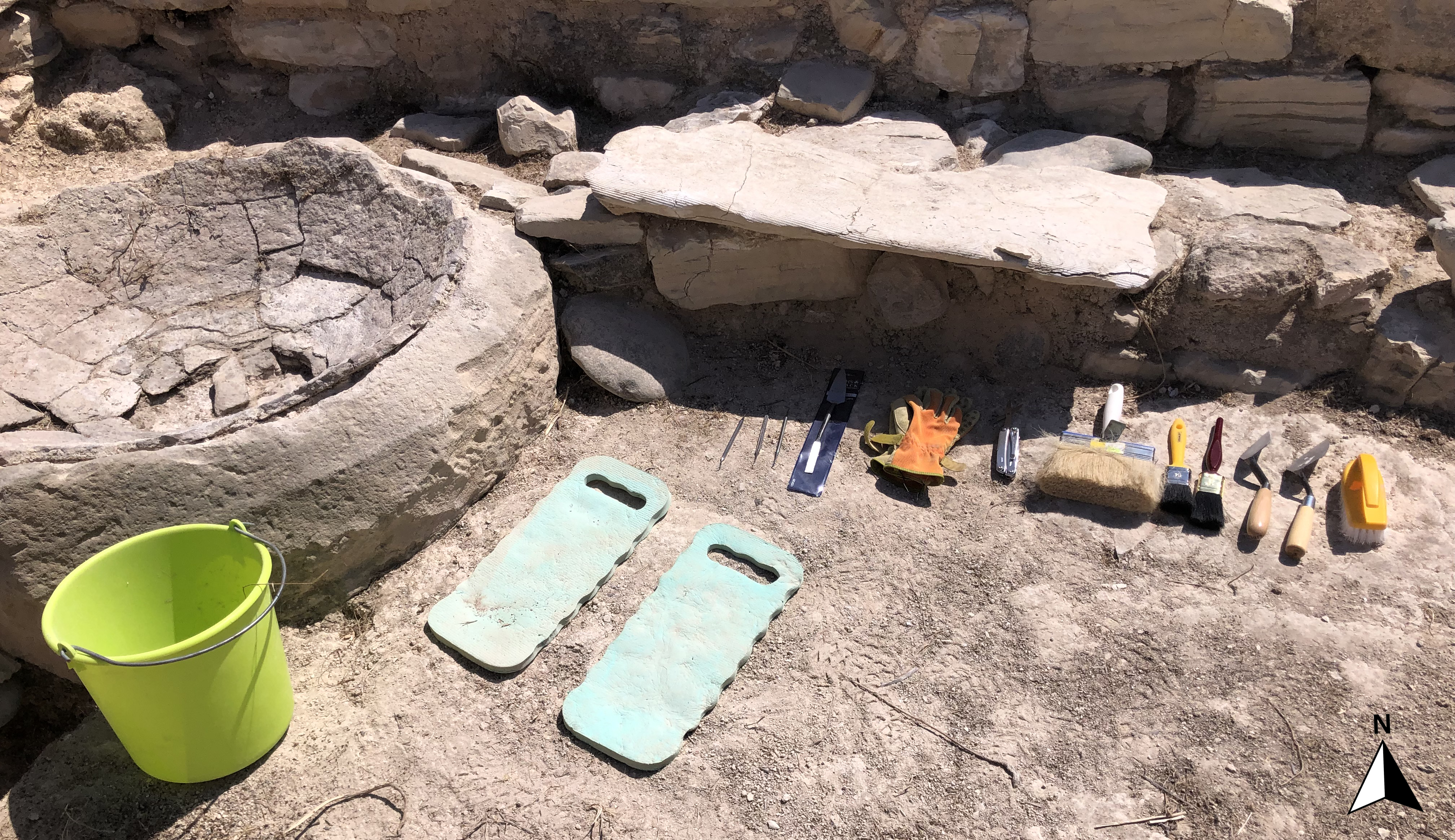
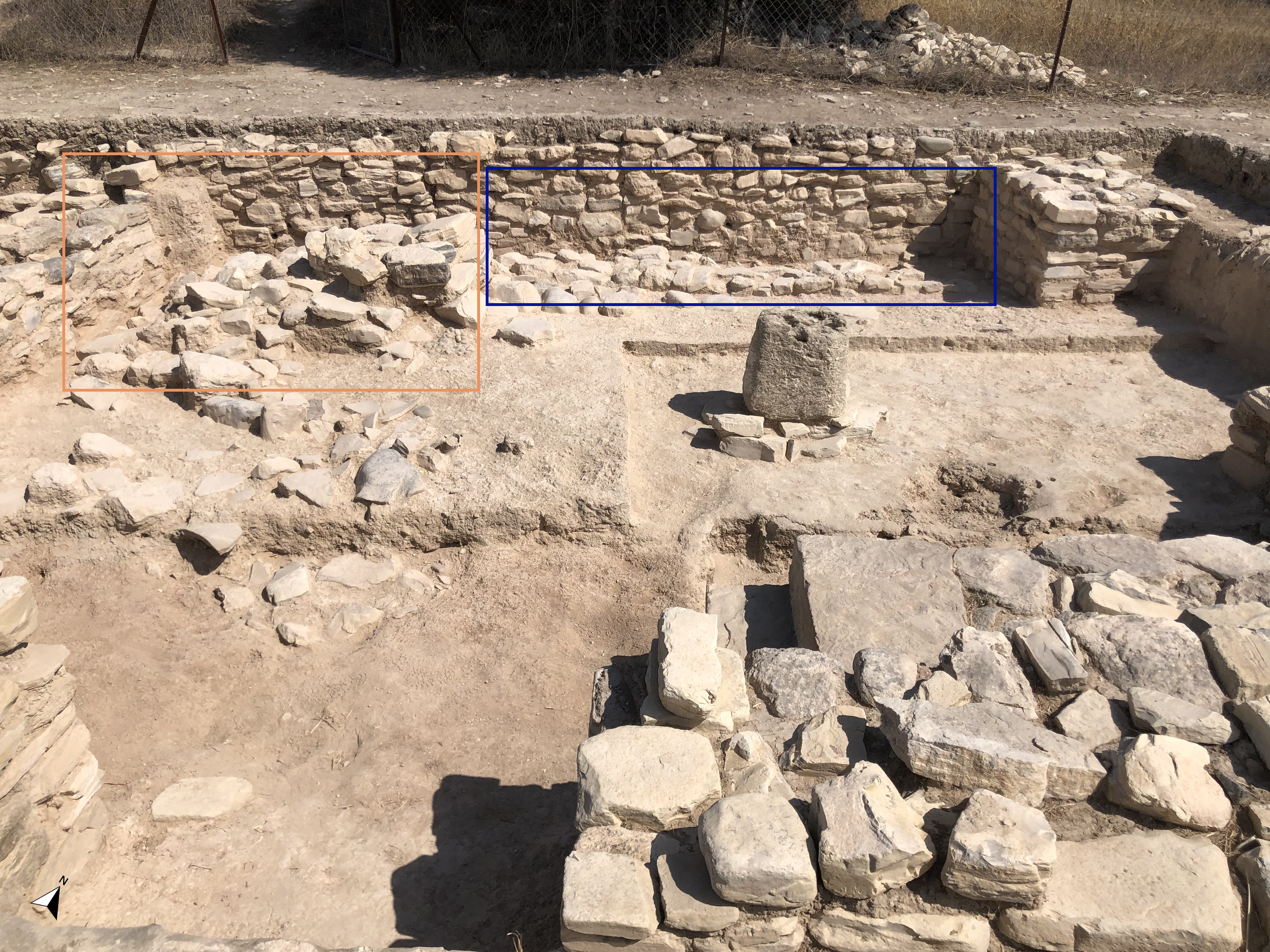
While excavation of artifacts and exposure of architecture in Unit 7 Building XVI Room 2 was the primary method of sample collection, a variety of tools and methods were additionally used to achieve project goals, including sieving (100% of removed material), flotation, and targeted sample collection for residue/starch analysis and C-14 dating. At the beginning of the excavation season, initial cleaning and maintenance of previously excavated trenches was undertaken. I was responsible for cleaning some ashlar masonry present in the Pithos Hall of Building X as well as the East wall, plaster floor, and basin in Unit 7 Building XVI Room 1 (Figs. 2-4, below). I also helped with registrar work to classify, process, and inventory finds according to the needs of the project while adhering as closely as possible to care and handling guidelines set forth by the Canadian Conservation Institute.
Finds
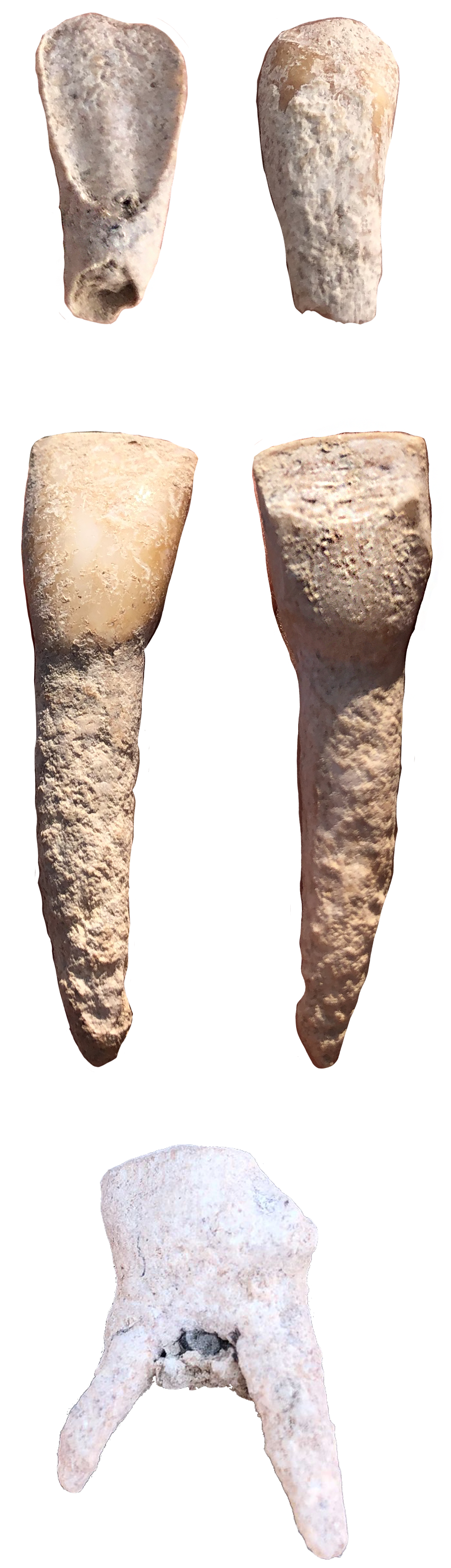
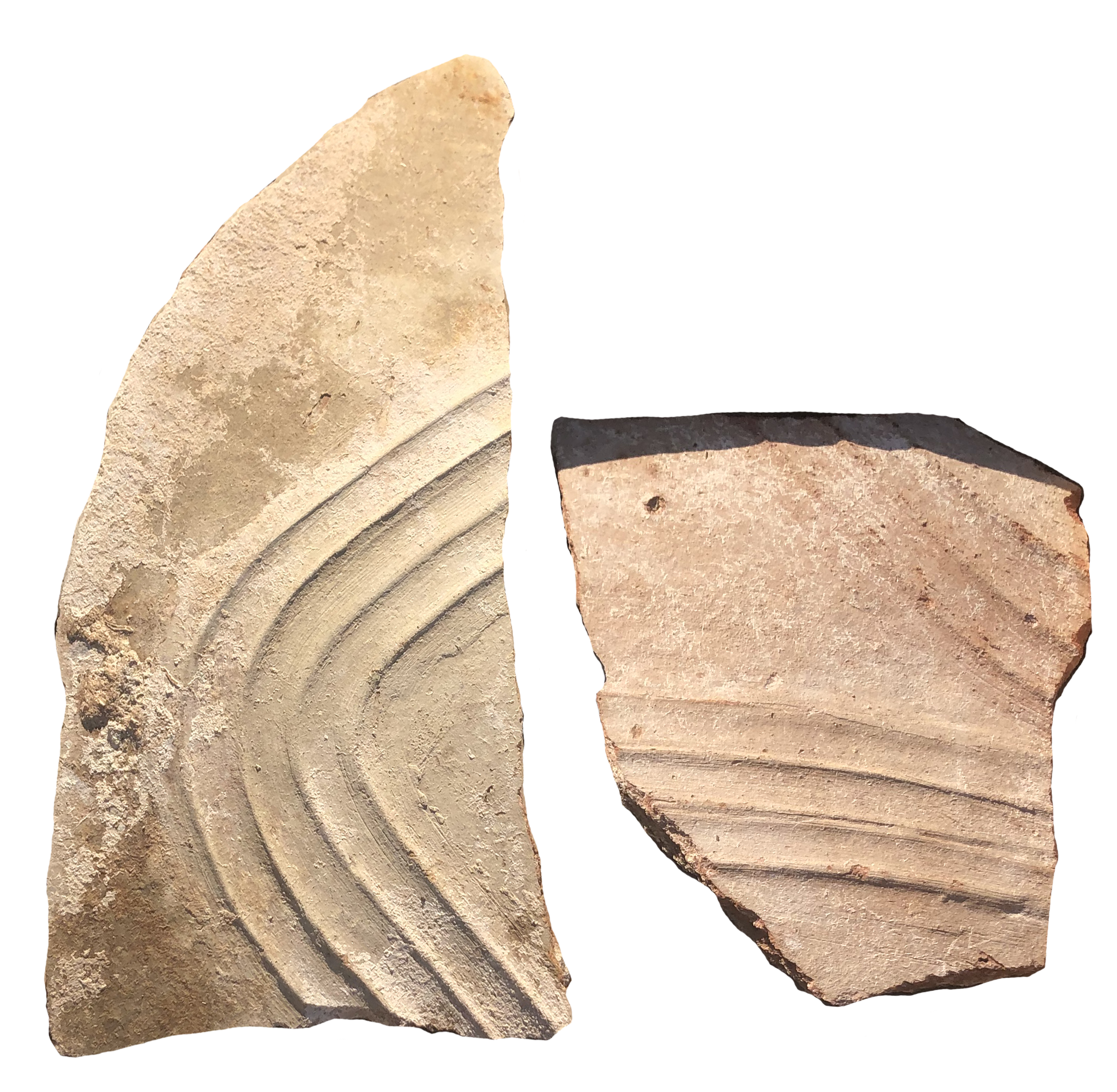
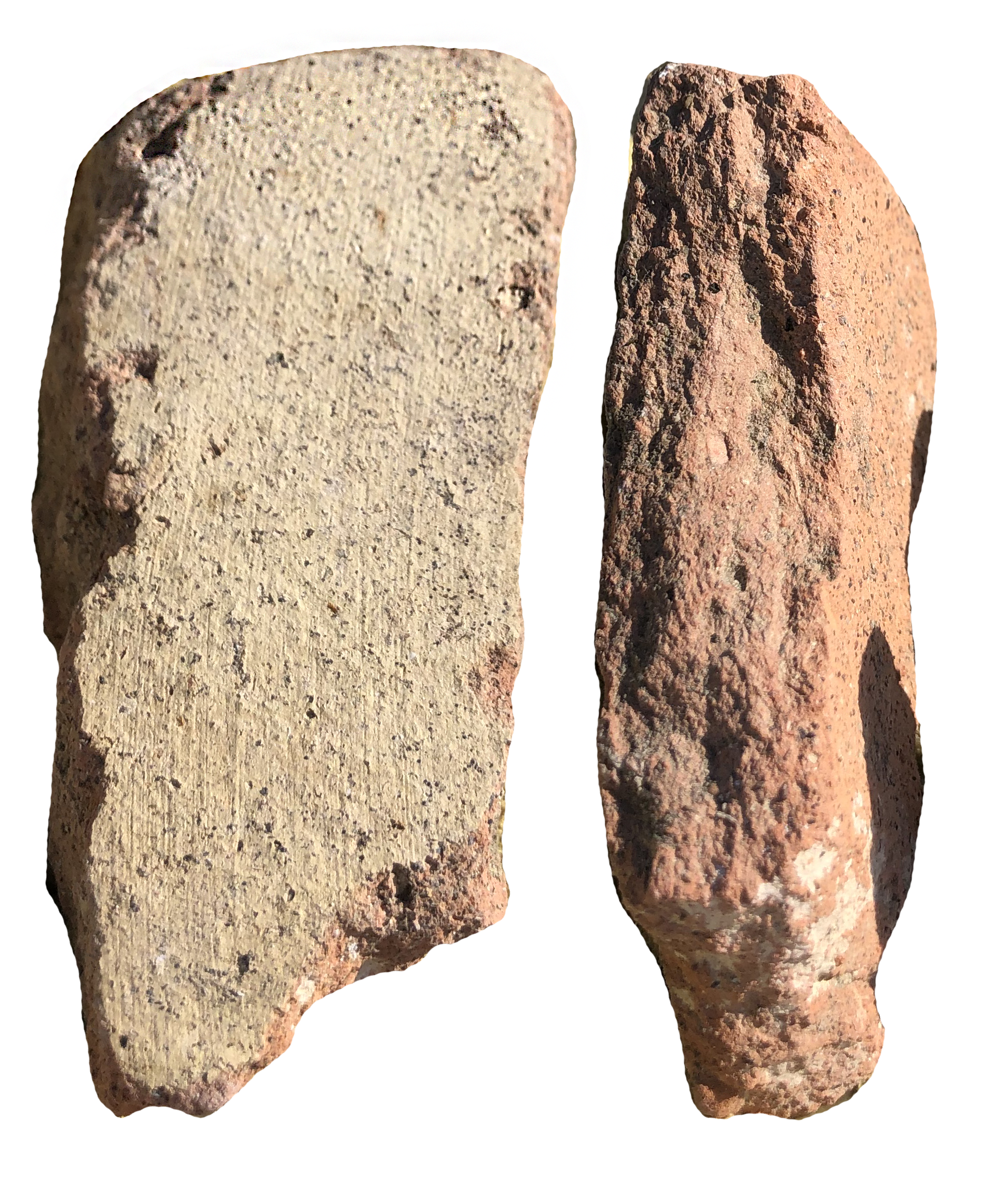
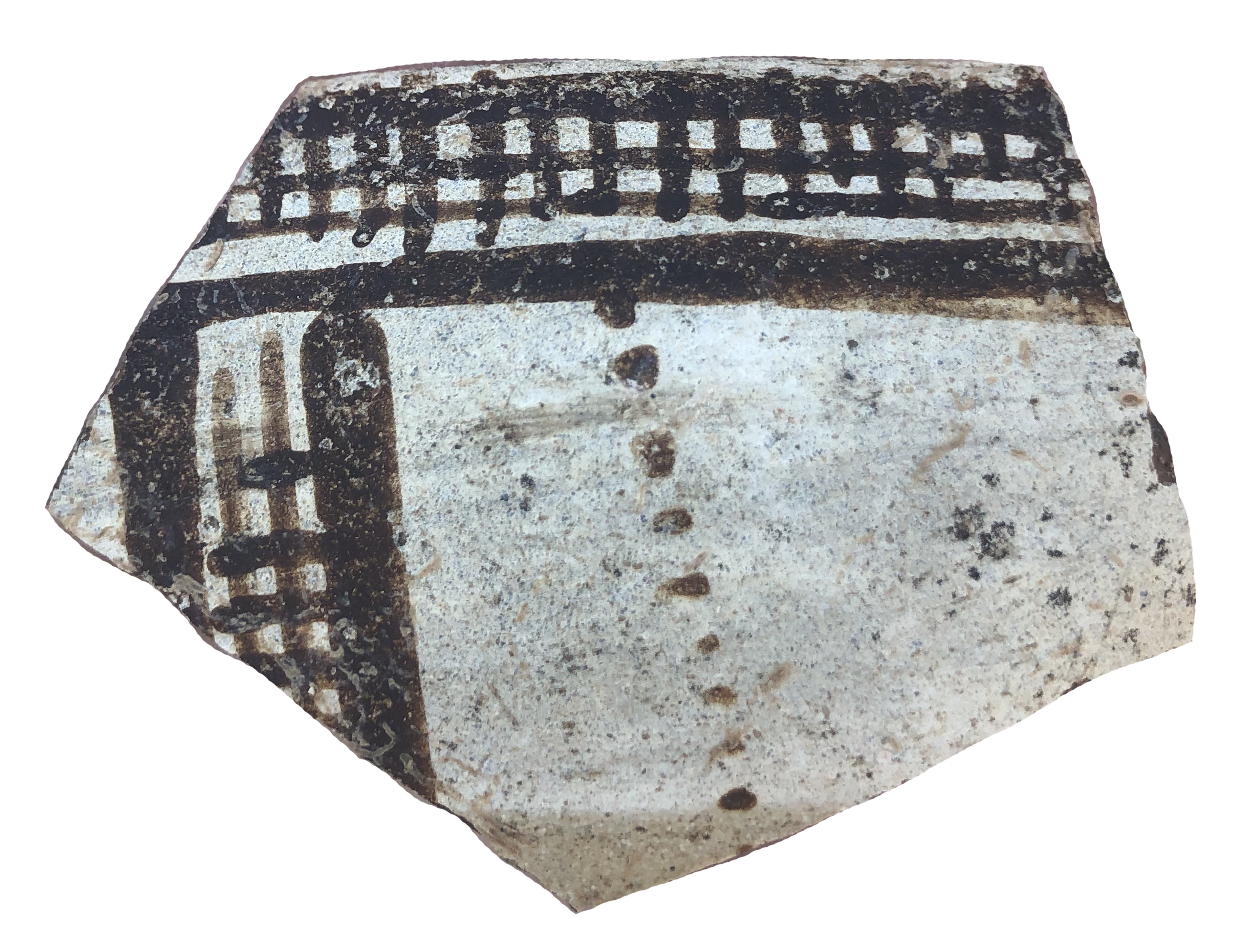
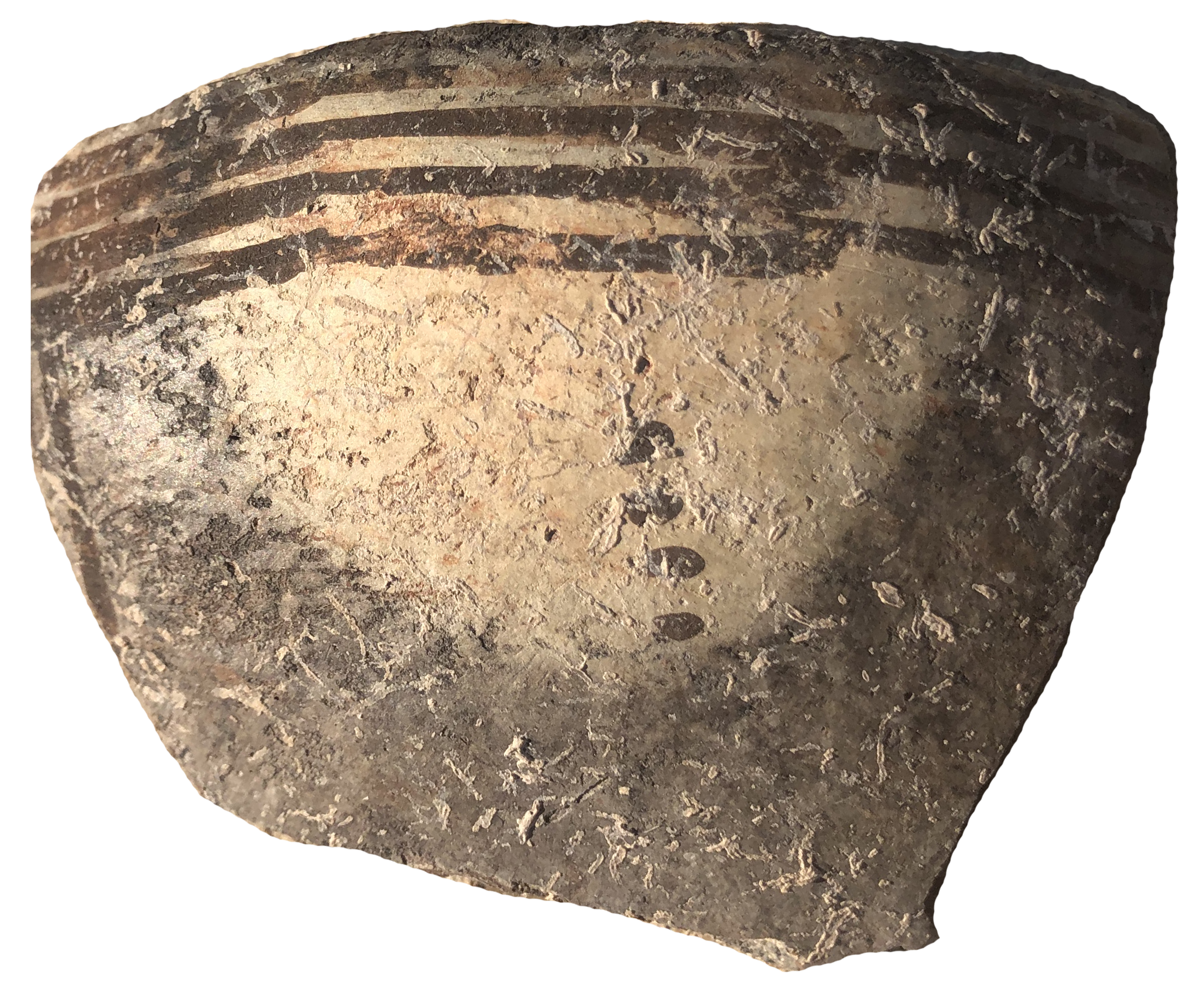
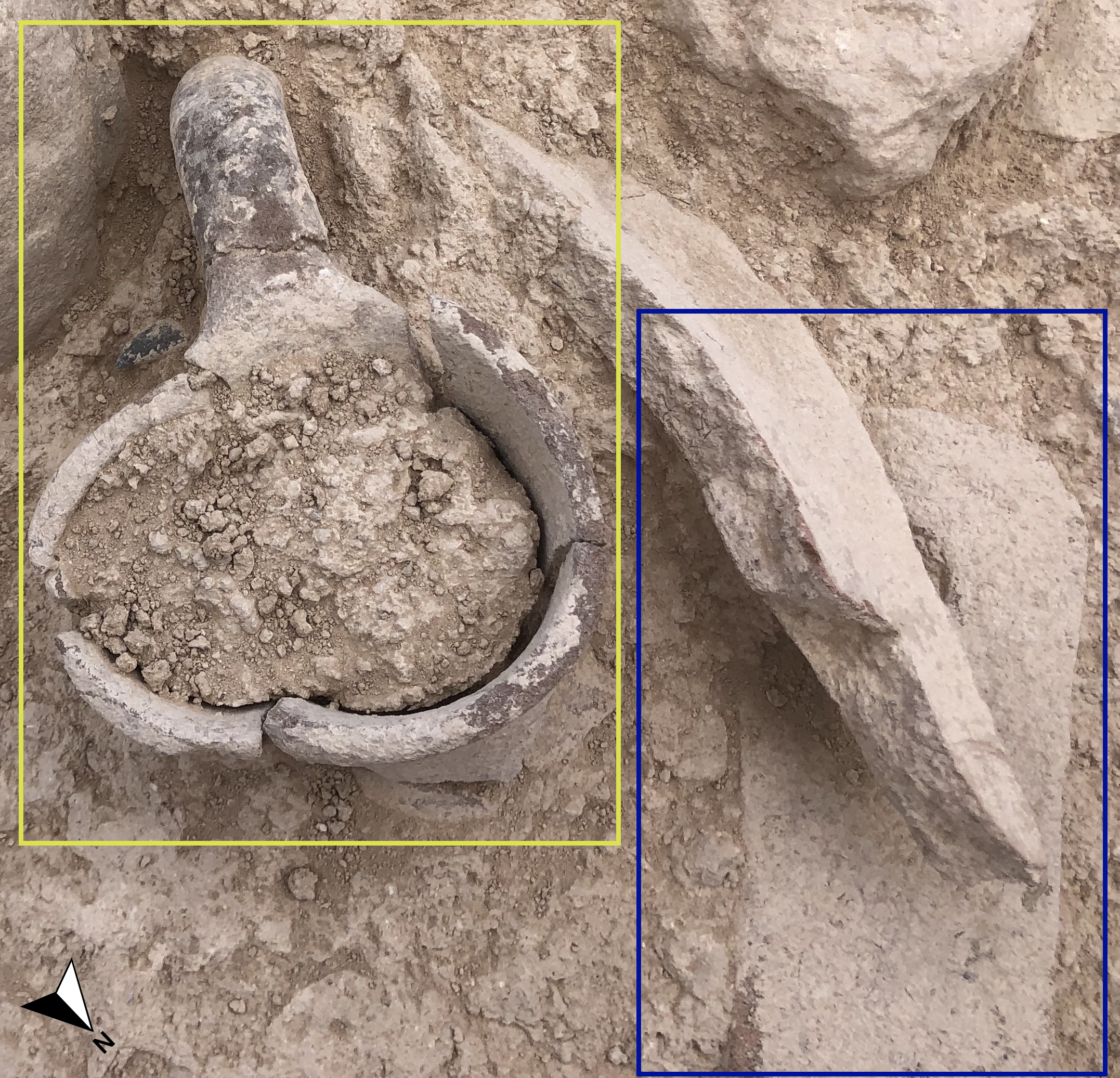
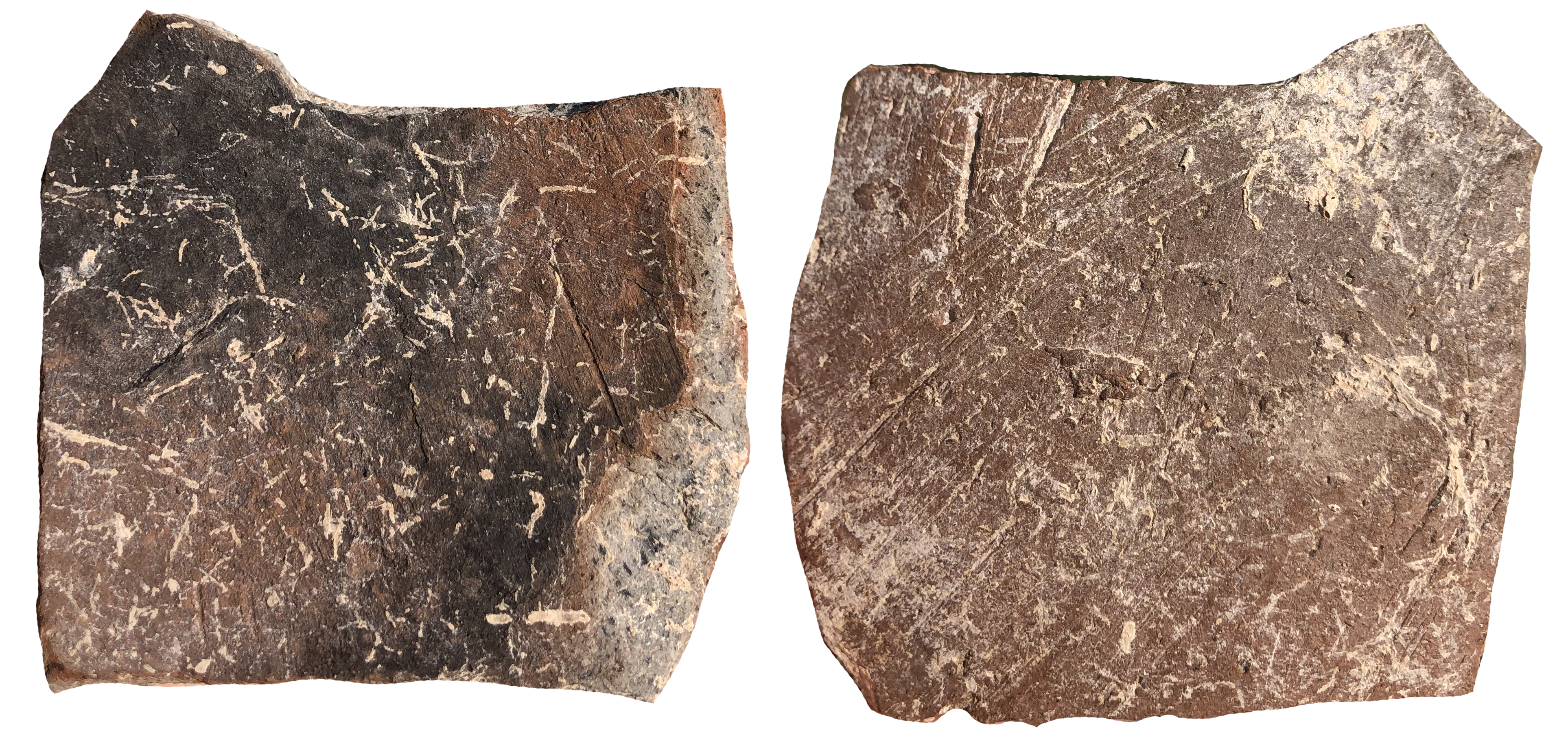
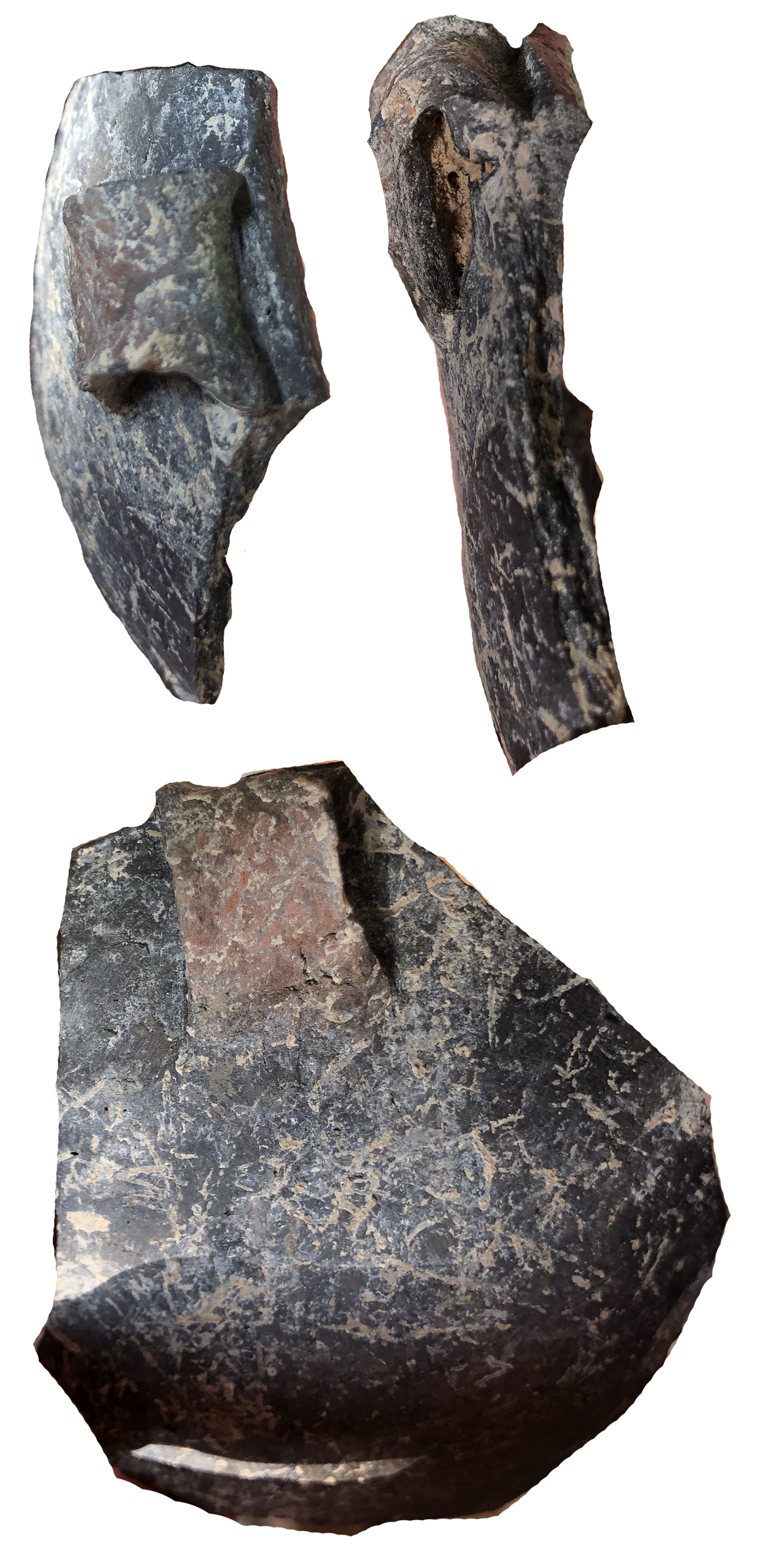
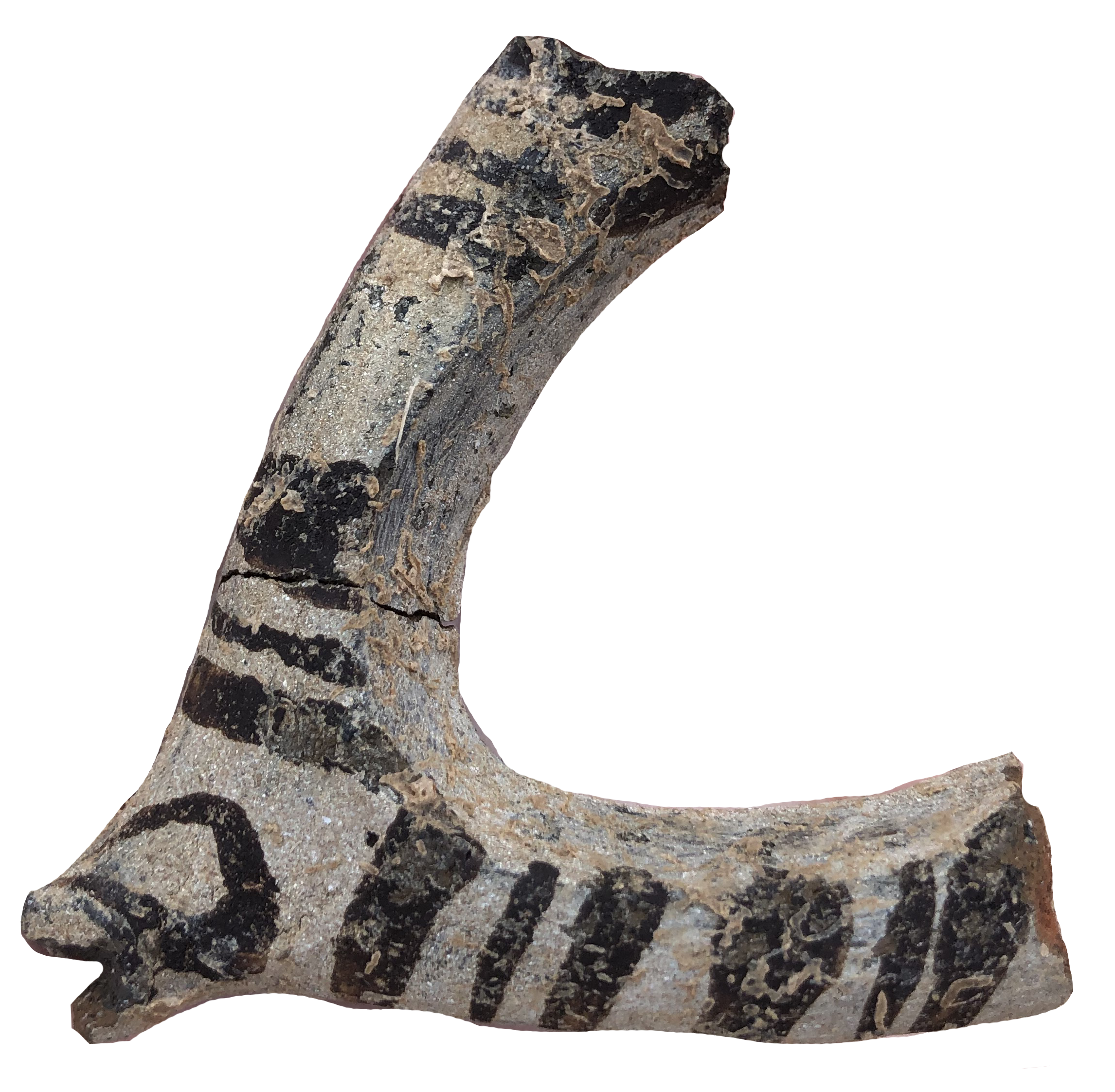
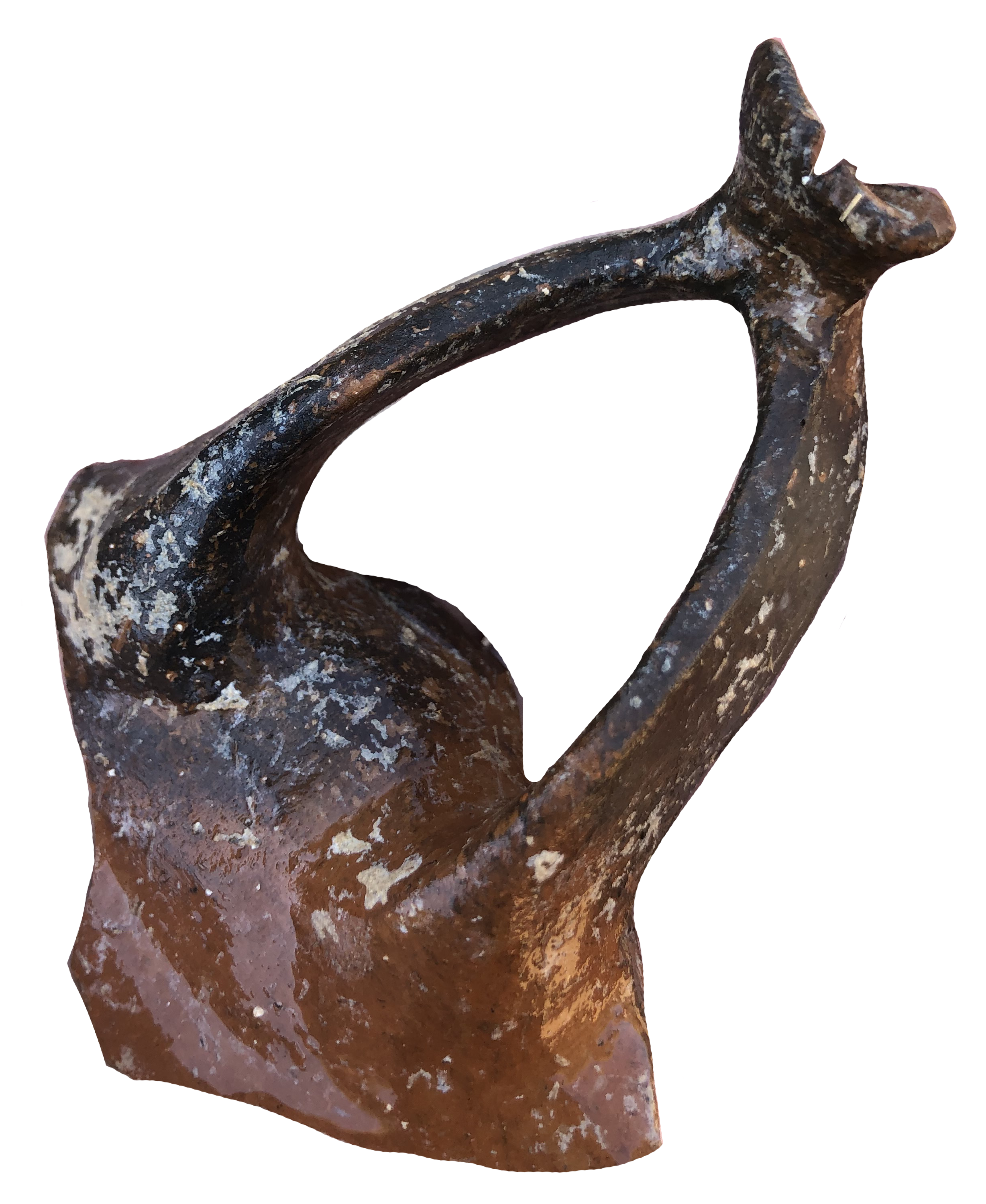
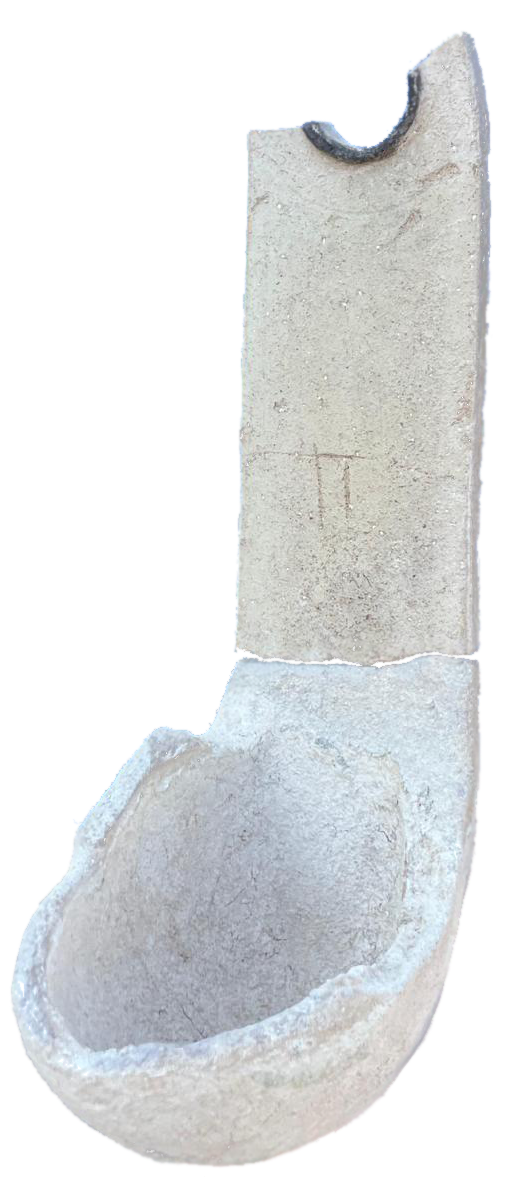
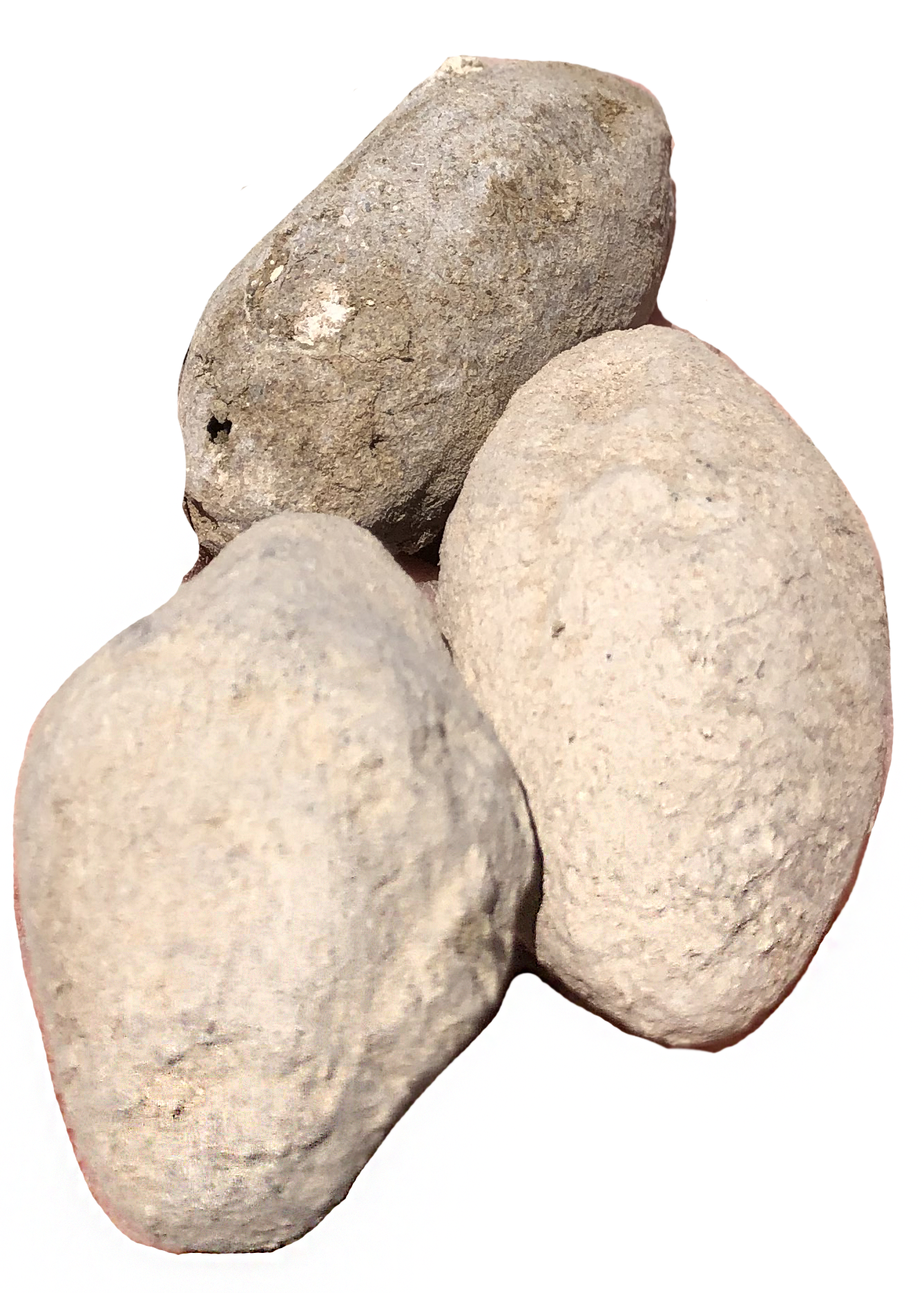
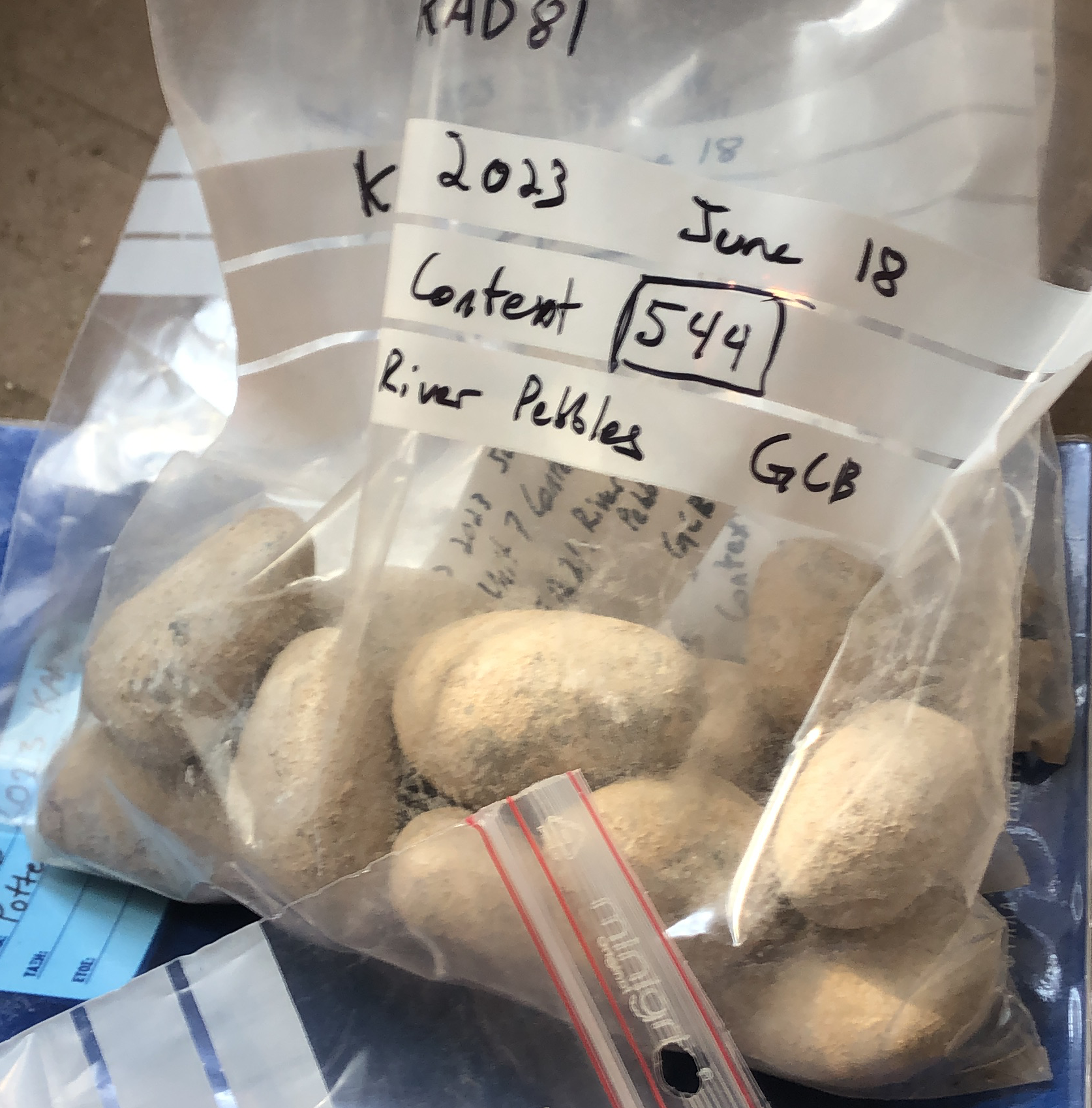
A large amount of cervid bone, antler, and teeth (Fig. 5, below) as well as a smaller amount of avian bone and other unidentified bone was excavated primarily on the south side of Unit 7, in context 547 (see Fig. 18, below). A great assortment of pottery was excavated, including a large number of sherds from very large storage pithos decorated with raised wavy lines (see Figs. 6 and 7, below), White Slip II sherds (see Figs. 8 and 9, below), a polished-ware jug (Fig. 10, below), coarseware, cookware (Fig. 11, below), a handheld lug-handled black polished ware cup/bowl (Fig. 12, below), White Slip II and Base Ring ware wishbone handles (Figs. 13 and 14, below), and Base Ring ware sherds. Some of the pottery was inscribed in characters from the Cypro-Minoan (CM) syllabary, such as a Base Ring ware cup base and a pithos handle inscribed with CM sign 78[4] before firing. Other notable finds include fired clay wall brackets, possibly used to hold incense or as lamps. One wall bracket was decorated with an incised wavy line before firing (Fig. 10, below). A wall bracket bowl was successfully refitted to a wall bracket fragment, slipped and also incised with CM sign 78 (after firing), that was excavated in a previous season (Fig. 15, below). A small and thin fired clay fragment potentially representing an eye from a zoomorphic askos was discovered during cleaning. A very large number of oblong objects made of unfired clay, presumed to be sling bullets, were discovered in the south-west corner of context 547 (see Fig. 16, below). These sling bullets vary in weight, length, fabric, quality, state of preservation, and shape (primarily biconical, egg-shaped, pill-shaped, and variants thereof). A heap of uniform river stones, similar in size to the clay sling bullets, was discovered nestled in a pile along the south-east side of the circular stone feature (context 548) (Figs. 17 and 18, below).
A circular stone feature (context 548) discovered in a previous season was further articulated. It was found that the feature extended down to the floor and out to the walls, forming a conspicuous edge on the westernmost extent. A linear stone feature (context 549) was discovered, running parallel yet distinctly not connected to the North wall of Room 2. The linear stone feature is connected to the circular stone feature, and appears to incline very slightly as it approaches the circular stone feature.
Bibliography
Fisher, Kevin. “Background.” KAMBE Project. University of British Columbia. Accessed July 29, 2023. https://kambe.cnrs.ubc.ca/sample-page/.
Fisher, Kevin D., Sturt W. Manning, and Thomas M. Urban. “New Approaches to Late Bronze Age Landscapes on Cyprus: Investigations at Kalavasos-Ayios Dhimitrios, 2012-2016.” American Journal of Archaeology 123, no. 3 (2019): 473-507. Accessed July 29, 2023. DOI: 10.3764/aja.123.3.0473.
Valério, Miguel. “Problems of Cypro-Minoan Paleography: The Case of Sign Shapes 08, 13 and 78.” Kadmos 52, no. 1 (2013): 111-34. Accessed July 29, 2023. DOI: https://doi.org/10.1515/kadmos-2013-0006.
References
[1] Kevin Fisher, “Background,” KAMBE Project, University of British Columbia, accessed July 29, 2023, https://kambe.cnrs.ubc.ca/sample-page/.
[2] Kevin D. Fisher, Sturt W. Manning, and Thomas M. Urban, “New Approaches to Late Bronze Age Landscapes on Cyprus: Investigations at Kalavasos-Ayios Dhimitrios, 2012-2016,” American Journal of Archaeology 123, no. 3 (2019): 486.
[3] Fisher, Manning, and Urban, “New Approaches,” 482.
[4] For examples of safe instances of sign 78, see Miguel Valério, “Problems of Cypro-Minoan Paleography: The Case of Sign Shapes 08, 13 and 78,” Kadmos 52, no. 1 (2013): 118.