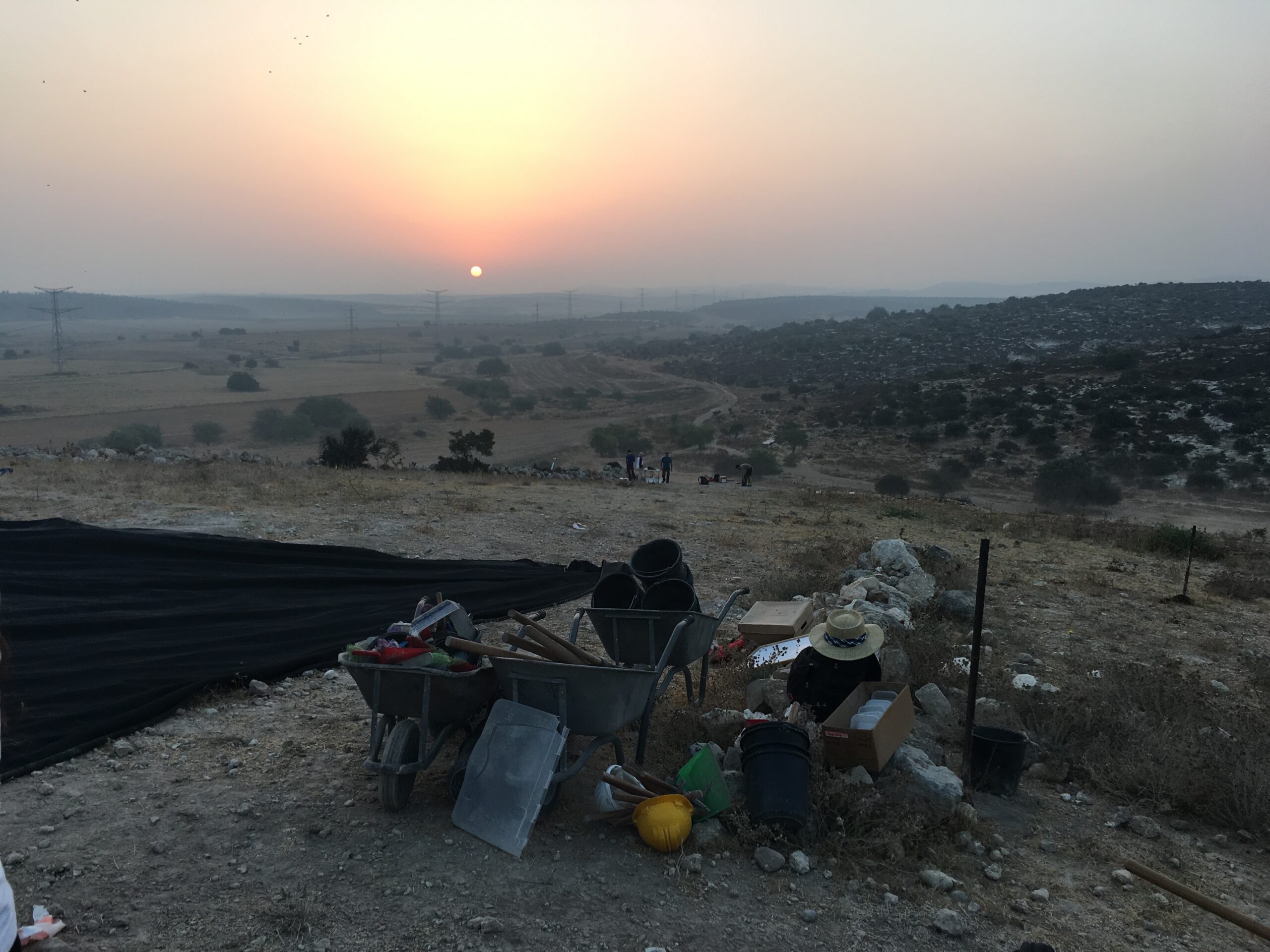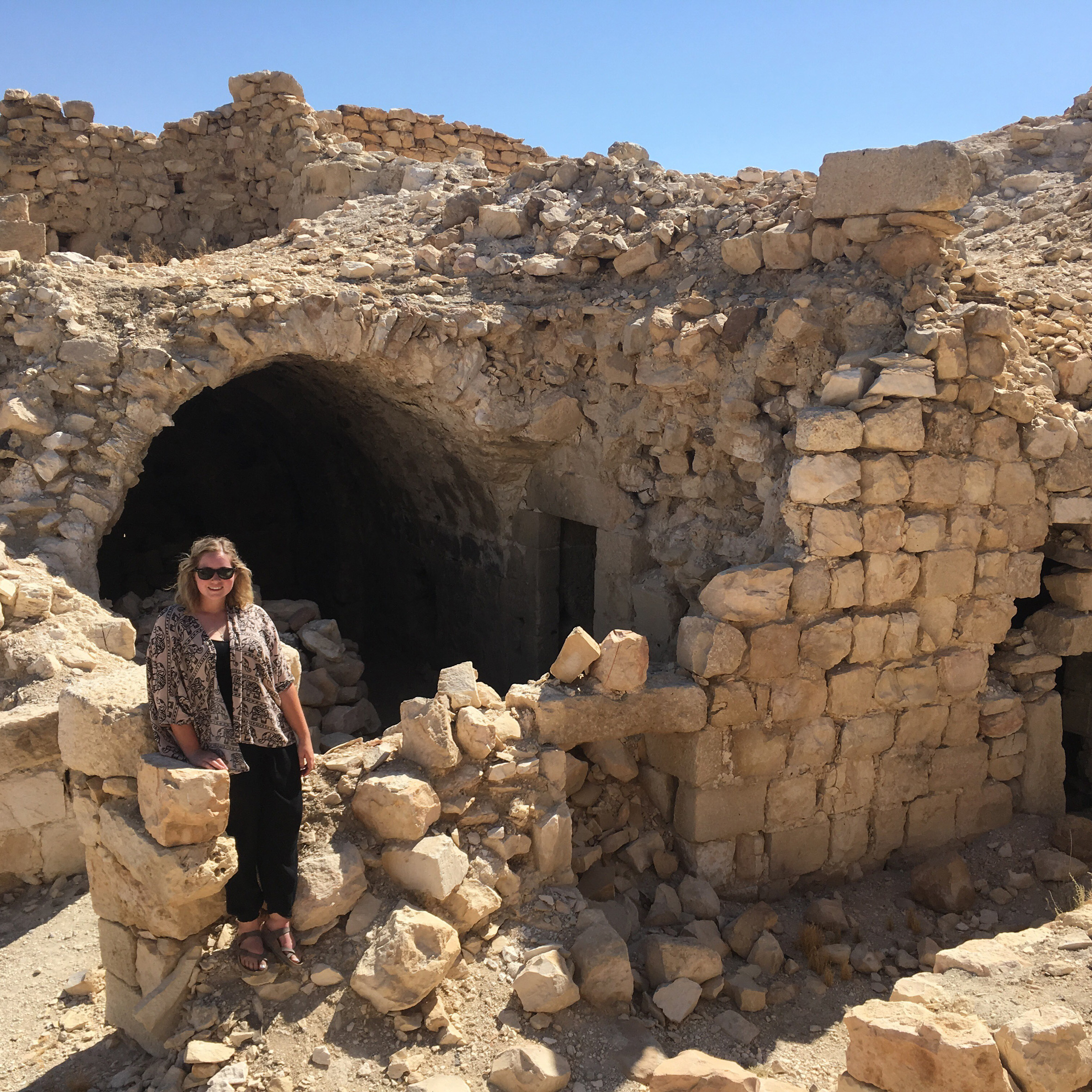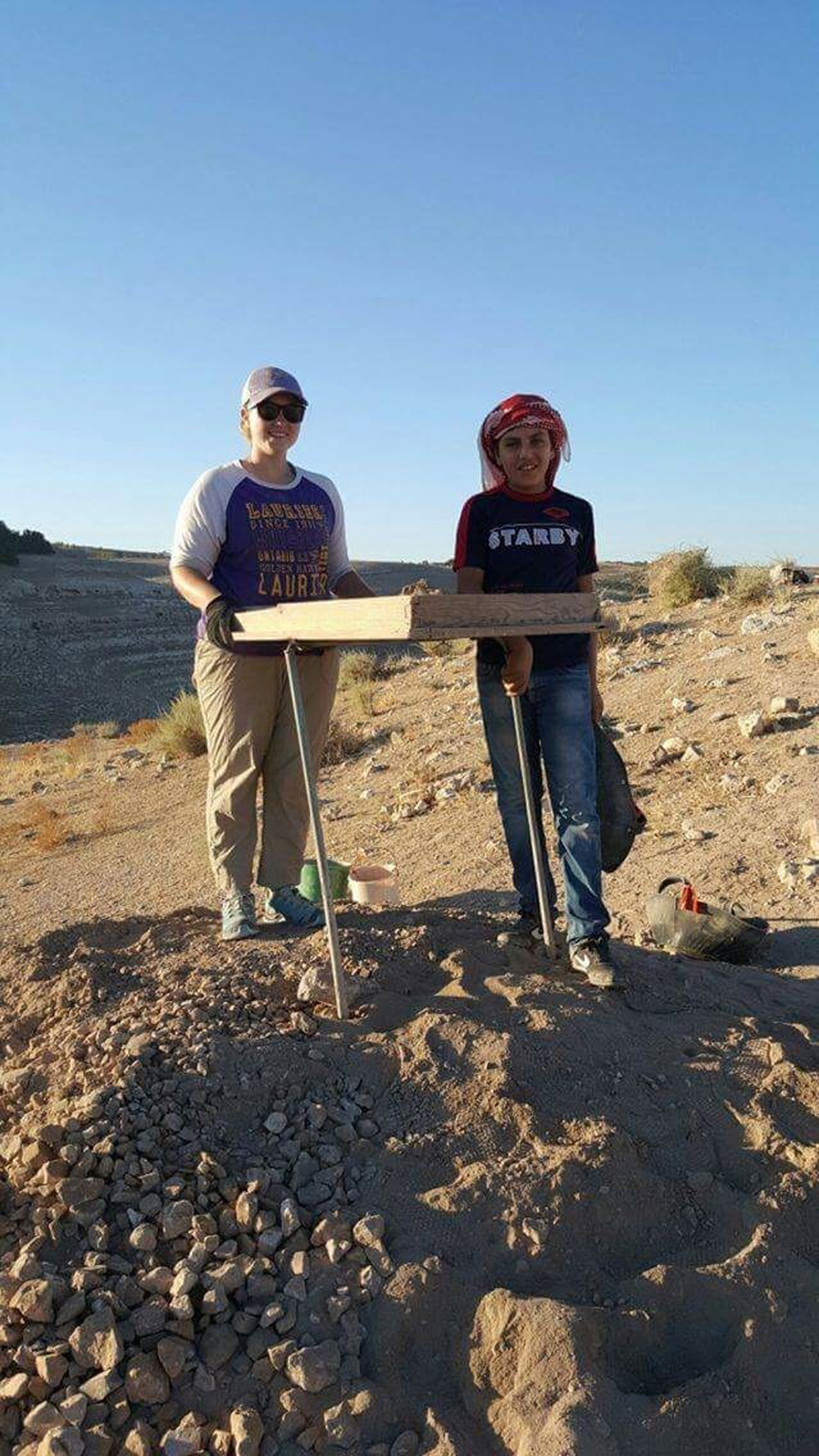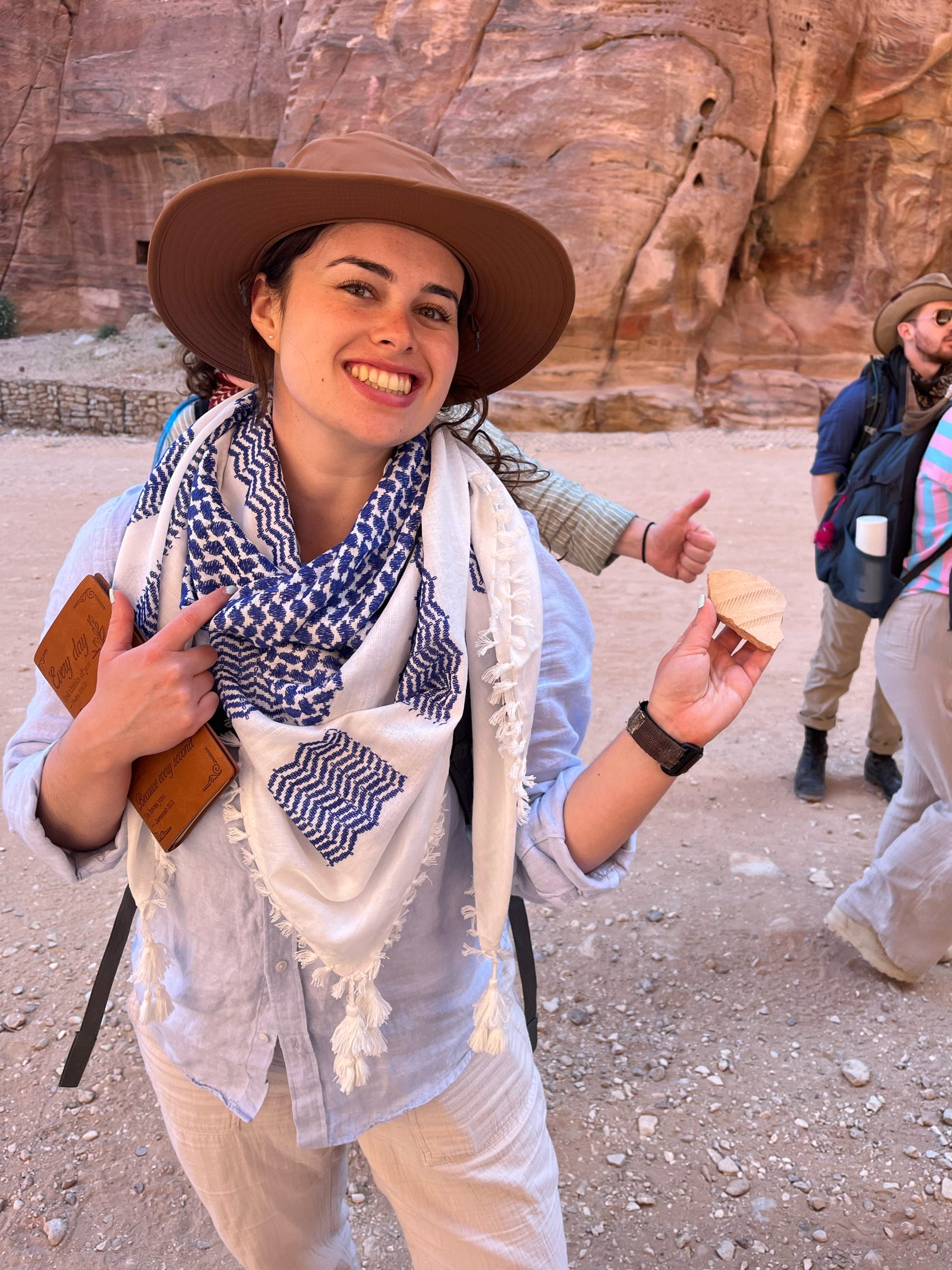
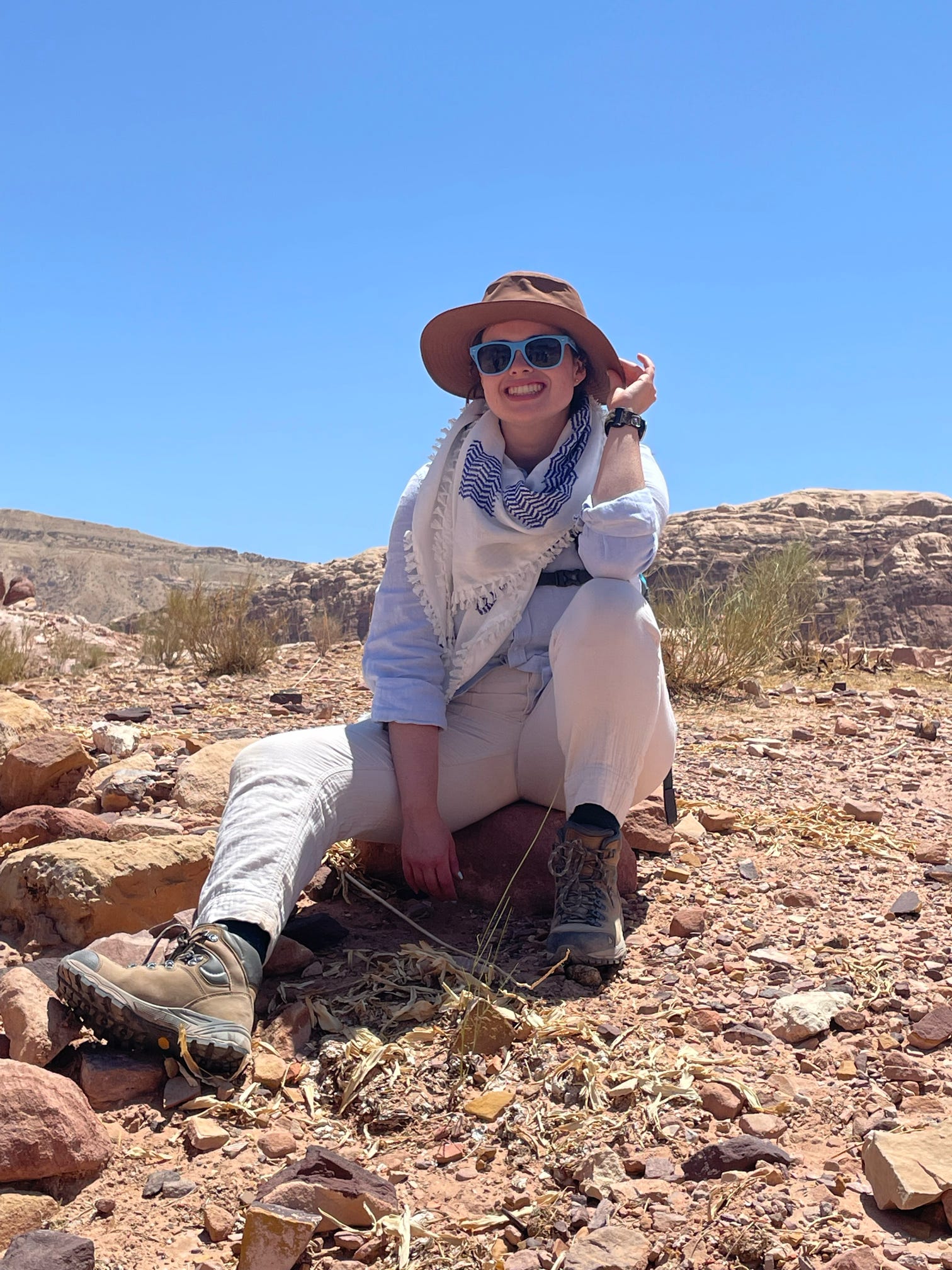
2025 Mussell Fellowship Winner Rachel Carroll – Under the Jordanian Sun: Summary reflections of a student archaeologist at the Humayma Archaeological Field School

Prior to this field school, my only archaeological experience and exposure came from classes I had taken at the University of Alberta, volunteer work I had done with one of my professors and travels I had taken with my family. Never once had I stepped foot on a site intending to contribute to its archaeological knowledge – until now. After spending three weeks at the Humayma Archaeological Field School in Jordan under the supervision of Dr. Craig A. Harvey, I have become better equipped to understand the nuanced processes and work involved in modern archaeology. This is especially true for instances where archaeological surveying unexpectedly uncovers discoveries which require adjustments to the work. Through my time spent at the American Center of Research (ACOR) and at the archaeological site of al-Humayma, I developed valuable skills in photography, photogrammetry, and writing site reports. These ‘hard’ skills were complemented by the ‘soft’ skills I also cultivated during my time in Jordan. These included establishing social-cultural transparency and relationships with the Bedouin people and the Jordanian DOA (Department of Antiquities) to help protect the site of al-Humayma against looting. All in all, my time spent under the Jordanian sun was both mentally and physically stimulating, and I could not have asked for a better first experience at an archaeological field school.

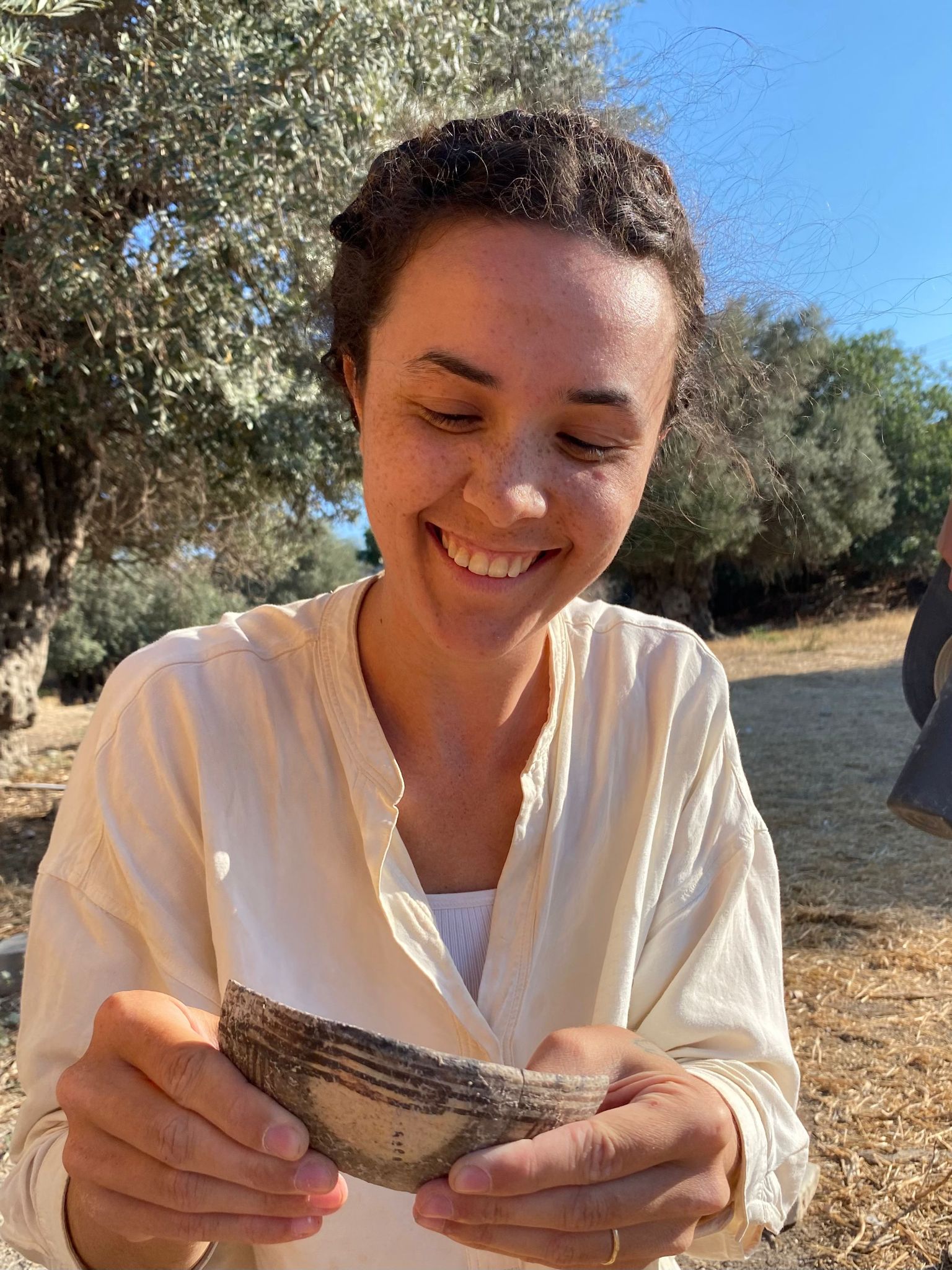
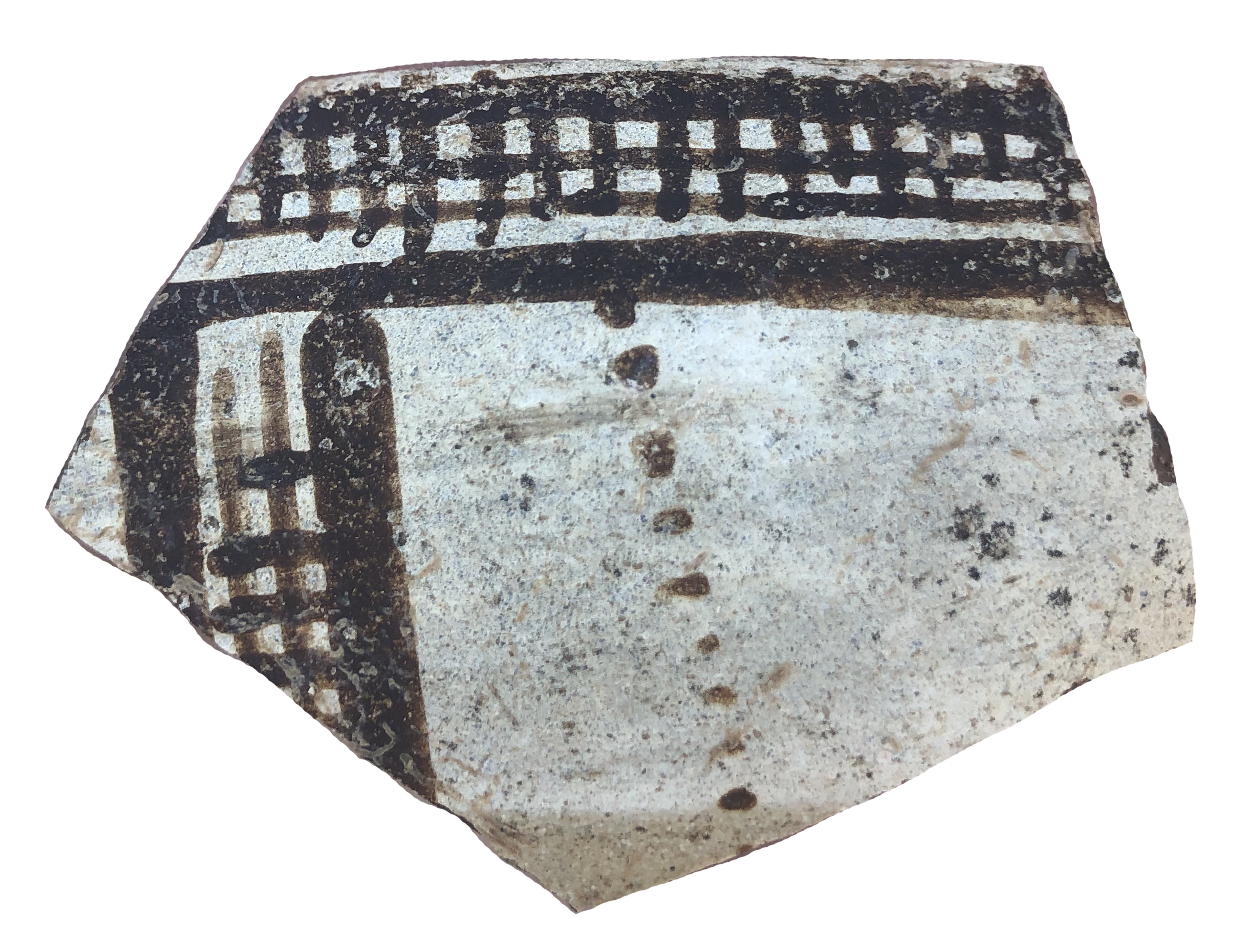
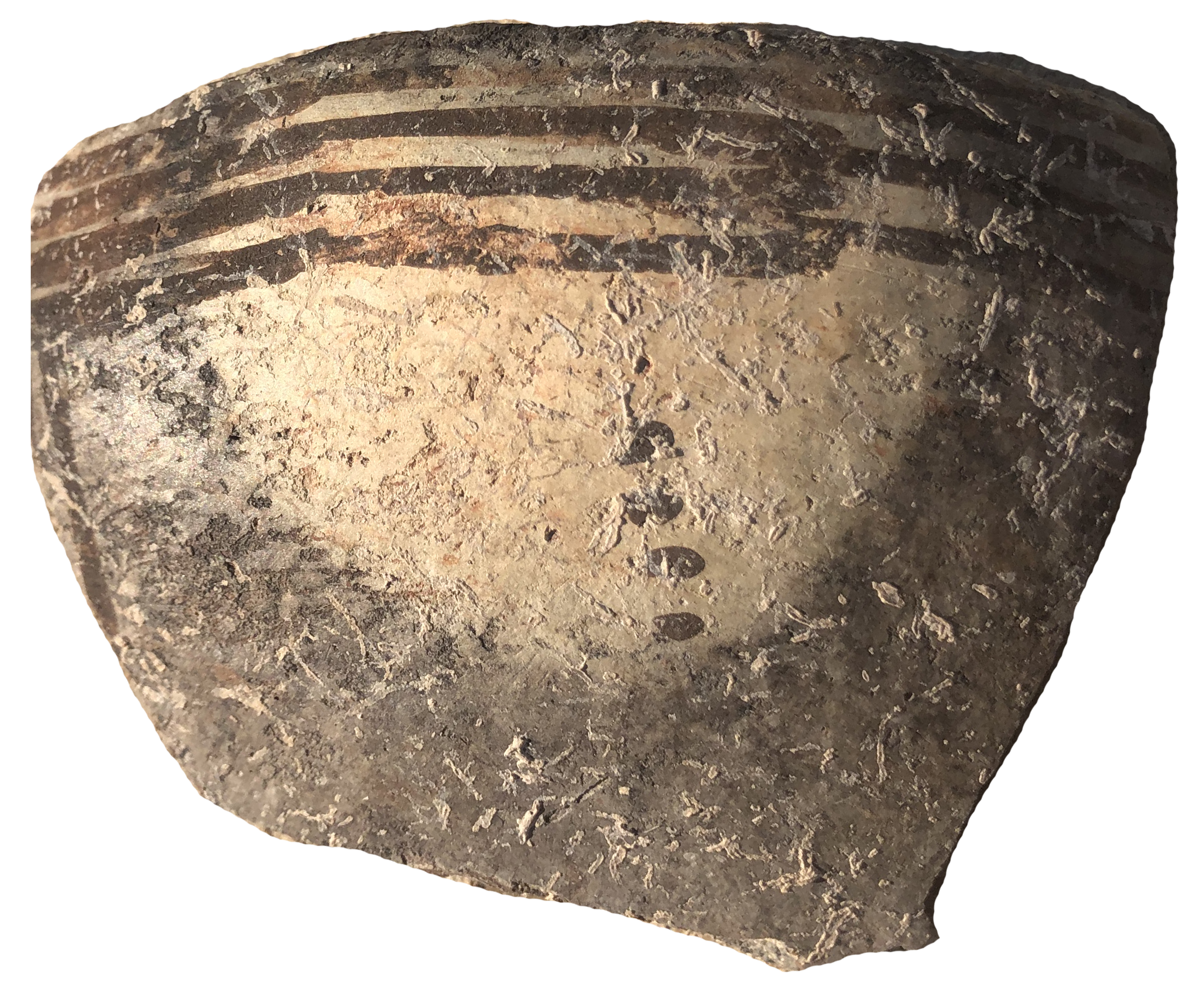
Spending my first week at ACOR, examining materials found at al-Humayma from previous excavations, contributed tremendously to my ability to both understand the site as well as work meaningfully at it. From late Nabataean fine wear to ARS (African Red Slip), and from stone cooking wear to terracotta pipes, it was through these materials and lectures (both formal and informal) that I gained a greater understanding of the site’s history and the artifacts found there. I am a very hands-on person, and I tend to retain information much better when I can see, hold, and feel in real time what it is I am learning about. If it were not for the modules on these materials, I would not have had the ability to examine the ground at al-Humayma so easily and discern a cup base from a perfume bottle rim – a skill I had no idea I could hone in just two weeks!

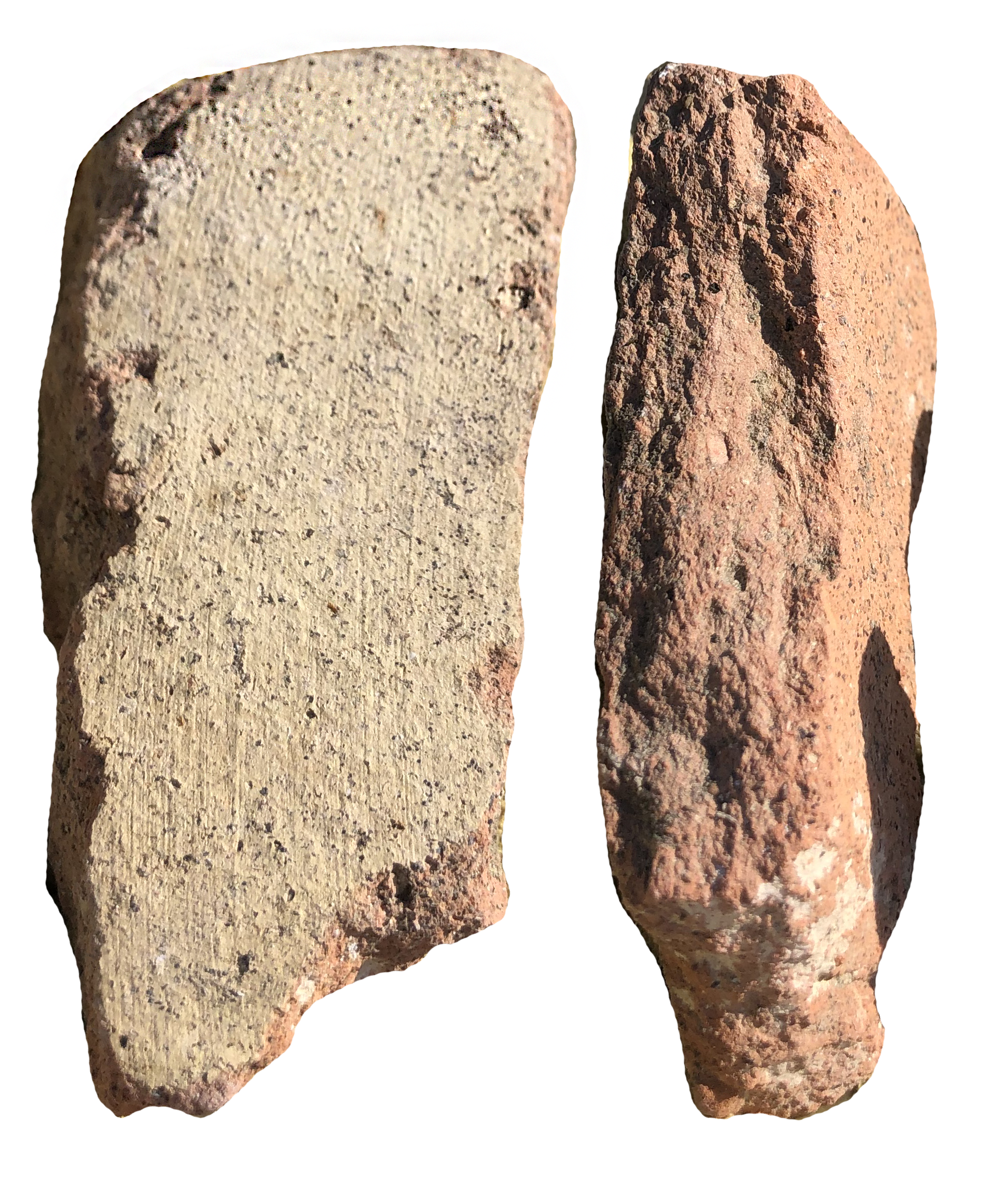
Digitally cataloguing the terracotta pipes was a particularly fantastic learning experience, as it gave me a better idea of how the past excavations of the site were conducted and the problem-solving involved in determining the categorization of certain artifacts. I remember there was one particular pipe sherd I worked on with Dr. Harvey, which we both agreed was likely a pipe whose type should be categorized into Group 6 (there are six group categories created for terracotta pipes at al-Humayma). What was interesting about this pipe was that it appeared identical to another pipe, also categorized in Group 6, and which came from the exact same area. To determine whether our hypothesis was correct, we needed to identify the pipe’s probe number. If the number was 8, we would have a match! Although looking through the field notes did not reveal where pipe probe 8 was, we were determined to find it elsewhere, as this would allow us to place our mystery pipe sherd definitely into Group 6. I may have left the field school before this discovery was made, but I am eager to stay in touch with Dr. Harvey regarding any discoveries he does make regarding this pipe’s categorization. As any archaeologist will tell you, nothing is perfect. There are no perfect types or categories to place things in, and often all we have is our best judgment, but this should not stop us from seeking to uncover and understand, to learn and change. By the time I had rotated through all the lab modules, I had learned this lesson and gained more knowledge about pottery, stone wear, and pipes than I thought possible! And through this learning, I began to understand the archaeological history of al-Humayma.
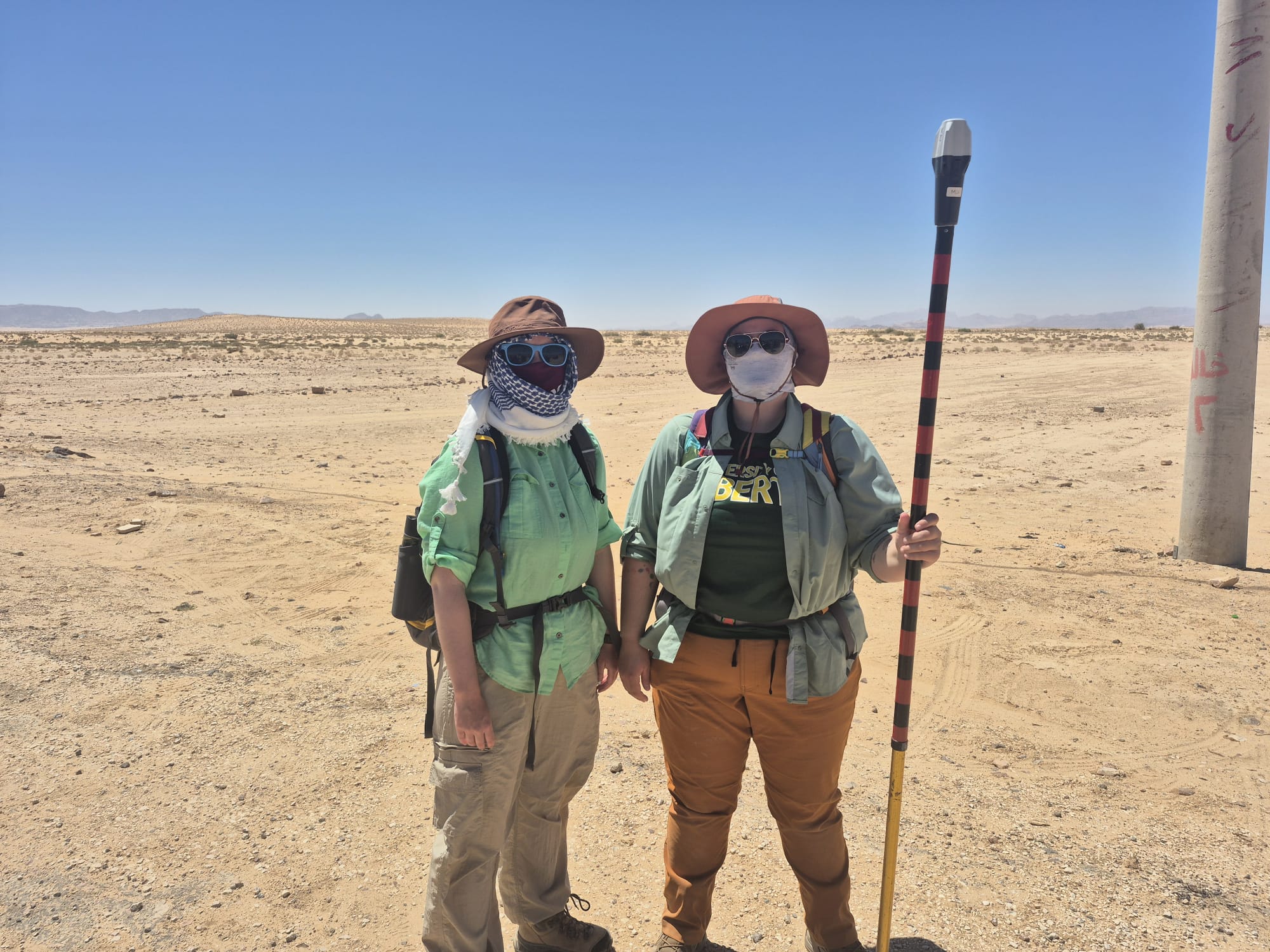
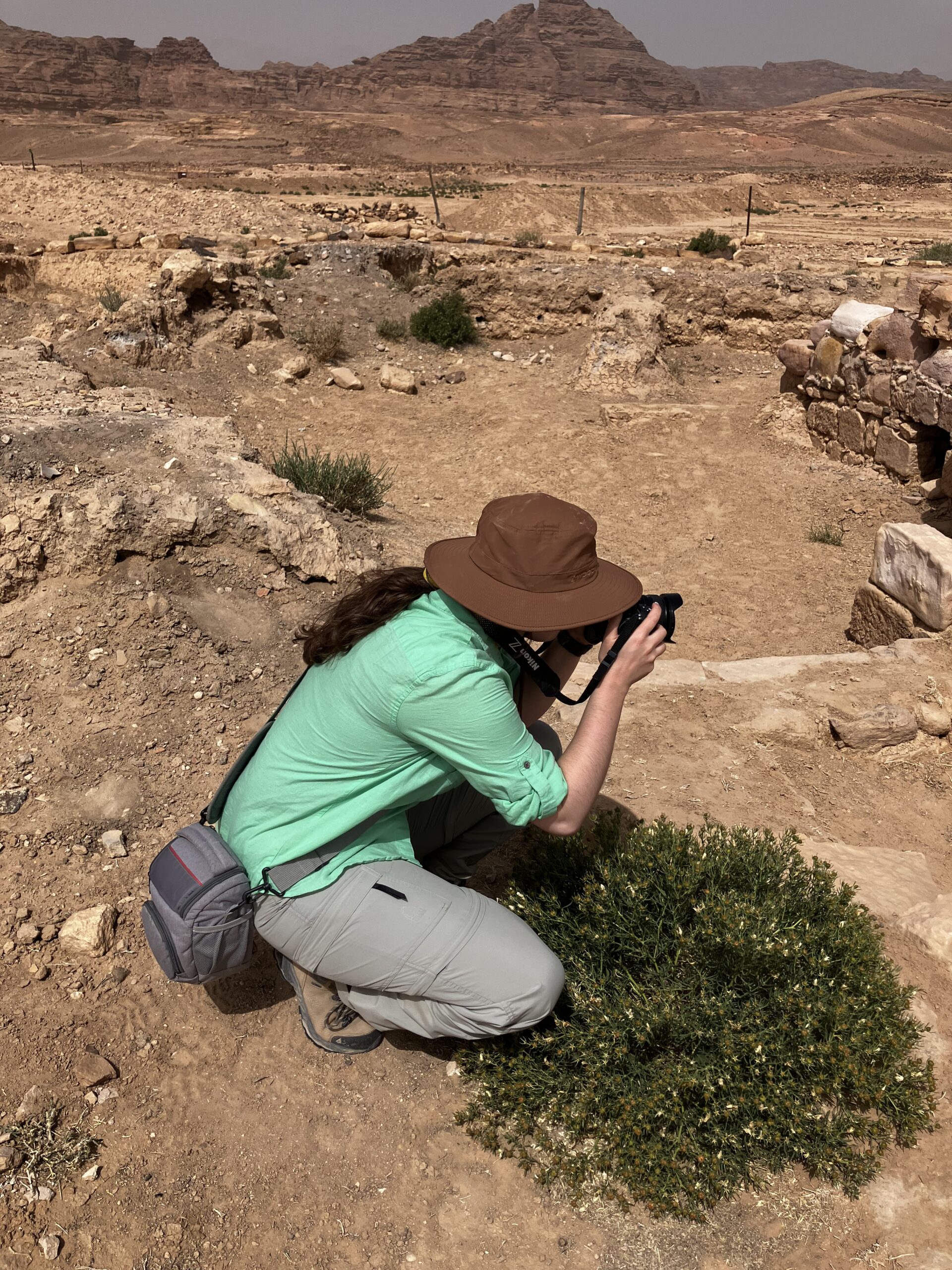
My fond experiences in the labs also extended to photography and photogrammetry. As Matthew Vincent, Project Director at ACOR, would often say, “The future of archaeology is in 3D modules.” Through Matt, I learned about RTK, how to use it in the field, and the important role it plays in creating 3D models of a site. With the field school’s MA student, Josh, I learned about RealityScan and how to do photogrammetry from small artifacts to large complexes. I was able to apply these skills in the field, helping Sophie, one of the field school’s supervisors, with the RTK of a monumental tomb structure and an unknown “latrine” structure, which were used to help with photogrammetry of those sites. It is incredible to see just how technology has improved our ability to do archaeological work, both in surveying and excavations. These are skills I will definitely continue to hone and use.

By far, my two favourite aspects of the field school were photography and the cultural interactions with the local Bedouin and the Jordanian DOA. For photography, I just seemed to take a shine to it – or perhaps it was the fact that I was always holding the camera! Either way, I immensely enjoyed taking photos of the sites and features, particularly appreciating the challenge of fighting the shadows and learning how to analyze what should/needed to be photographed. Concerning the cultural interactions, I wish I could have chatted with the DOAs and one of the local Bedouin men, Ali, more, getting a sense of their understanding and connection to the site. As someone particularly interested in socio-cultural anthropology, I enjoyed the connections our group made with Ali and the Bedouins, and I am curious where this relationship will lead and the potential it has to help maintain the sanctity of the site while involving the community. As mentioned above, the core skills I learned through this field school were made more meaningful through their connection to the research goals, cultural interactions and general nuances of archaeology that generally are not talked about nor considered in a classroom setting. As I reflect on my three weeks in Jordan, I see my biggest accomplishments, without a doubt, being developing my techniques in photography, learning how to use software for 3D scanning/modelling, and honing my ability to assess a site and take in-depth notes. Although I have some prior experience with photography and 3D scanning through my volunteer work, I have been able to learn more about the techniques involved with photography and photogrammetry. Before the field school, I would not have known the importance of shooting photos on “Aperture” for photogrammetry, or the proper way to take site photographs to use as references for future surveying and excavation. As well, I found that by the end of the last week, I was able to create in-depth notes which accurately identified and captured key features and aspects of the sites and complexes I worked on. As I continue my education and begin work in CRM, I see these skills becoming invaluable for helping determine sites and quickly assessing them. Most especially, my ability to do all of this on my own with little to no supervision – to have my director feel confident in my ability to be unsupervised and produce good work – has been the most profound accomplishment for me. This field school has definitely set me up for success for a future in archaeology by providing me invaluable experience working hands-on with materials, applying theory from class and volunteer work in a practical way, and, most especially, helping confirm that archaeology, with a specialization in heritage management, is the career I see myself pursuing whole heartedly.
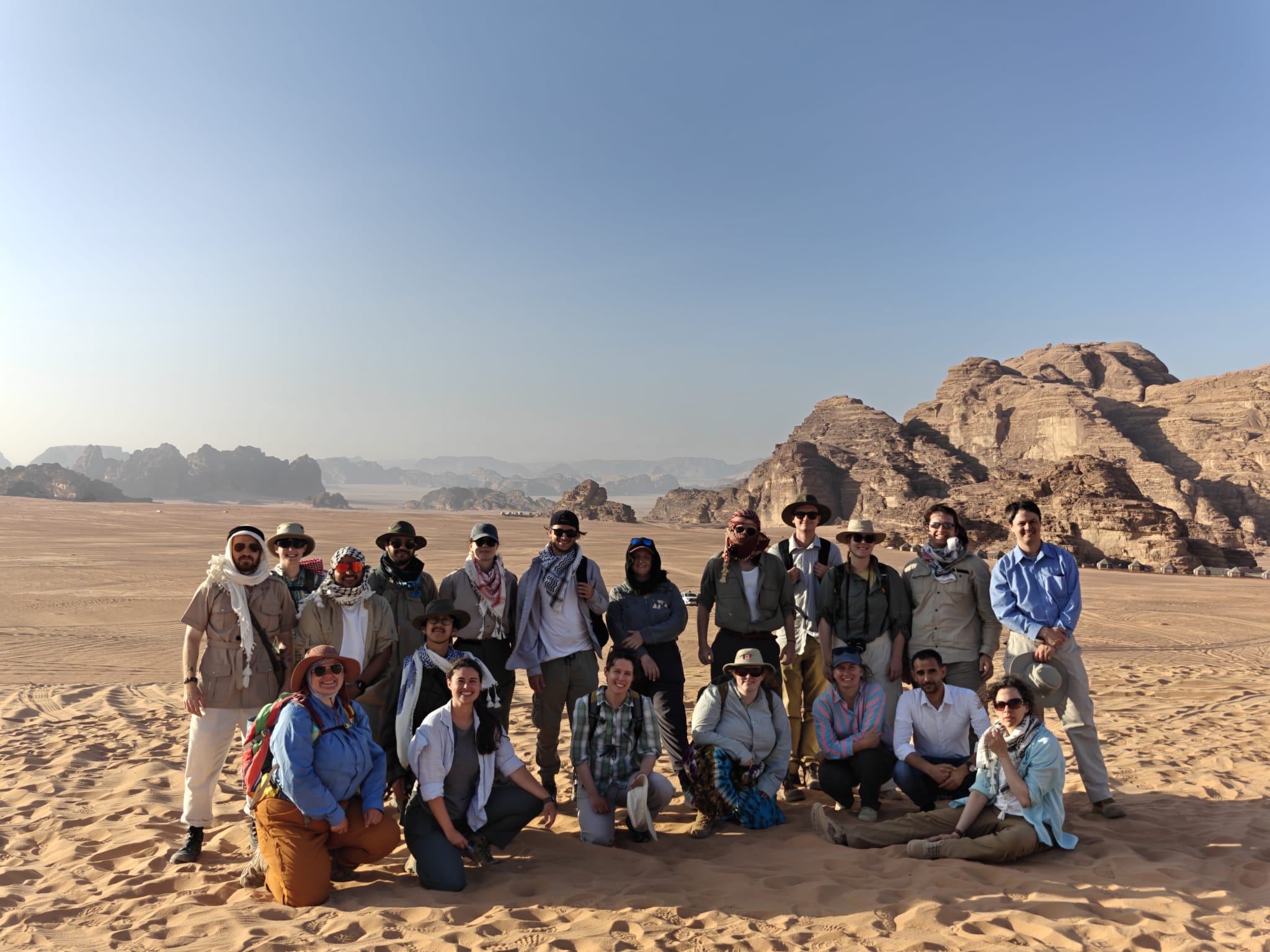
The 2025 Humayma Excavation Project team at Wadi Ramm

2025 Mussell Fellowship Winner Anjali Kanda

Situated halfway between Larnaca and Limassol, the site of Kalavasos-Ayios Dhimitrioswas once a prominent urban centre during the Late Cypriot IIC (c. 1340–1200 BCE) period [1].  In modernity, the site is divided by the A1 motorway corridor which connects Nicosia and Limassol, resulting in three zones which were extensively excavated as part of the Vasilikos Valley Project: the Southeast Area, which contains domestic rubble architecture; the Central and East Areas; and the Northeast Area, where monumental mudbrick architecture and ashlar masonry supports theories that this area contained the centralisation of elite power at this settlement [2]. The Kalavosos and Maroni Built Environment (KAMBE) Project builds on this previous fieldwork –– specifically excavations led by Dr. Allison South from 1979–1998 –– and seeks to investigate the relationship between emerging urbanism and social changes of Late Bronze Age Cyprus [3]. As a member of KAMBE’s University of British Columbia team, I had the opportunity to excavate at Kalavasos-Ayios Dhimitrios from June 2025 – July 2025, under the direction of Dr. Kevin Fisher.

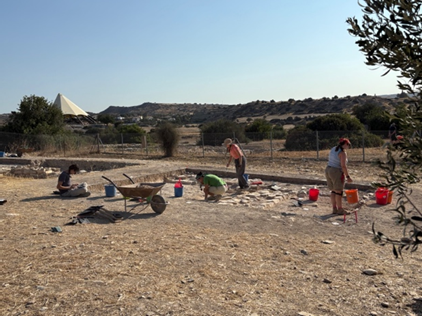
Previous seasons excavating in the Northeast Area, specifically Building XVI Unit 7, yielded evidence for ritual and feasting activities: this included deer skulls, Triton shells, wall brackets, and a circular stone feature. During the four weeks of the 2025 excavation, I worked predominately in a new trench, Unit 7 South Court. Surveying with ground-penetrating radar (GPR) of this area indicated the presence of possible architectural features, particularly thick exterior walls; resultantly, we laid out the parameters with intention to capture these features. By our final day on site, the trench measured 5 m by 8.5 m.

In South Court, we pickaxed and trowelled through three sediments –– topsoil, transitional mudbrick, and mudbrick –– before reaching the plaster floor. Actually digging through these layers gave me a richer understanding of the texture, colour, and compaction of this stratigraphy in a way merely reading about them doesn’t offer. This became particularly evident as we reached the floor level, and sometimes had to rely on sonic cues (the sound emitted when scraping a trowel across a surface) to differentiate between the compact grey-ish mudbrick and the white-grey plaster. Furthermore, as suggested by the GPR, our excavation revealed notable exterior walls, one of which ran East to West and another along the Eastern baulk, from North to South; both were roughly 1 m thick. The North–South wall aligned with sections of the exterior wall which were excavated in Rooms 1 and 3 –– trenches north of South Court. Other discoveries included ceramic sherds, slag, charcoal, unidentified pieces of bone, and a nearly 2 m long gypsum bench in the Northeast corner of the trench, positioned in front of the Eastern wall.

My participation in KAMBE was my first archaeological field experience, and from the first to final day on site I received a well-rounded education in the necessary procedures involved in excavation. This ranged from answering my questions surrounding how to start (the answer: with large pickaxes and shovels) to training in on-site data recording, such as photogrammetry, filling context sheets, and labelling bags for finds. These more administrative tasks were woven into the day-to-day aspects of digging on site and were integral to maintaining organised and accurate data collection as well as an overall smoother chain of operations.

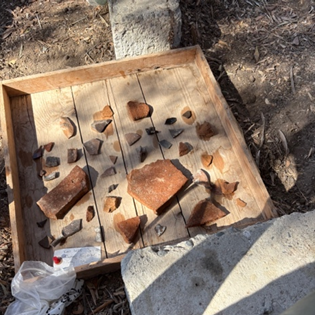
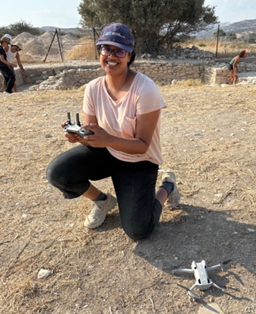
Not only did I train extensively in the methodologies of excavation, but I also gained experience in post-excavation processing techniques. As both trenches accumulated ceramic finds, we engaged in pottery washing off-site. Through this, we were able to identify the fabric of the sherds, which included White Slip, cooking ware, and even Mycenaean pottery. Additionally, we learned how to use flotation for soil samples. As digging drew to a close, we also learned how to hand sketch trench profiles and use drones to capture aerial images (pictured above). Moreover, our education didn’t stop as we wrapped-up digging, nor did it end with the workday: as part of the KAMBE experience, we were fortunate to engage in weekly trips to numerous archaeological sites around the island, from Paphos to Larnaca, and from the Troodos Mountains to Nicosia. We also immersed ourselves in Cypriot culture and customs throughout our stay in Kalavasos village, where the local people kindly hosted and fed us for the month.

I am thankful to the KAMBE Project for a thorough and versatile education in the practices of archaeological field work, as well as the ancient and modern culture of Cyprus, and I am grateful to CASOR’s financial contribution for supporting my first field experience. I am certain this opportunity will be an invaluable supplement to my knowledge as I progress in my academic career.

References

[1] Fisher et al. 2019: 477; South 1997: 151.

[2] Fisher et al. 2019: 478–79; South 1997: 151.

[3] Fisher et al. 2019: 473–477.

Bibliography

Fisher, Kevin D., Sturt W. Manning, and Thomas M. Urban. “New Approaches to Late Bronze Age Urban Landscapes on Cyprus: Investigations at Kalavasos-Ayios Dhimitrios, 2012–2016.” American Journal of Archaeology 123, no. 3 (2019): 473–507. https://doi.org/10.3764/aja.123.3.0473.

South, Alison K. (1997). “Kalavasos-Ayios Dhimitrios 1992–1996.” Report of the Department of Antiquities, Cyprus: 151–75.

2023 Mussell Fellowship Winner Emily Morrish

Background

The Kalavasos and Maroni Built Environments (KAMBE) Project is an interdisciplinary project that seeks to investigate social change and interaction in an urban environment in Late Bronze Age Cyprus.[1] During the 2023 excavation season, I worked at the site of Kalavasos-Ayios Dhimitros in the Vasilikos River valley near the south-eastern coast of the island to assist in collecting excavation data.

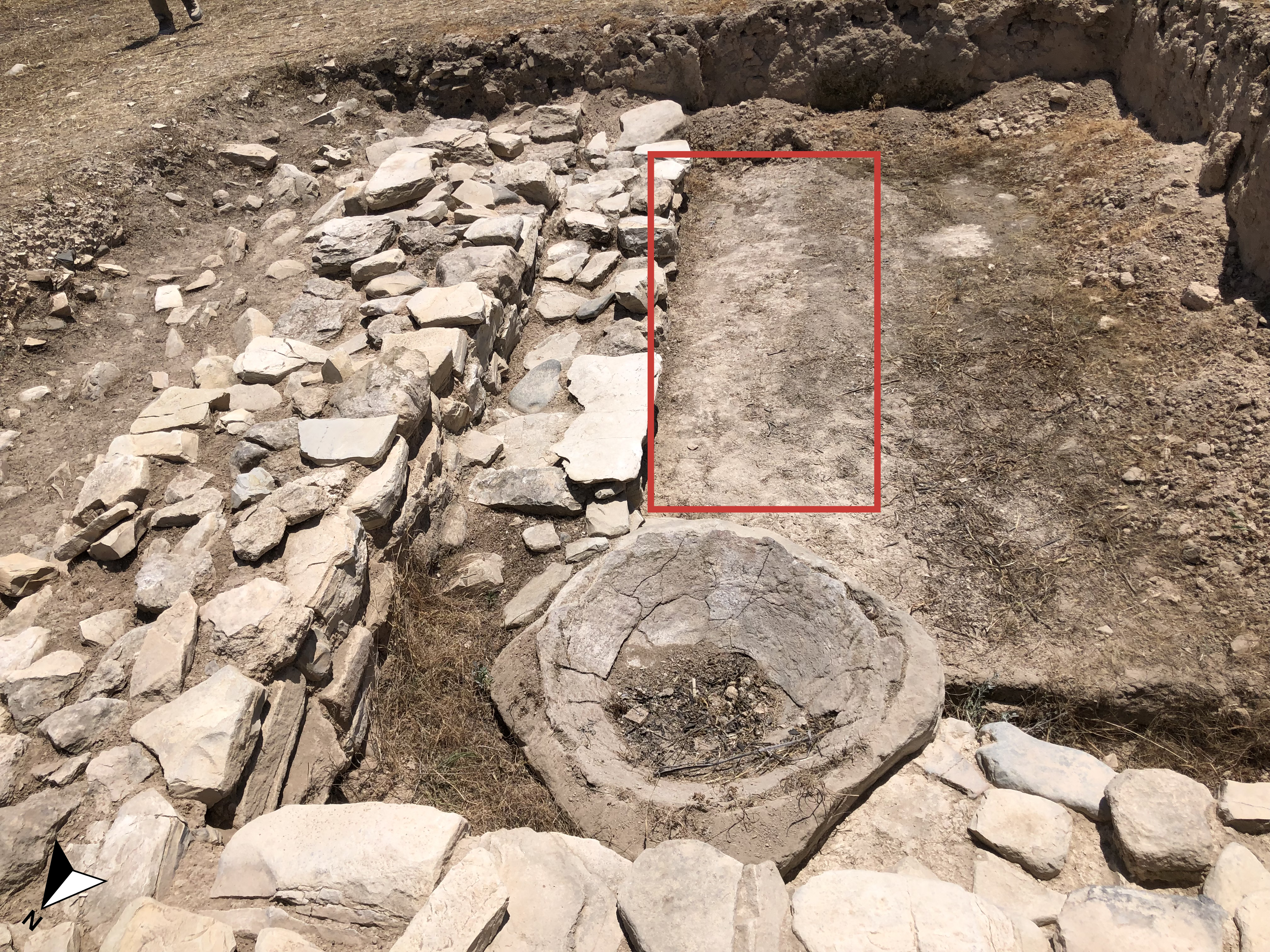
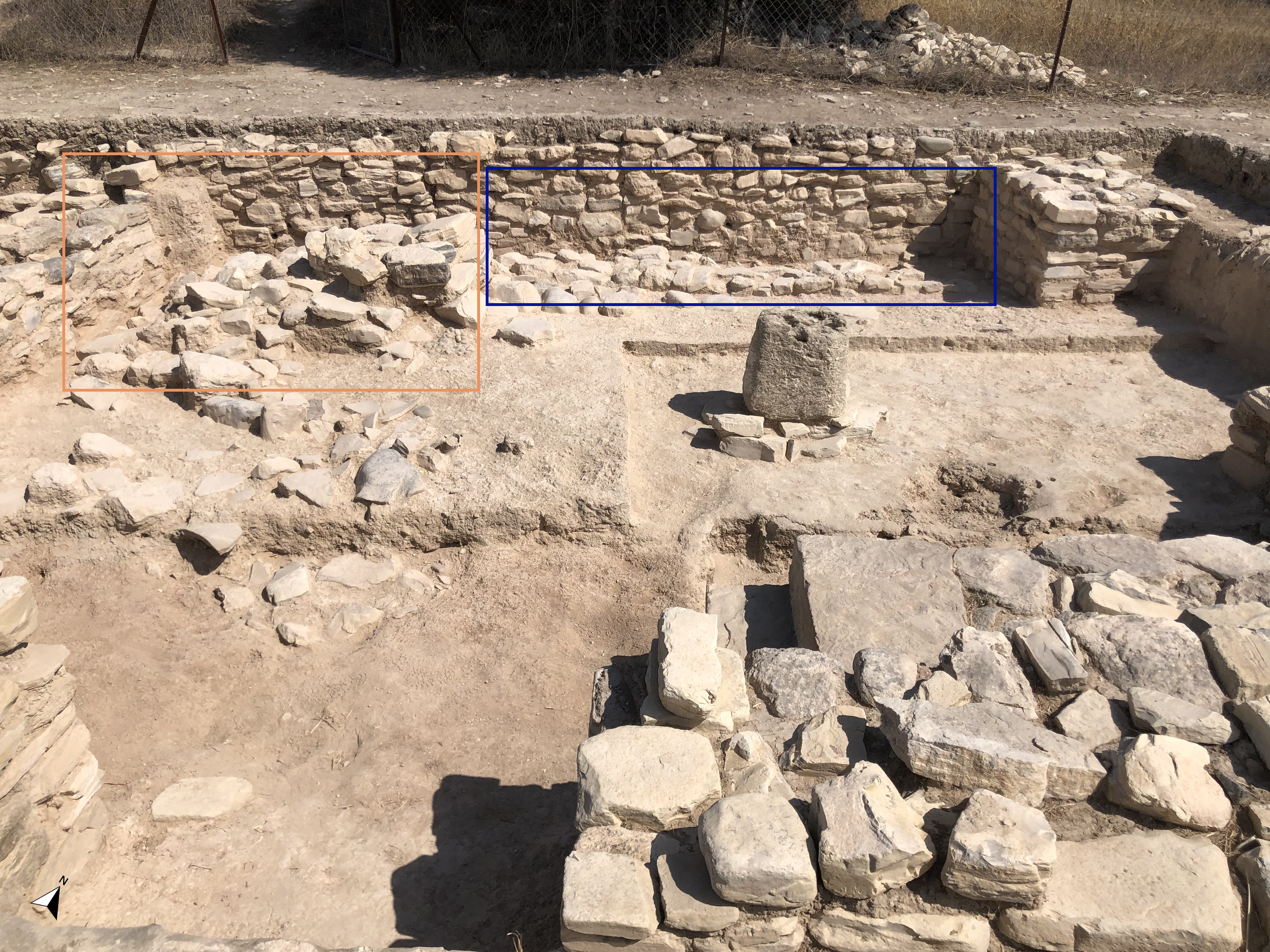
Two trenches were excavated during the 2023 excavation season. One trench was a continuation of previous work originally begun in 2012[2] in Unit 7 Building XVI Room 2. This room is one of two smaller rooms on the north end of the building which adjoin to a central square room. One other smaller room adjoins to the court’s south side (see Fig. 1, below).[3] Previous excavation had already exposed the south half of Room 2 and some of a circular stone feature in its north-west area. I primarily worked to excavate Unit 7 Building XVI Room 2 with the goal of articulating the circular stone feature and removing material to floor level.

Methods

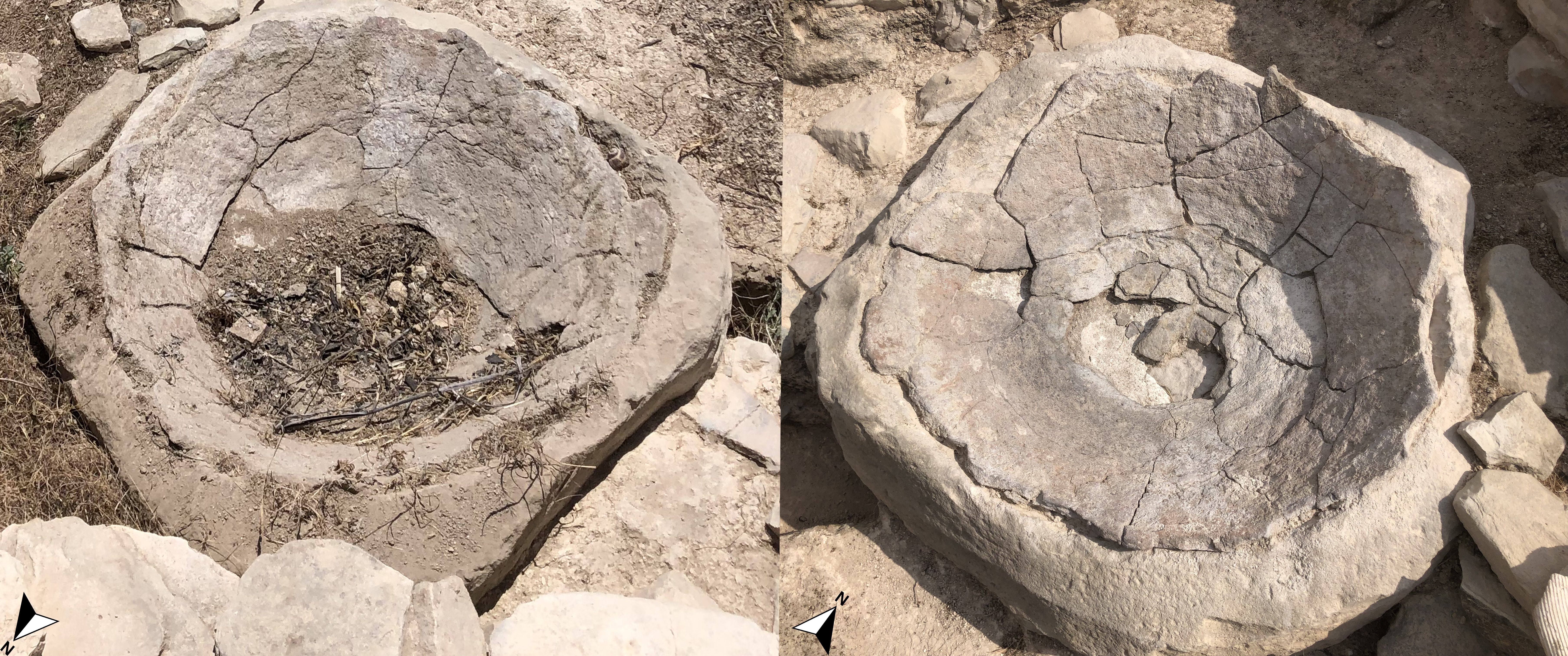
While excavation of artifacts and exposure of architecture in Unit 7 Building XVI Room 2 was the primary method of sample collection, a variety of tools and methods were additionally used to achieve project goals, including sieving (100% of removed material), flotation, and targeted sample collection for residue/starch analysis and C-14 dating. At the beginning of the excavation season, initial cleaning and maintenance of previously excavated trenches was undertaken. I was responsible for cleaning some ashlar masonry present in the Pithos Hall of Building X as well as the East wall, plaster floor, and basin in Unit 7 Building XVI Room 1 (Figs. 2-4, below). I also helped with registrar work to classify, process, and inventory finds according to the needs of the project while adhering as closely as possible to care and handling guidelines set forth by the Canadian Conservation Institute.

Fig. 2. Basin before (left) and after (right) cleaning. Soil and moisture accumulation invited vegetative growth which compromised the adhesion of the fragmented ceramic basin lining to the stone basin exterior. Soil hid evidence of ceramic delamination due to moisture and temperature fluctuations.
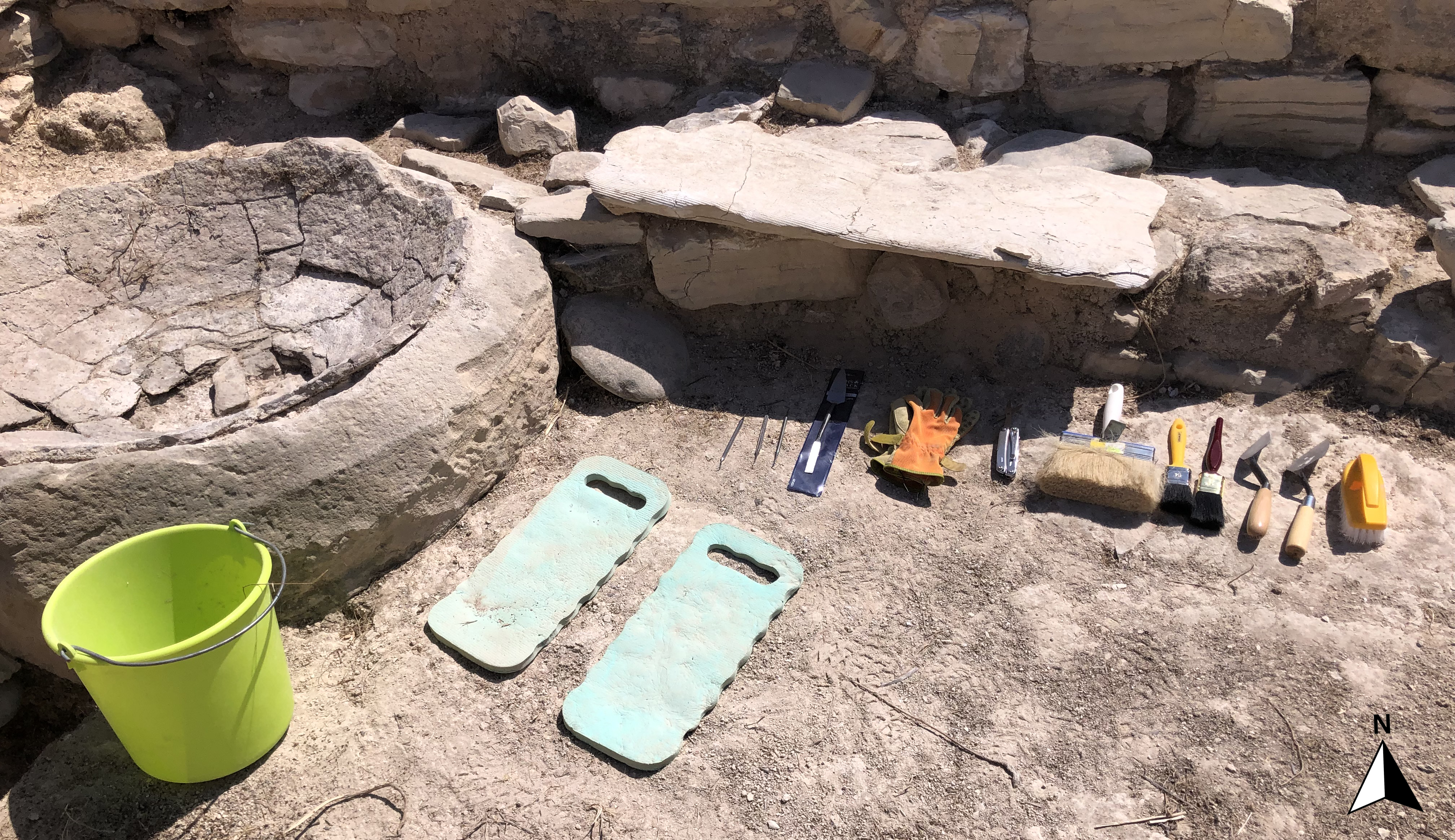
Fig. 3. Tools used to clean basin, including dental picks, trowels, a multi-tool, and an assortment of brushes.
Fig. 4. cleaning basin

Finds

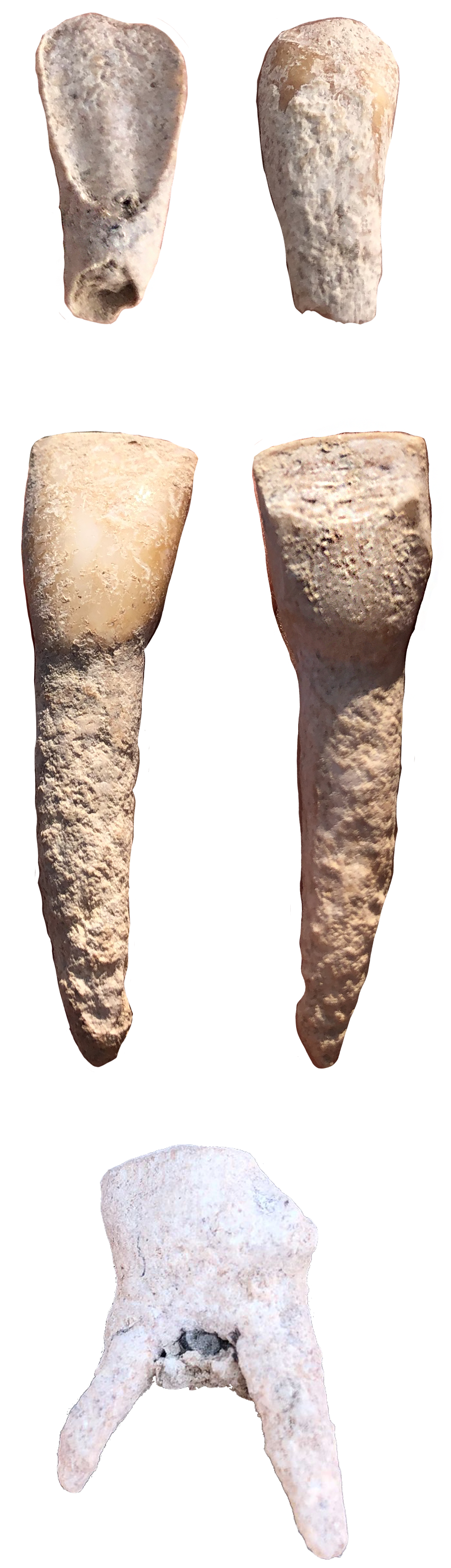
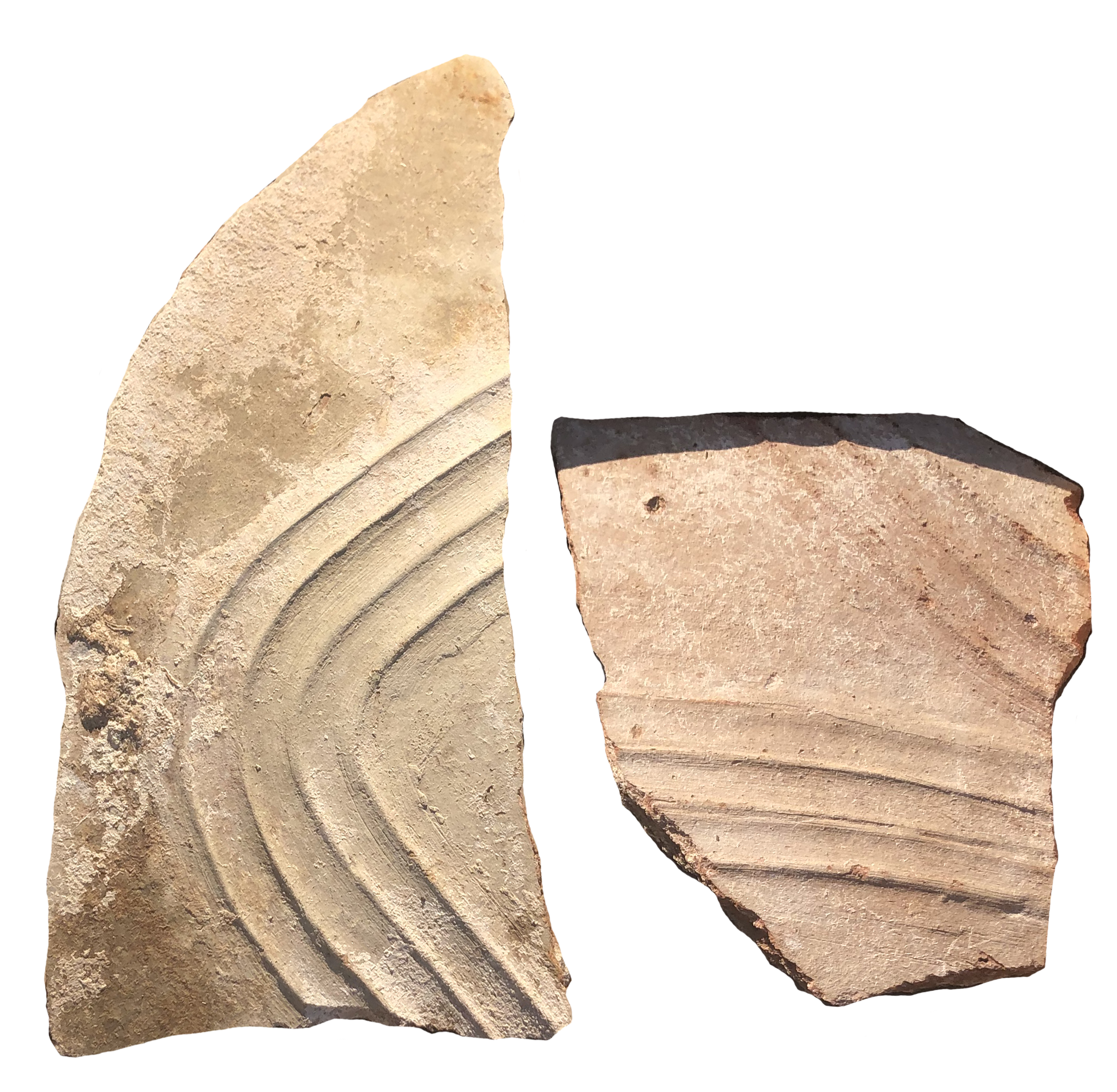
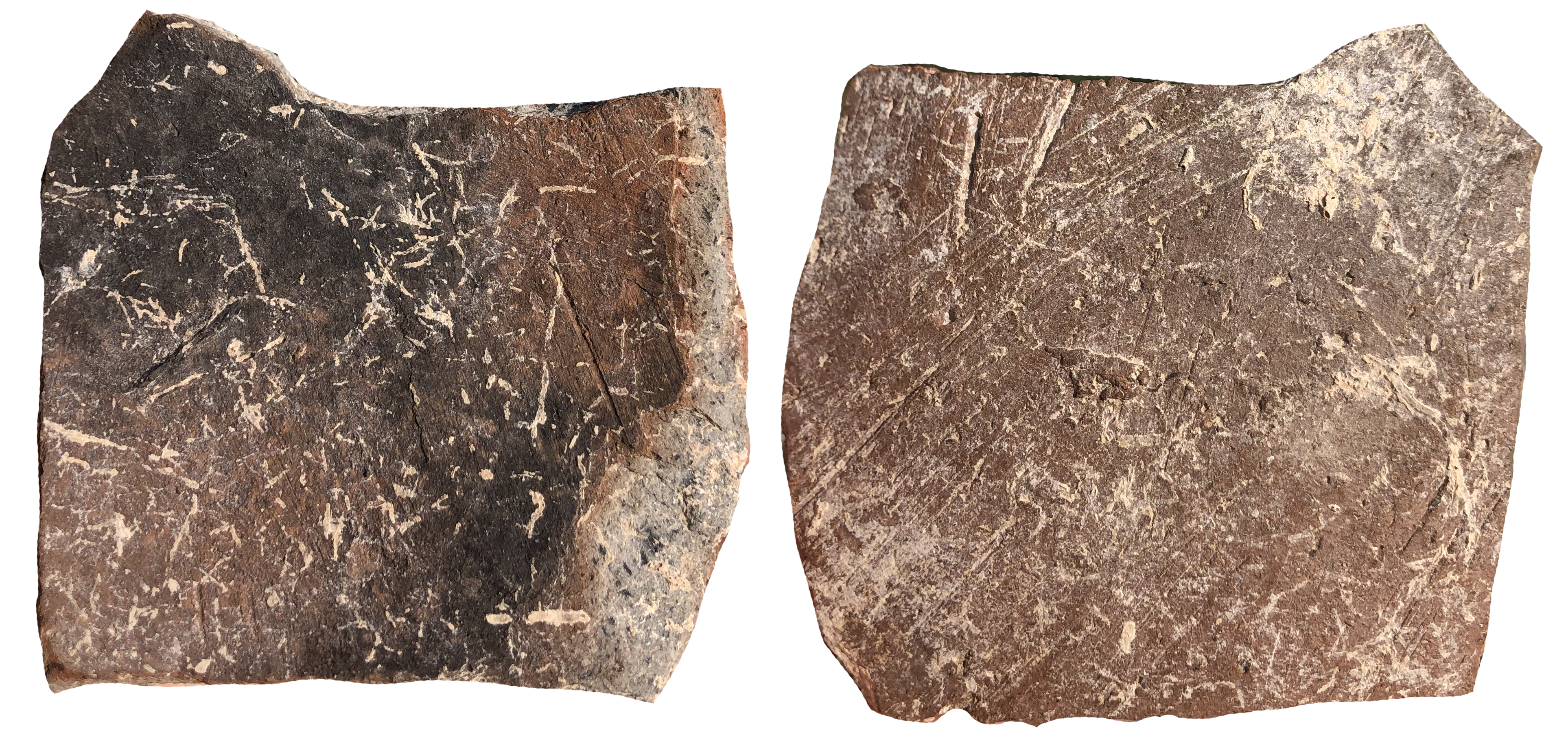
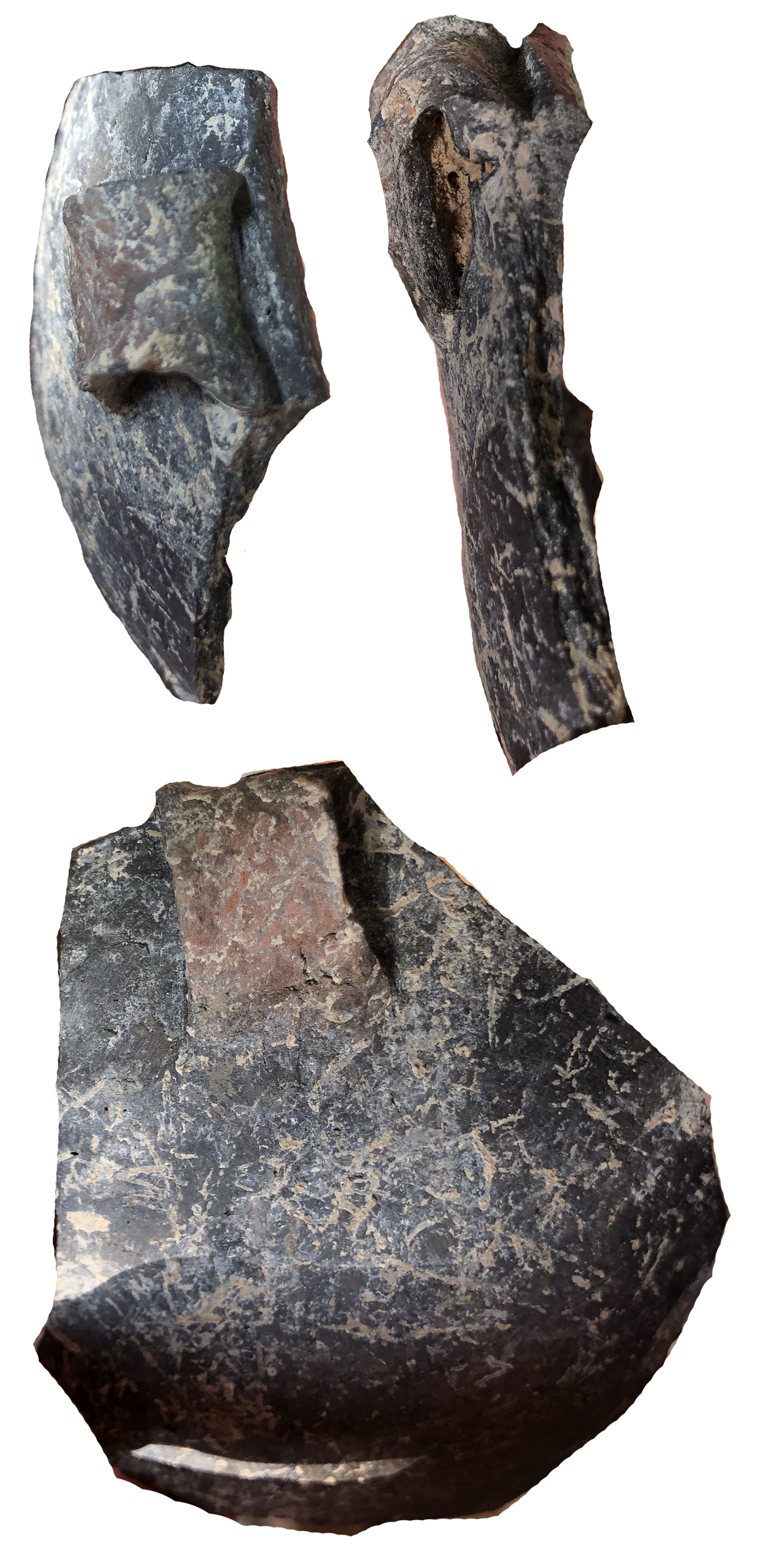
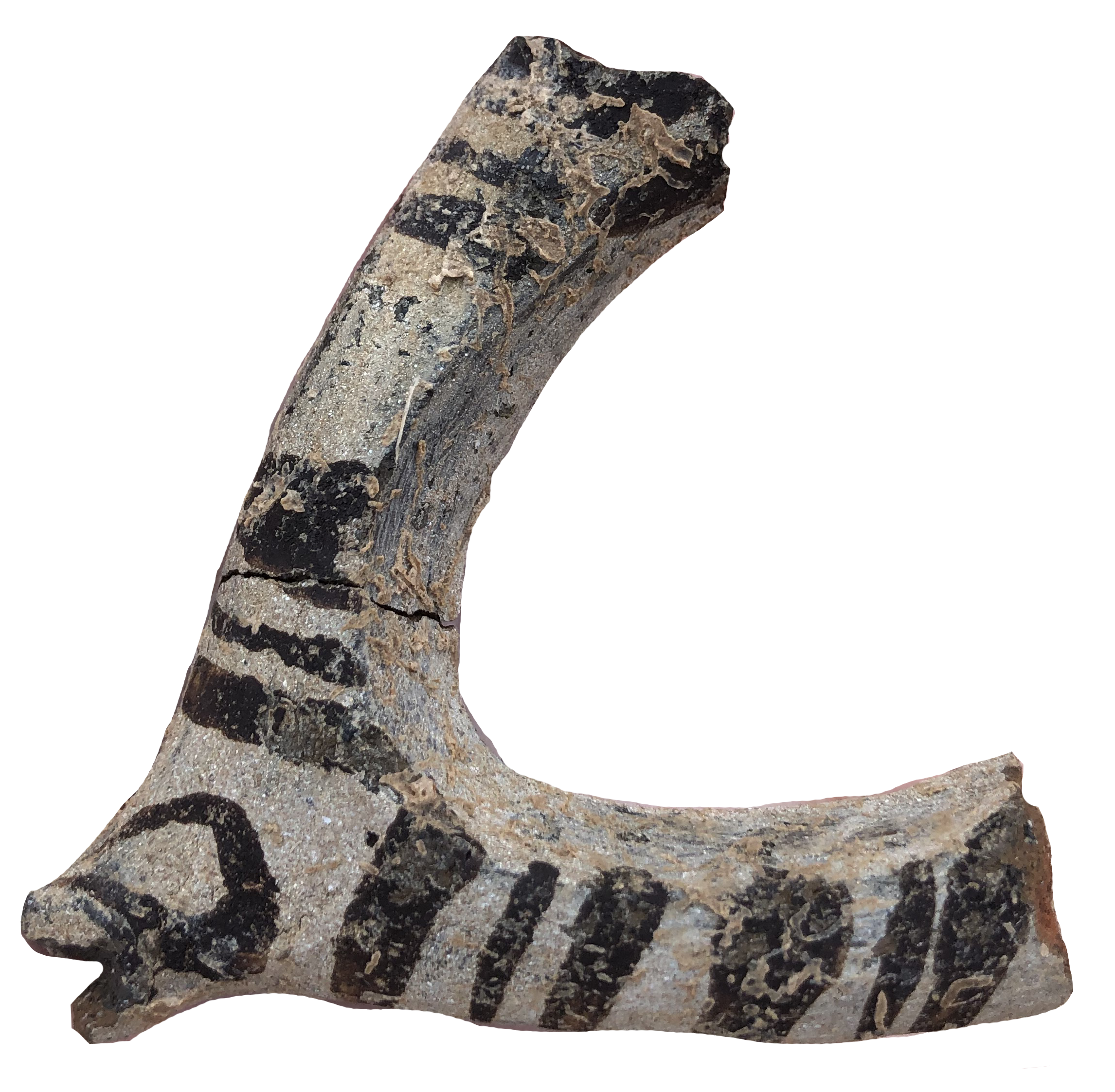
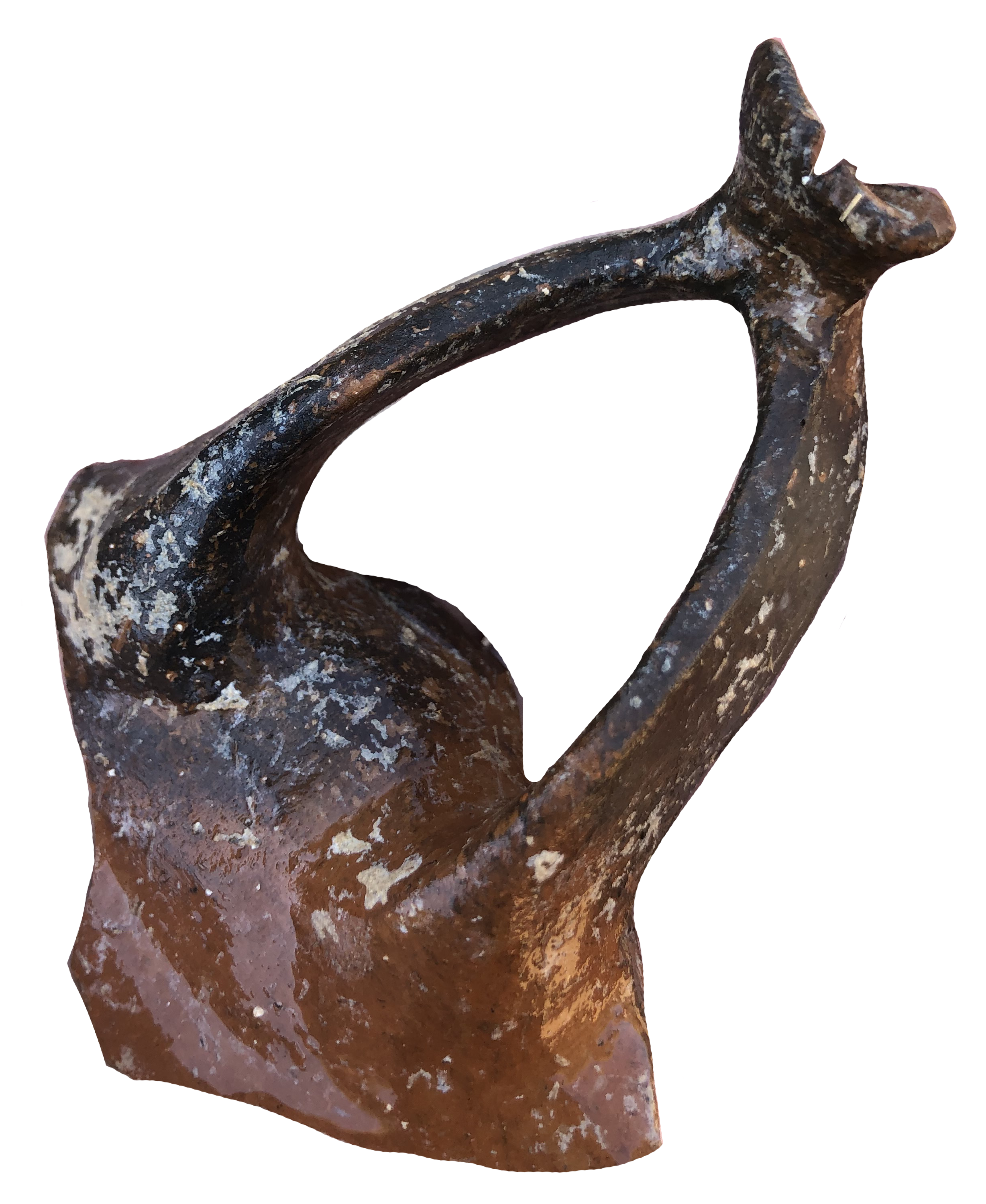
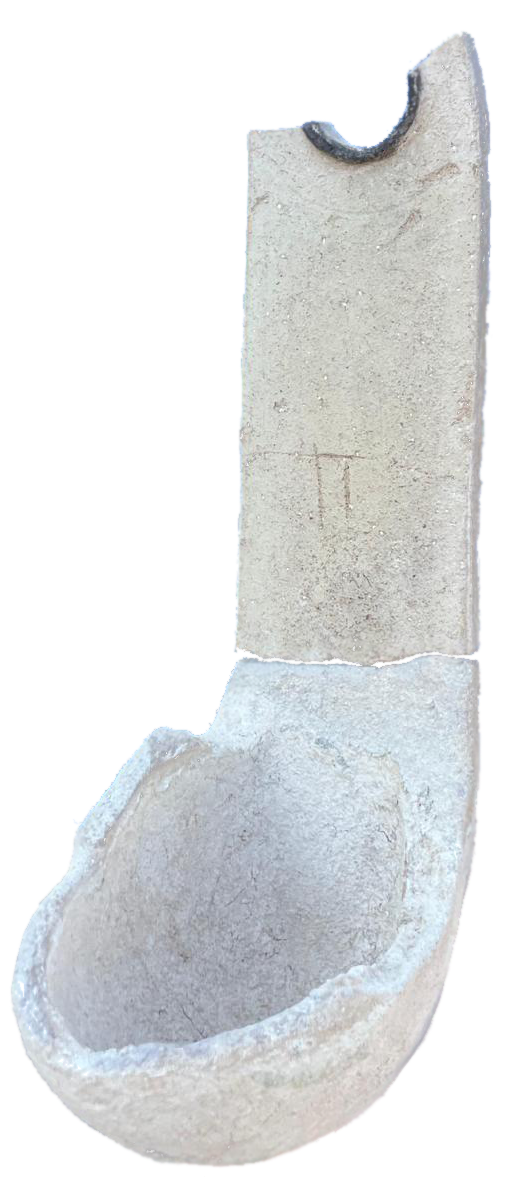
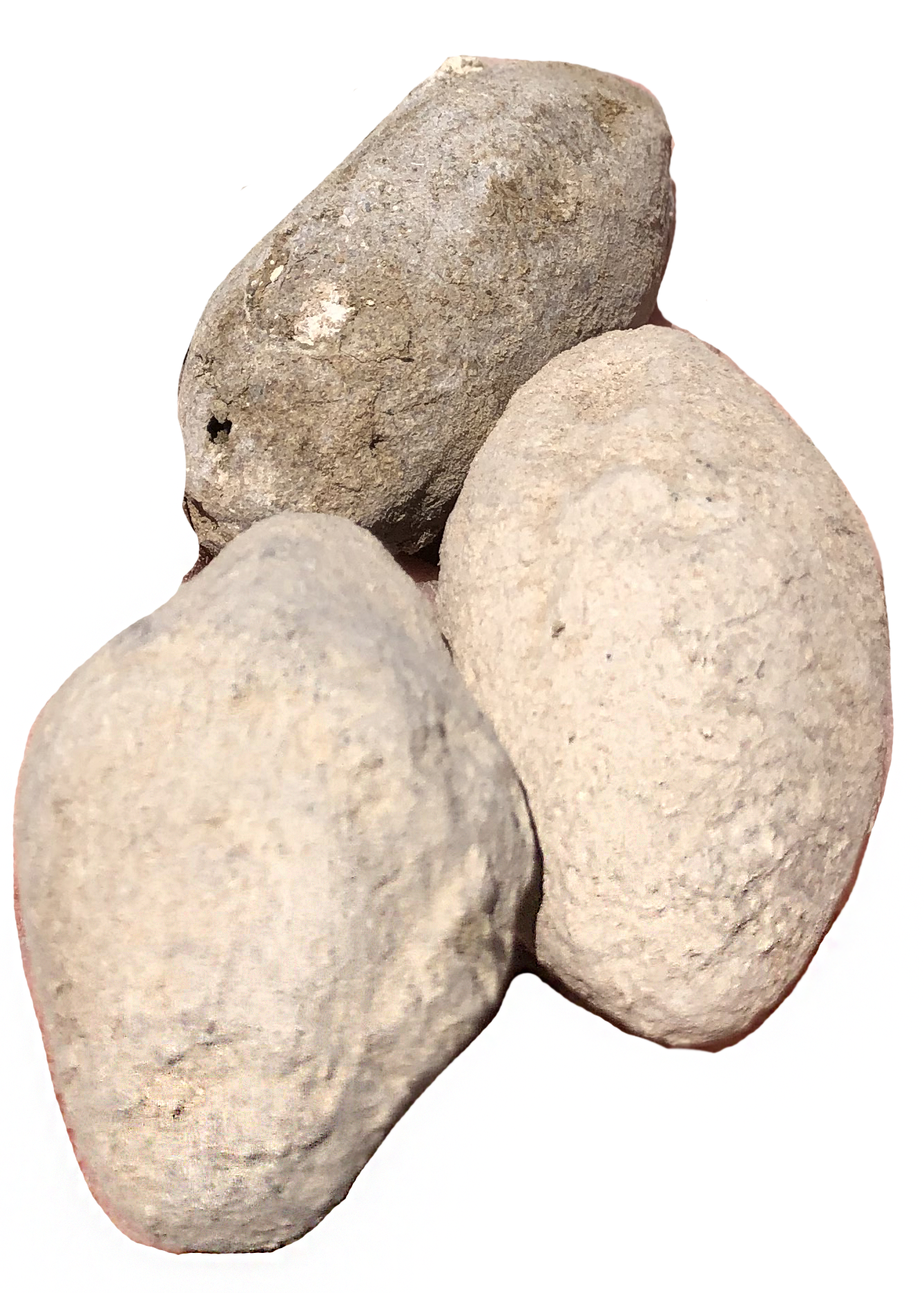
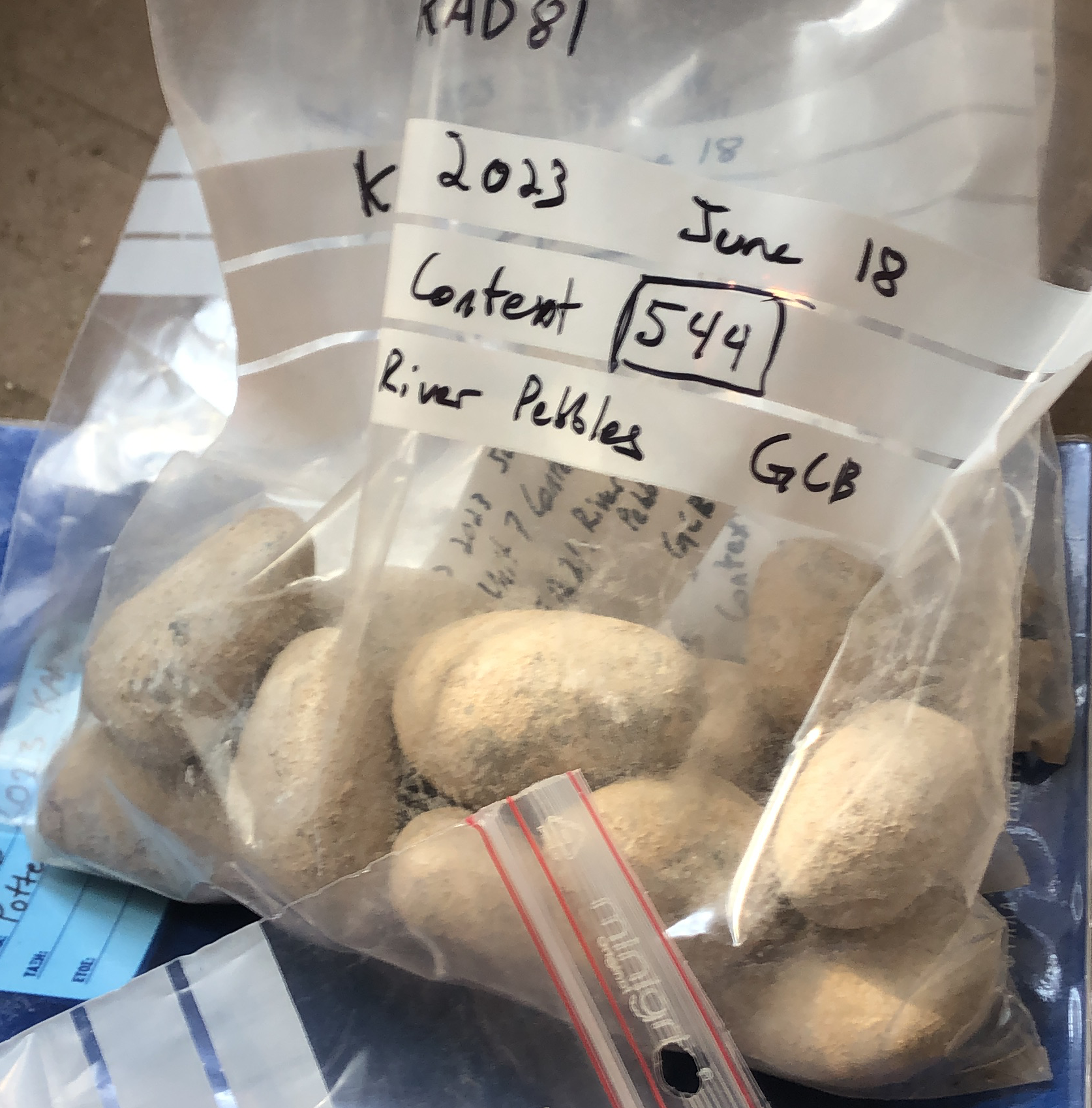
A large amount of cervid bone, antler, and teeth (Fig. 5, below) as well as a smaller amount of avian bone and other unidentified bone was excavated primarily on the south side of Unit 7, in context 547 (see Fig. 18, below). A great assortment of pottery was excavated, including a large number of sherds from very large storage pithos decorated with raised wavy lines (see Figs. 6 and 7, below), White Slip II sherds (see Figs. 8 and 9, below), a polished-ware jug (Fig. 10, below), coarseware, cookware (Fig. 11, below), a handheld lug-handled black polished ware cup/bowl (Fig. 12, below), White Slip II and Base Ring ware wishbone handles (Figs. 13 and 14, below), and Base Ring ware sherds. Some of the pottery was inscribed in characters from the Cypro-Minoan (CM) syllabary, such as a Base Ring ware cup base and a pithos handle inscribed with CM sign 78[4] before firing. Other notable finds include fired clay wall brackets, possibly used to hold incense or as lamps. One wall bracket was decorated with an incised wavy line before firing (Fig. 10, below). A wall bracket bowl was successfully refitted to a wall bracket fragment, slipped and also incised with CM sign 78 (after firing), that was excavated in a previous season (Fig. 15, below). A small and thin fired clay fragment potentially representing an eye from a zoomorphic askos was discovered during cleaning. A very large number of oblong objects made of unfired clay, presumed to be sling bullets, were discovered in the south-west corner of context 547 (see Fig. 16, below). These sling bullets vary in weight, length, fabric, quality, state of preservation, and shape (primarily biconical, egg-shaped, pill-shaped, and variants thereof). A heap of uniform river stones, similar in size to the clay sling bullets, was discovered nestled in a pile along the south-east side of the circular stone feature (context 548) (Figs. 17 and 18, below).

A circular stone feature (context 548) discovered in a previous season was further articulated. It was found that the feature extended down to the floor and out to the walls, forming a conspicuous edge on the westernmost extent. A linear stone feature (context 549) was discovered, running parallel yet distinctly not connected to the North wall of Room 2. The linear stone feature is connected to the circular stone feature, and appears to incline very slightly as it approaches the circular stone feature.

Bibliography

Fisher, Kevin. “Background.” KAMBE Project. University of British Columbia. Accessed July 29, 2023. https://kambe.cnrs.ubc.ca/sample-page/.

Fisher, Kevin D., Sturt W. Manning, and Thomas M. Urban. “New Approaches to Late Bronze Age Landscapes on Cyprus: Investigations at Kalavasos-Ayios Dhimitrios, 2012-2016.” American Journal of Archaeology 123, no. 3 (2019): 473-507. Accessed July 29, 2023. DOI: 10.3764/aja.123.3.0473.

Valério, Miguel. “Problems of Cypro-Minoan Paleography: The Case of Sign Shapes 08, 13 and 78.” Kadmos 52, no. 1 (2013): 111-34. Accessed July 29, 2023. DOI: https://doi.org/10.1515/kadmos-2013-0006.

References

[1]     Kevin Fisher, “Background,” KAMBE Project, University of British Columbia, accessed July 29, 2023, https://kambe.cnrs.ubc.ca/sample-page/.

[2]     Kevin D. Fisher, Sturt W. Manning, and Thomas M. Urban, “New Approaches to Late Bronze Age Landscapes on Cyprus: Investigations at Kalavasos-Ayios Dhimitrios, 2012-2016,” American Journal of Archaeology 123, no. 3 (2019): 486.

[3]     Fisher, Manning, and Urban, “New Approaches,” 482.

[4]     For examples of safe instances of sign 78, see Miguel Valério, “Problems of Cypro-Minoan Paleography: The Case of Sign Shapes 08, 13 and 78,” Kadmos 52, no. 1 (2013): 118.

2019 Mussell Fellowship Winner Safia Boutaleb

In June of this year, with the financial support of the Mary Louise Mussell Student Travel Fellowship, I travelled to Cyprus to excavate Kalavasos-Ayios Dhimitrios as part of the larger KAMBE Project (Kalavasos and Maroni Built Environments) directed by Dr. Fisher of The University of British Columbia, Dr. Kearns of the University of Chicago and Dr. Manning of Cornell University. My time spent in the field was, as I anticipated it would be, fundamentally life changing. The physical and mental exertion required each day was both exhausting and satisfying and I left Cyprus hoping to be given the opportunity to return the following season. In the following paragraphs, I will provide a brief overview of the site, our methods of excavation and, principally, my academic journey over the course of the season.

Kalavasos-Ayios Dhimitrios is a Late Bronze Age site located on the southern side of the island of Cyprus, near the Neolithic site Kalavasos-Tenta. It was first excavated by Dr. Todd and Dr. South in the 1970s and became part of the KAMBE Project in 2008; with the project’s aim being to assess the spatial relationship between urban sites Maroni and Kalavasos-Ayios Dhimitrios to better understand socio-economic interaction on the island during the Late Bronze Age. Kalavasos-Ayios Dhimitrios is most remarkable for its monumental architecture and use of ashlar masonry, which, thus far in its excavation, is best exemplified in Building X.

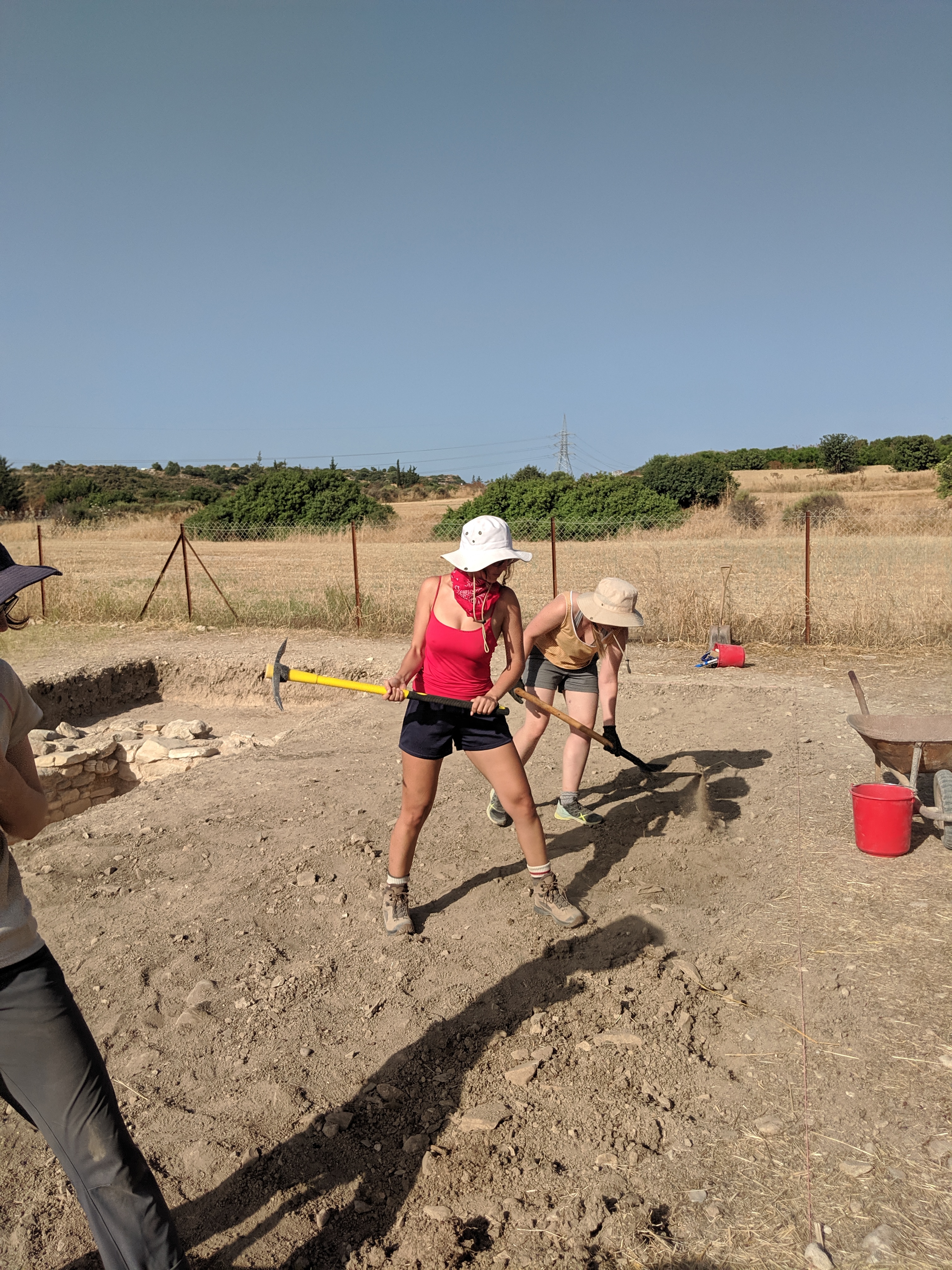
The 2019  season’s  excavation focused primarily on Building XVI in Unit 7 and the plaster road in Unit 3, which were both situated to the south-west of the site. Building upon excavation from the 2015 season, we expanded Unit 7 by opening a new trench north-adjacent to the existing one to expose what we believed (correctly) would be the remaining interior of the north room. Unit 7 was in many ways the perfect stepping stone for beginner archaeologists like myself because it gave us experience both analyzing a previously excavated trench (the first half of the Building XVI’s north room) and opening a new one (the second half of the room). We learned how to measure and delineate the borders of a new trench and excavate and record each pass. We also learned how to adapt our excavation technique to our environment and circumstances; such as when we reduced our trench size to accommodate for time restriction. This reduction allowed us to reach the “floor” of the north room, a feat that would have been nearly impossible in the time given with our previous 6 x 4 metre trench. This resonated with me, as I now believe archaeology to be a rare discipline in which scientific method and adaptability hold equal importance.

My education, however, did not stop at the end of each working day; the local Cypriots possess a distinctively Mediterranean culture and I thoroughly enjoyed learning the Greek language and customs, even if it meant occasionally stumbling over their syntax. I was also delighted to dine each night with students, like myself, from universities across North America and the KAMBE directors. I will admit, in the beginning it was a bit surreal for me to realize the person I had been casually chatting with over dinner was a professor I had cited multiple times in my own academic papers. There were specialists in broad topics such as Cypriot Archaeology, as well as specialists in narrower fields like Geoarchaeology and Dendrochronology. Never before had I ever been surrounded by so many diverse, yet like-minded people and I believe myself to be the wiser for knowing each one of them. Prior to my departure, I was certain that I would find myself in the field and I am glad to say that my instincts were correct. I grew to admire many aspects of the field; particularly the juxtaposition of physical labour and meticulous documentation that went into each excavated pass. I appreciate CASOR’s generous contribution to my first field school and I look forward to the future as I intend to immerse myself in archaeology any way I can.


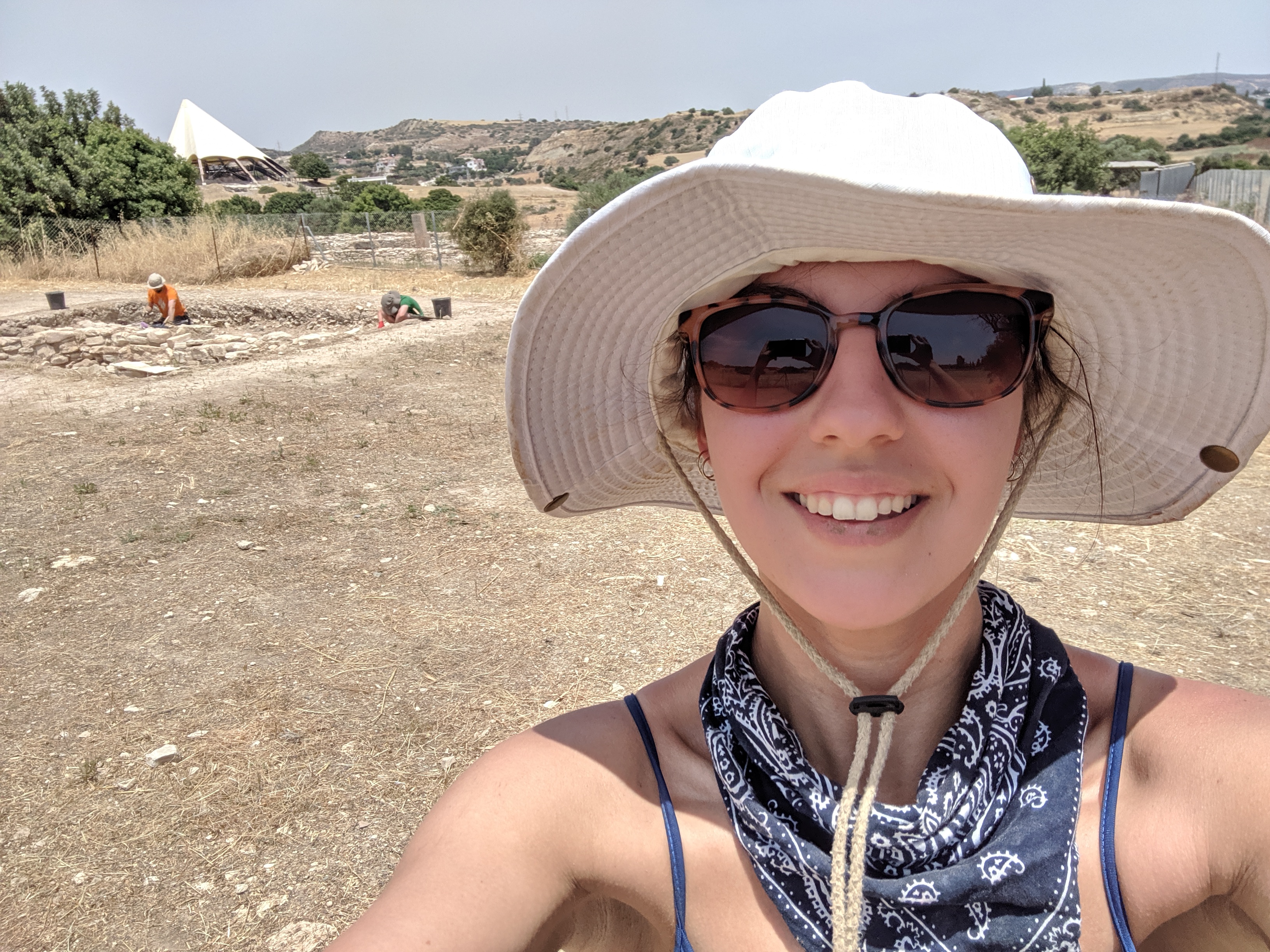
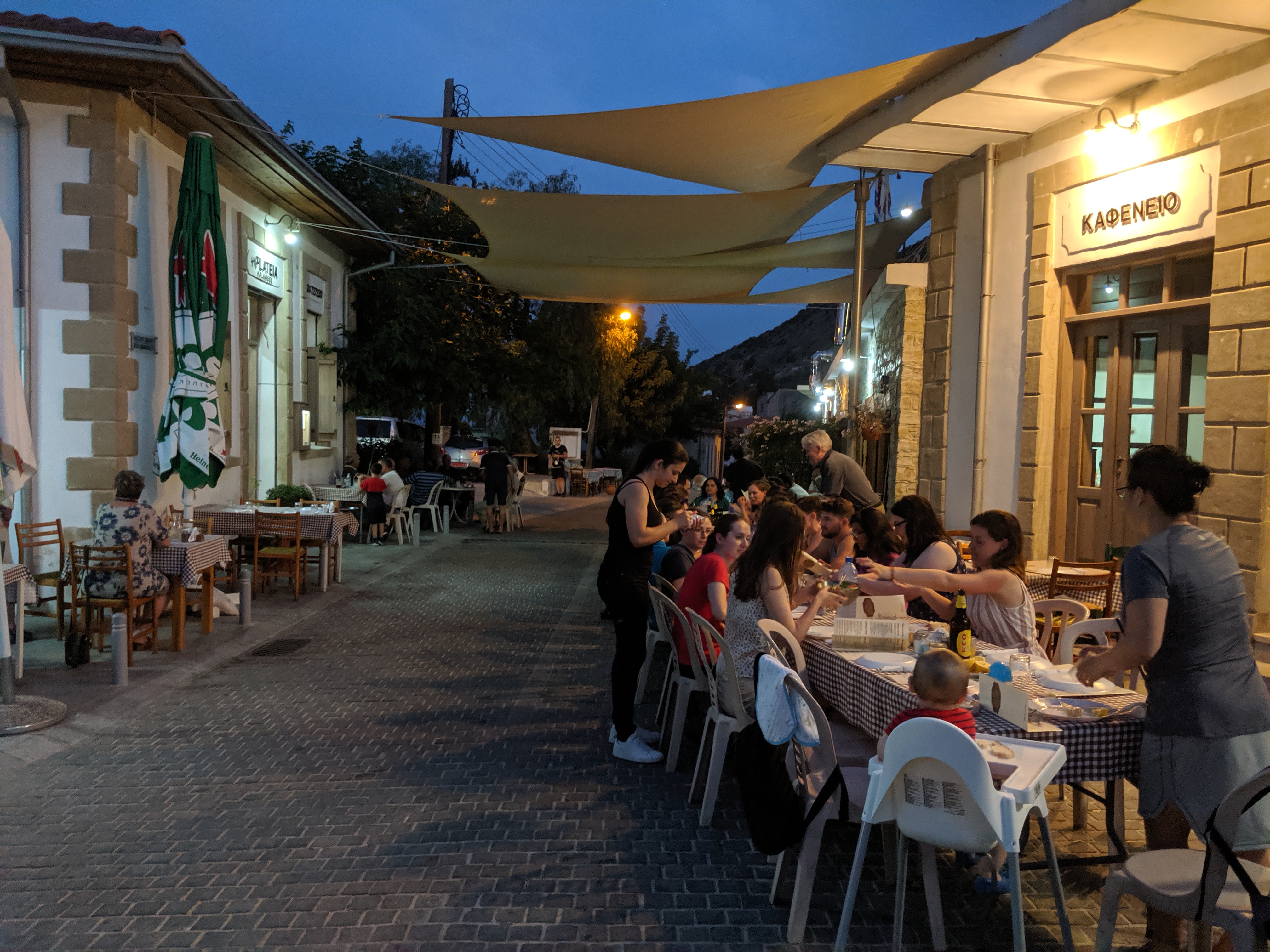
A typical dinner in Kalavasos
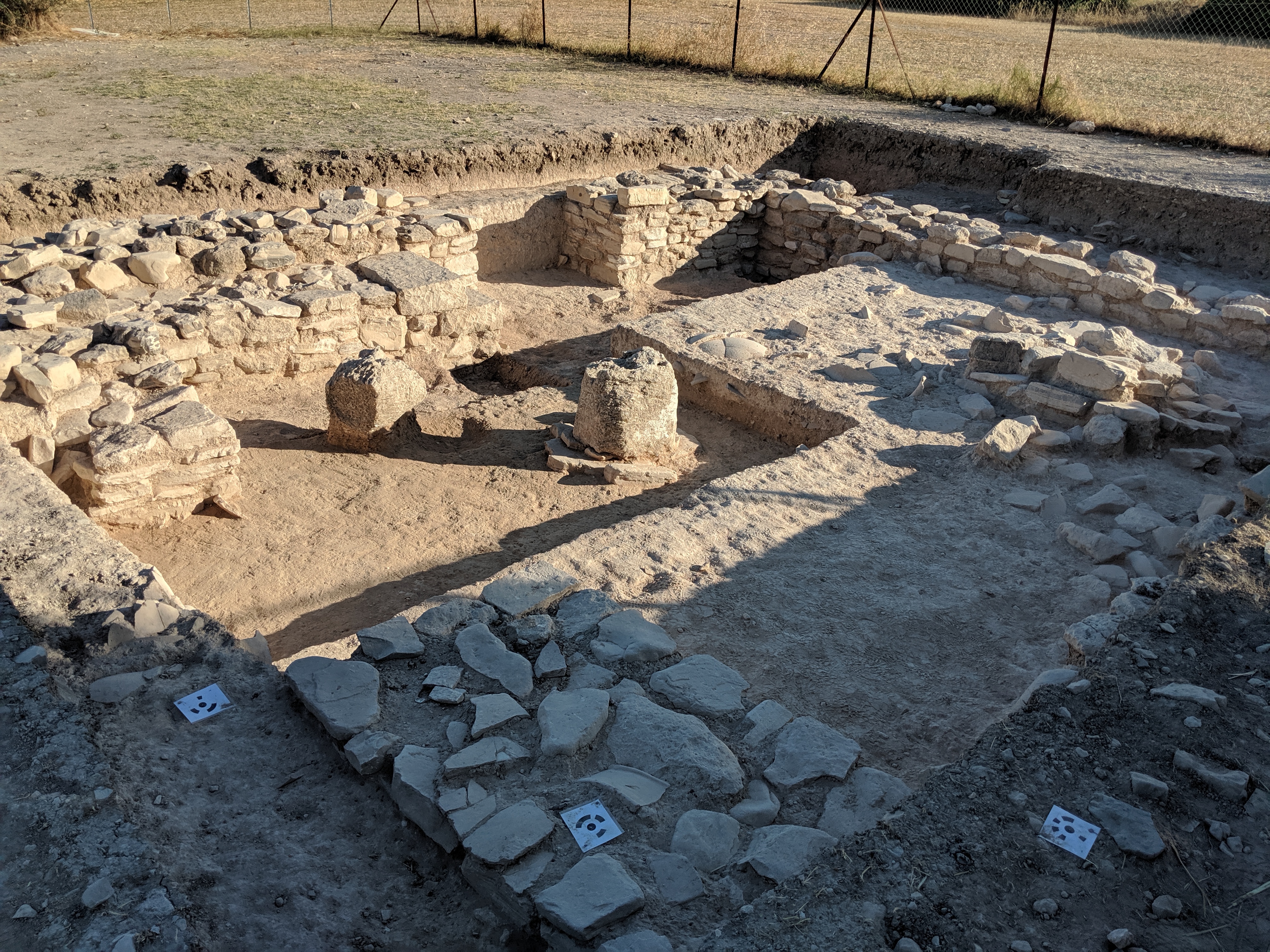
Facing south west towards Unit 7s Building XVI on final day of excavation

2018 Mussell Fellowship Winner Ryan D. Schroeder

Before this summer, I had already completed graduate coursework in the study of religion, the ancient Near East, and early Judaism, as well as courses dealing with Eastern Mediterranean archaeology. What I lacked was first-hand experience on an excavation in the Middle East. With the help of the CASOR Mary Louise Mussell Student Travel Fellowship, I participated this past July and August in the Horvat Midras Field School run by Dr. Orit Peleg-Barkat of the Institute of Archaeology of the Hebrew University in Jerusalem and Dr. Gregg G. Gardner of the Department of Classical, Near Eastern, and Religious Studies at the University of British Columbia (UBC). This program brought together mostly undergraduate students from the Hebrew University and UBC to work with Dr. Peleg-Barkat’s excavation staff and other volunteers at Horvat Midras in the Judaean Foothills in Israel.

At the site of Horvat Midras, located about 40 km southwest of Jerusalem and 30 km east- southeast of the Mediterranean coast at Ashkelon, there are archaeological remains from several different eras, most notably the Hellenistic, late Roman, and Byzantine periods. The site is particularly important for the window it opens onto a wealthy rural settlement in Roman Idumaea. This year, the third season of Peleg-Barkat’s excavation, the team excavated in three areas. At Area D, a monumental pyramid marks the tomb of wealthy Idumaean inhabitants from the Hellenistic period. In Area B, the focus was on residential quarters and subterranean complexes from the Byzantine period and earlier.

I worked mainly at Area A, on an enormous public building. Earlier excavators thought the structure was a synagogue, and a park sign by its front steps offers tourists and the interested public this interpretation. On the ground beside the sign is a hewn stone that clearly formed part of a niche, which according to the sign indicated a Torah shrine. During our excavations, a group of Orthodox Jewish men and youth paid the site a visit and sang and danced at the ancient entrance to the building (the steps of which had been exposed in a previous season). These visitors may have been disappointed to hear that the current excavators understand the building at Area A to be a late Roman temple, constructed after the Bar Kokhba revolt (ca. 132–135 CE) probably to serve the Roman citizenry at near-by Beit Guvrin. The assessment is based on the pottery assemblage as well as architectural features (e.g., the style of cornice pieces discovered at the site). One goal for the 2018 excavation season was to establish the perimeter of the building, which meant locating the eastern (back) wall.

Along with two archaeology students from the Hebrew University, I was assigned to the northeastern corner of the area, where we hoped to find the exterior wall. After clearing weeds, boulders, and buckets of topsoil, we documented and dismantled make-shift shelters used by pastoralists in the Ottoman and modern eras, and then we worked through a stratum containing ceramics and miscellaneous items (e.g., a smoking pipe and an iron tool, perhaps an adze) from the Mamluk period (ca. 1250–1517). This stratum also showed signs of secondary use of the remains of the Roman building. For example, several cornice pieces of the collapsed building had been oriented vertically, perhaps to serve as bases for wooden posts that supported a roof. The area supervisor suggested we might be looking at the remnants of a Mamluk stable. More buckets of dirt later, my square-mates and I arrived at the large stones that once formed the exterior wall of the Roman building. Time did not permit us to dig in my square to the base of the wall. However, the perimeter of the building has now been clearly identified.

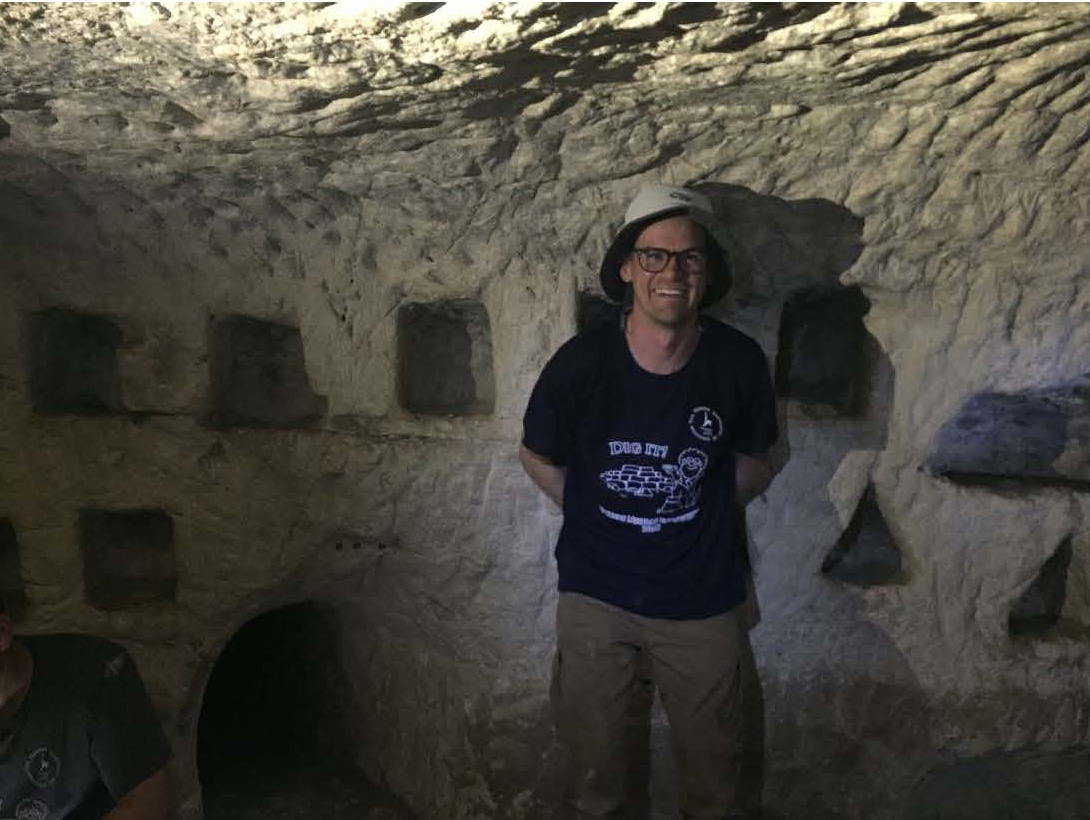
By far the highlight of the trip for me was exploring the caves of the Judaean Foothills. Prior to the Field School, I had no idea about the extent of these human-made underground networks— which contained oil presses, columbaria, storage facilities, purification installations, hideouts, and more. The program included visits to important local archaeological sites, such as Lachish and Maresha (Marissa), as well as to several key sites for the study of religion, with guided tours of Jerusalem (including the Old City and the Israel Museum), Masada, and modern Tel Aviv. This aspect of the program gave me a much better appreciation for the landscape and climate of the region. I took hundreds of photos, which I use already in my work as a Teaching Assistant at UBC. Dr. Gardner invited me to give a talk on my research in the evening lecture series that ran over the course of the dig. I was happy to share my knowledge, but I’m sure I learned at least as much from my undergraduate classmates, both those from the Hebrew University and from UBC. Apart from the formal aspects of the program, I enjoyed practicing Hebrew on my Israeli square-mates, who graciously endured my stammering in biblical Hebrew. The cross-cultural dimension of the trip was deeply rewarding. I am confident that my participation in the 2018 excavation season at Horvat Midras will have a positive and life-long impact on my career. I have an even greater appreciation for interdisciplinary approaches to the study of religion. This experience gave me a deeper understanding of archaeological method and practice, which gives me confidence to integrate material culture into my studies. I look forward to seeing how archaeology can inform my research over the next two years, as I complete my dissertation at UBC.

2017 Mussell Fellowship Winner Savannah Kisilowsky

My name is Savannah Kisilowsky. I am the recipient of the 2017 Mary Louise Mussel Student Travel Fellowship. I currently live in Stonewall, Manitoba with my mother and my two brothers. I graduated in May 2016 with a 3 year General Bachelor of Arts with a major in Anthropology and a minor in Classics from the University of Manitoba in Winnipeg. I returned to school in May for the Summer 2017 semester to pursue a 4 year Honors Bachelor of Arts Degree where I plan on majoring in Anthropology and minoring in Geography. I hope to graduate by the Summer 2018 semester and begin my Anthropology Master’s the following Fall 2018 semester.

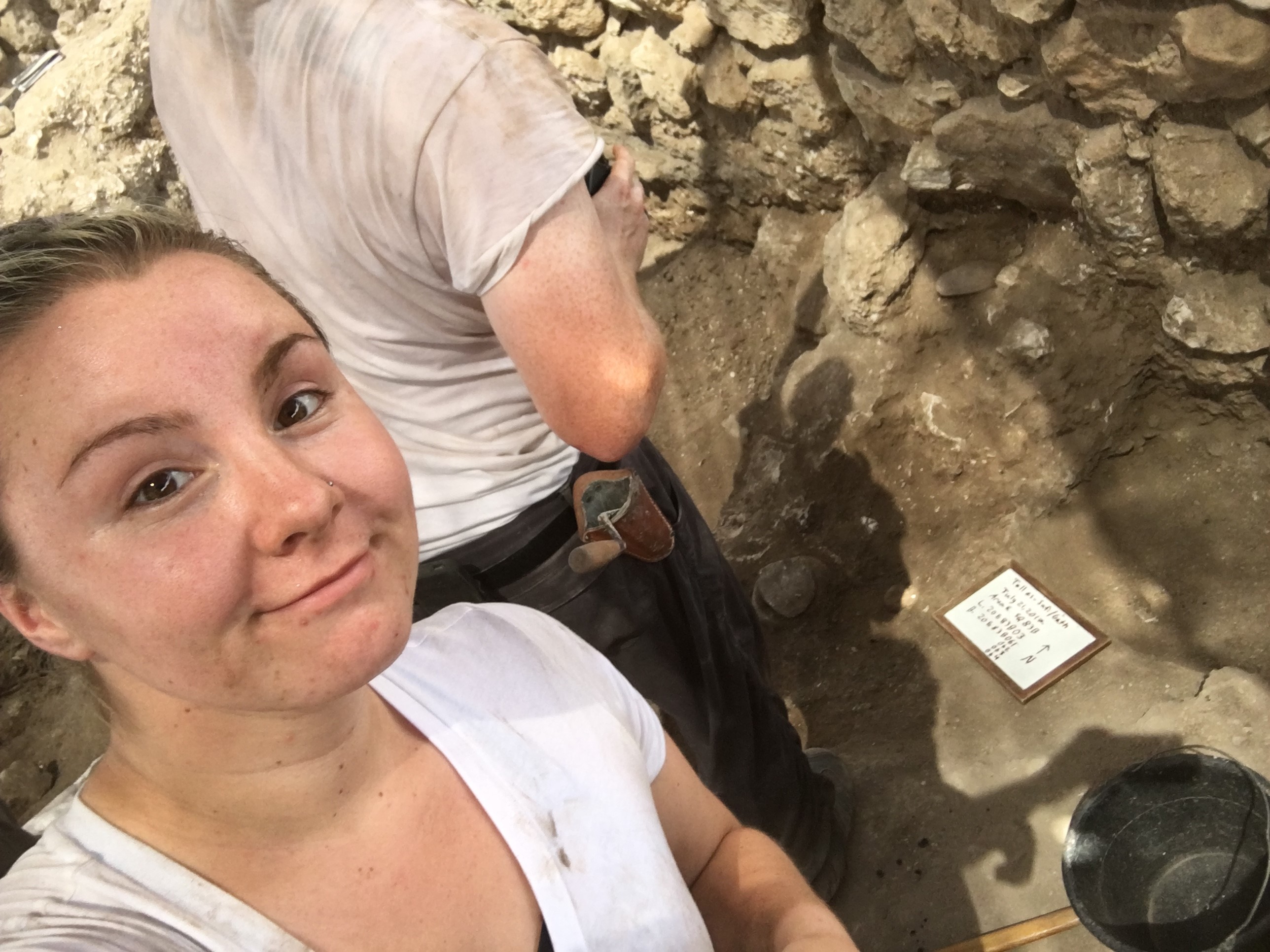
My experience this summer was everything I had set out to do. After taking nearly a year off of school, I decided to return to school. I signed up for Haskel Greenfield’s ANTH 3910 “Archaeological Field Training” course. It took place from July 2 to 28th, and was located in Israel. I stayed in “Neve Shalom” during the week, a kibbutz that was a 45 minute drive away from the dig site. The site I worked in was an Early Bronze Age archaeological site. Tell es- Safi/Gath is a Philistine site, and biblically believed to be the home town of the Philistine giant Goliath. I worked in Area E, under the dig directors of Haskel Greenfield (University of Manitoba), Tina Greenfield (University of Manitoba), Elizabeth Arnold (Grand Valley State University), and Shira Albaz (Bar-Ilan University). Area E was on the upper tell of the site, and was an Early Bronze Age residential area. I dug in square 83A with Tiffany Okaluk-Hildebrand (University of Manitoba) as my supervisor.

In my original application, I had wrote that I believed I would gain experience in archaeology, and that this fellowship would go to support this. I can confidently say that I was able to learn something new every day that I was there, both culturally, academically, and technically. I participated in the actual excavation of artefacts in the field, as well as working in the laboratory, with the various other tasks to do both on and off site. I learned how to complete tasks like flotation, wash and write on pottery, and how to close a site at the end of a season.

During my trip, I kept a personal journal of all the social aspects of the trip as part of the course’s assignments, as well as a field journal to keep more professional archaeological observations in. All of my instructors and mentors provided an overwhelming amount of knowledge daily. I would learn during the time we were on the dig site, during our chores (mainly pottery washing) before lunch, to the nightly lectures and even field trips once a week. On the dig site, I learned a lot of physical techniques. I was taught the proper use behind tools like hoes, shovels, trowels, and different techniques in using them, as well as the reason as to why it is done that way. I was also taught the proper way to excavate different items, as well as what not to do. I was taught the correct methods of cataloguing, how to sort different items from each other, create a tag for, bag, transport, and unpack them into the corresponding boxes back at Neve Shalom. Many of my cultural experiences on this trip were integrated into my daily life by living in the kibbutz. I also had the opportunity to enjoy and experience local culture on the weekends during our free time. We had the opportunity to travel out of Neve Shalom and into either Jerusalem or Tel Aviv from

Friday afternoon until Sunday morning. We were exposed to the Hebrew language, and Jewish holidays like Shabbat. We had many new experiences as a group as well. When away from the kibbutz on weekends, we visited museums, went to the beach in Tel Aviv, shopping in the markets, eating in restaurants experiencing local foods, and visiting landmarks like the Western Wall and the Holy Sepulchre. Overall, I learned many useful experiences that greatly contribute to my understanding of anthropological theories, concepts, and their applications. The things I learned while in Israel were invaluable assets to my knowledge. I now have a broader spatial awareness of the world and an irreplaceable first-hand experience. I feel much more confident in the choice of my field of study and the direction of my education is clearer. Most importantly, I have a much deeper appreciation for the education I am continuing to receive this Fall 2017 semester. My experience has already contributed to class discussions and even assignments, and will only continue to enhance the education I’m receiving. I am very grateful to have received your support for this experience. It was truly a memorable one, as well as enriching academically, and was made possible with your help.

2016 Mussell Fellowship Winner Heather Robinson tells of her adventures in Jordan!

This summer I had the opportunity to participate in the Khirbat al-Mukhayyat Archaeological Project in Jordan. It was an amazing experience that allowed me to see what an archaeological excavation was really like and confirmed that I love archaeology. When we began excavating, I realized it was going to be completely different than what I was anticipating. There were various things that I had to get accustomed to such as the temperature and heavy lifting. The climate is very different from Canada’s in the summer. It is extremely hot and dry and didn’t rain once while we were there. One day there were clouds in the sky for almost 2 hours. That phenomenon made it to the excavation Twitter feed! Before the excavations began, I envisioned archaeologists sitting on a rock picking at the ground delicately with their trowels. Now I realize that when digging, you have to move at faster speeds and have the ability to move a large amount of dirt and rocks at once. Despite my fear of accidentally digging through an artifact, that thankfully did not happen. Once a daily routine was established and I realized how excavations are run, it became easier and I enjoyed it more and more.

At the beginning we started out at one square. There were some architectural installations and few artifacts. We hit bedrock at a shallow level which forced us to relocate on site. The new area that we started digging in was very deep. We never reached bedrock during the season. This area had an abundance of artifacts and some architectural features. My favourite part of the excavation was when I was digging in this square and my trowel hit a hard object. As I cleared the dirt away from the object, I noticed it was a complete pot with no cracks in it or pieces missing. I was amazed that this object had been sitting there undisturbed for over a thousand years, and I was likely the first person to view it in so long. That day was very exciting!

After the digging portion was finished for the day, lab hours began. On average we washed pottery for 1 hour, and everyone had different jobs for the next hour. I learned how to register and draw pottery. After pottery drawing for a few days, it became easier than at the beginning. Others were working on object drawing and pottery mending. It was interesting to see all of the artifacts found in the field being drawn or mended in the lab. It makes the entire project come together, seeing how all of the artifacts and techniques interact with each other.

During the weekend, we had the opportunity to travel across Jordan. My favourite weekend was when we went to Petra. On the first night, we stayed in a hotel with air conditioning and a pool. The next day we went to the ancient city of Petra. I was shocked by how large it is, and that people had the ability to make a city so complex thousands of years ago. We spent the day exploring different buildings and caves. I even climbed 1000 steps to see the Monastery, which was worth it for the spectacular view. At night we drove to Wadi Rum, a dessert that stretches out for hundreds of kilometres. It looks like you are on Mars. It is even where The Martian was filmed. Many stars were visible because of the lack of light pollution. The next day everyone sat in the back of trucks, rode through Wadi Rum, and climbed sand dunes.

This entire experience was amazing, and one I will never forget. I have learned so much about archaeology and Jordanian culture through visiting sites, excavating, and lab work. It has inspired me to go on future excavations, and hopefully travel back into the Middle East. I wish to continue working in archaeology for a long time.

– Heather Robinson