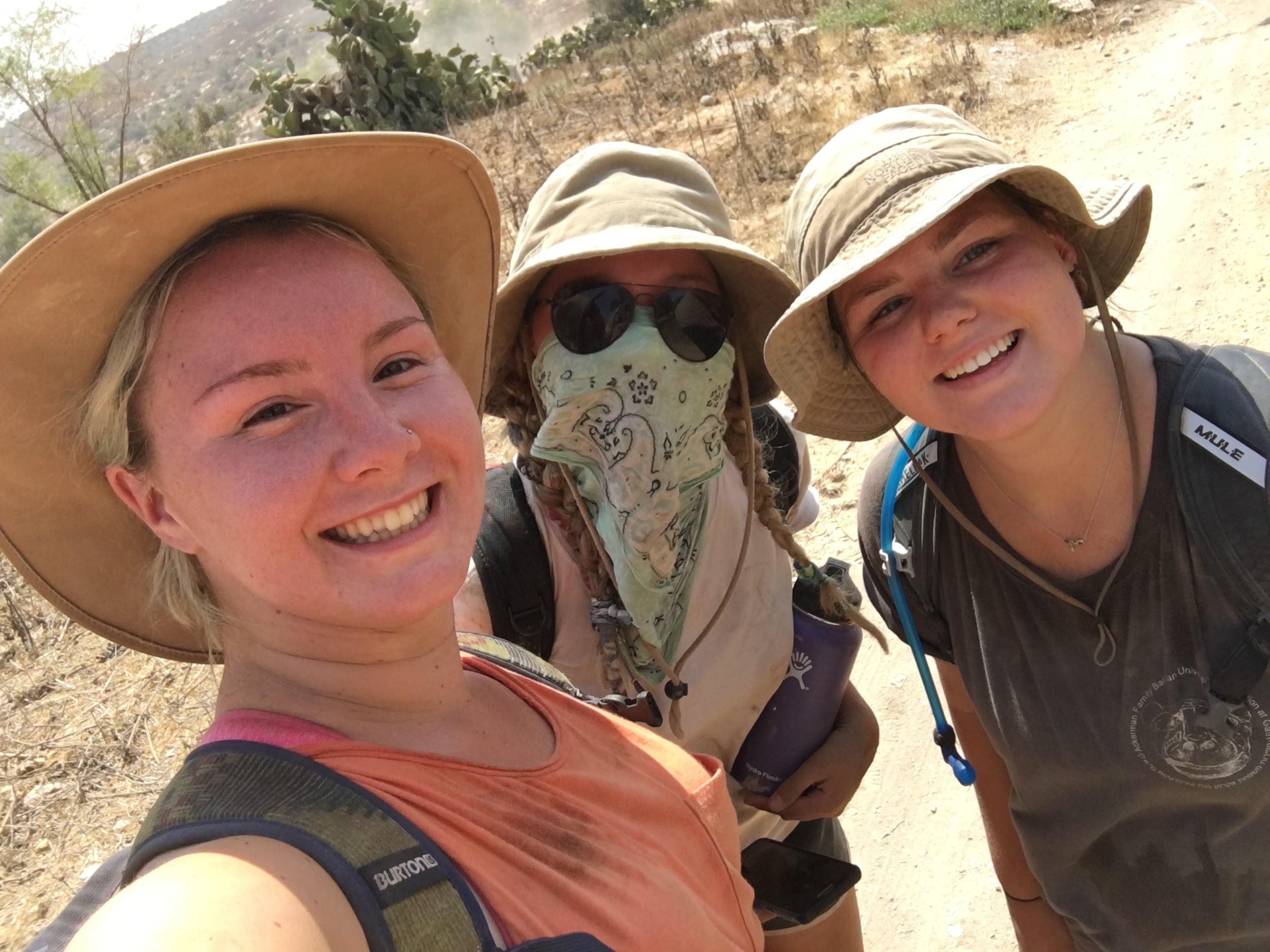
My name is Savannah Kisilowsky. I am the recipient of the 2017 Mary Louise Mussel Student Travel Fellowship. I currently live in Stonewall, Manitoba with my mother and my two brothers. I graduated in May 2016 with a 3 year General Bachelor of Arts with a major in Anthropology and a minor in Classics from the University of Manitoba in Winnipeg. I returned to school in May for the Summer 2017 semester to pursue a 4 year Honors Bachelor of Arts Degree where I plan on majoring in Anthropology and minoring in Geography. I hope to graduate by the Summer 2018 semester and begin my Anthropology Master’s the following Fall 2018 semester.
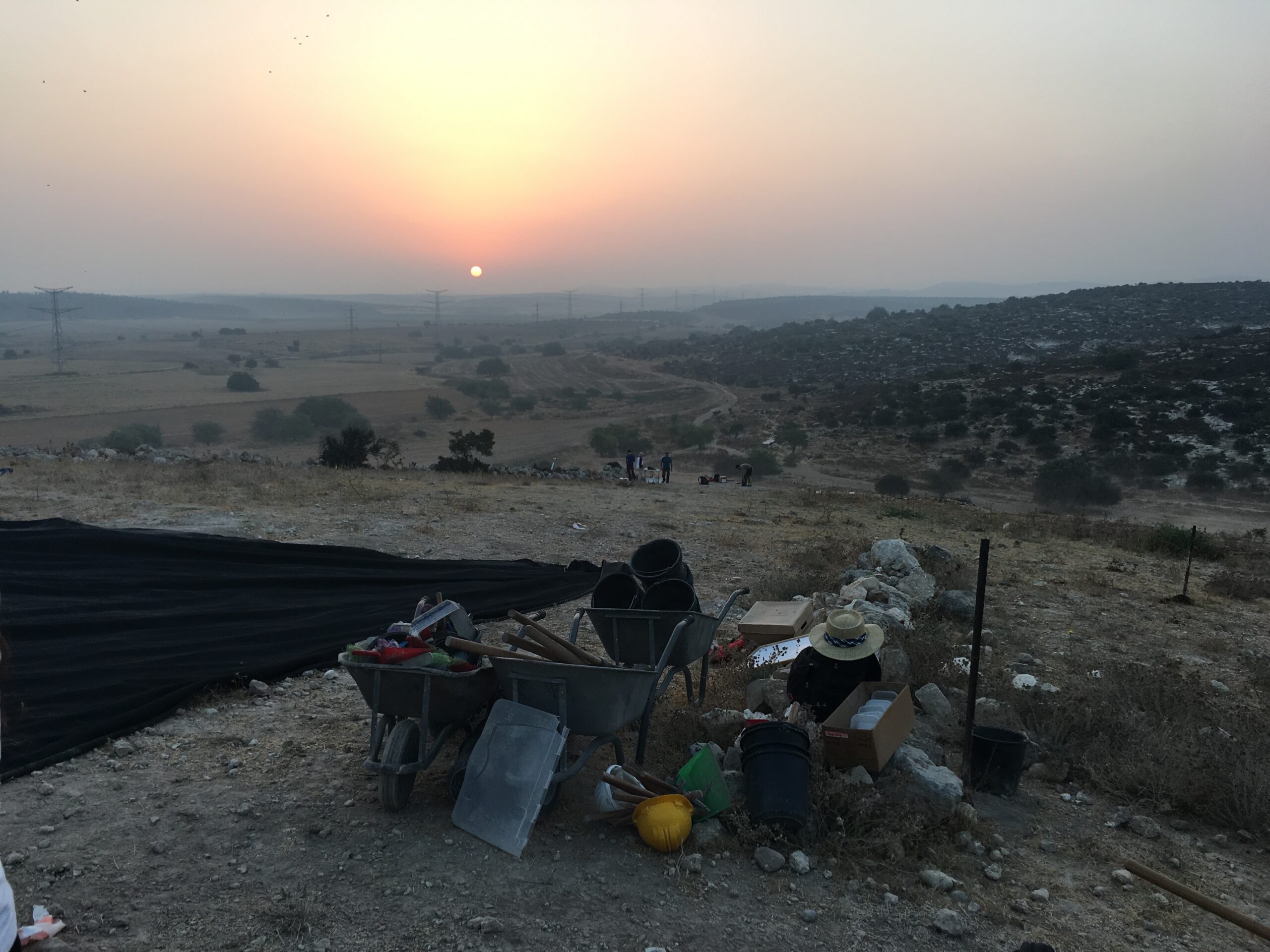
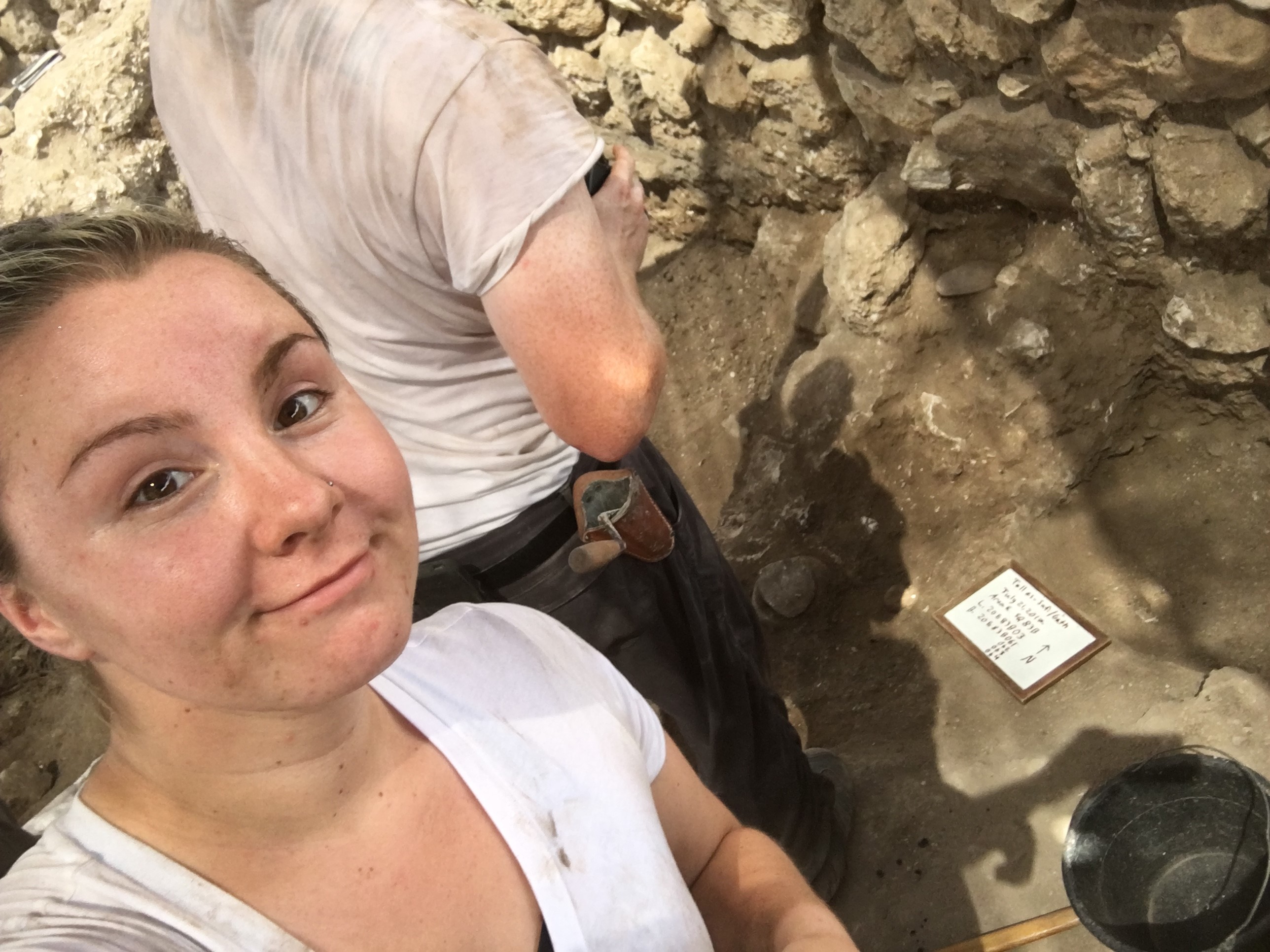
My experience this summer was everything I had set out to do. After taking nearly a year off of school, I decided to return to school. I signed up for Haskel Greenfield’s ANTH 3910 “Archaeological Field Training” course. It took place from July 2 to 28th, and was located in Israel. I stayed in “Neve Shalom” during the week, a kibbutz that was a 45 minute drive away from the dig site. The site I worked in was an Early Bronze Age archaeological site. Tell es- Safi/Gath is a Philistine site, and biblically believed to be the home town of the Philistine giant Goliath. I worked in Area E, under the dig directors of Haskel Greenfield (University of Manitoba), Tina Greenfield (University of Manitoba), Elizabeth Arnold (Grand Valley State University), and Shira Albaz (Bar-Ilan University). Area E was on the upper tell of the site, and was an Early Bronze Age residential area. I dug in square 83A with Tiffany Okaluk-Hildebrand (University of Manitoba) as my supervisor.
In my original application, I had wrote that I believed I would gain experience in archaeology, and that this fellowship would go to support this. I can confidently say that I was able to learn something new every day that I was there, both culturally, academically, and technically. I participated in the actual excavation of artefacts in the field, as well as working in the laboratory, with the various other tasks to do both on and off site. I learned how to complete tasks like flotation, wash and write on pottery, and how to close a site at the end of a season.
During my trip, I kept a personal journal of all the social aspects of the trip as part of the course’s assignments, as well as a field journal to keep more professional archaeological observations in. All of my instructors and mentors provided an overwhelming amount of knowledge daily. I would learn during the time we were on the dig site, during our chores (mainly pottery washing) before lunch, to the nightly lectures and even field trips once a week. On the dig site, I learned a lot of physical techniques. I was taught the proper use behind tools like hoes, shovels, trowels, and different techniques in using them, as well as the reason as to why it is done that way. I was also taught the proper way to excavate different items, as well as what not to do. I was taught the correct methods of cataloguing, how to sort different items from each other, create a tag for, bag, transport, and unpack them into the corresponding boxes back at Neve Shalom. Many of my cultural experiences on this trip were integrated into my daily life by living in the kibbutz. I also had the opportunity to enjoy and experience local culture on the weekends during our free time. We had the opportunity to travel out of Neve Shalom and into either Jerusalem or Tel Aviv from
Friday afternoon until Sunday morning. We were exposed to the Hebrew language, and Jewish holidays like Shabbat. We had many new experiences as a group as well. When away from the kibbutz on weekends, we visited museums, went to the beach in Tel Aviv, shopping in the markets, eating in restaurants experiencing local foods, and visiting landmarks like the Western Wall and the Holy Sepulchre. Overall, I learned many useful experiences that greatly contribute to my understanding of anthropological theories, concepts, and their applications. The things I learned while in Israel were invaluable assets to my knowledge. I now have a broader spatial awareness of the world and an irreplaceable first-hand experience. I feel much more confident in the choice of my field of study and the direction of my education is clearer. Most importantly, I have a much deeper appreciation for the education I am continuing to receive this Fall 2017 semester. My experience has already contributed to class discussions and even assignments, and will only continue to enhance the education I’m receiving. I am very grateful to have received your support for this experience. It was truly a memorable one, as well as enriching academically, and was made possible with your help.