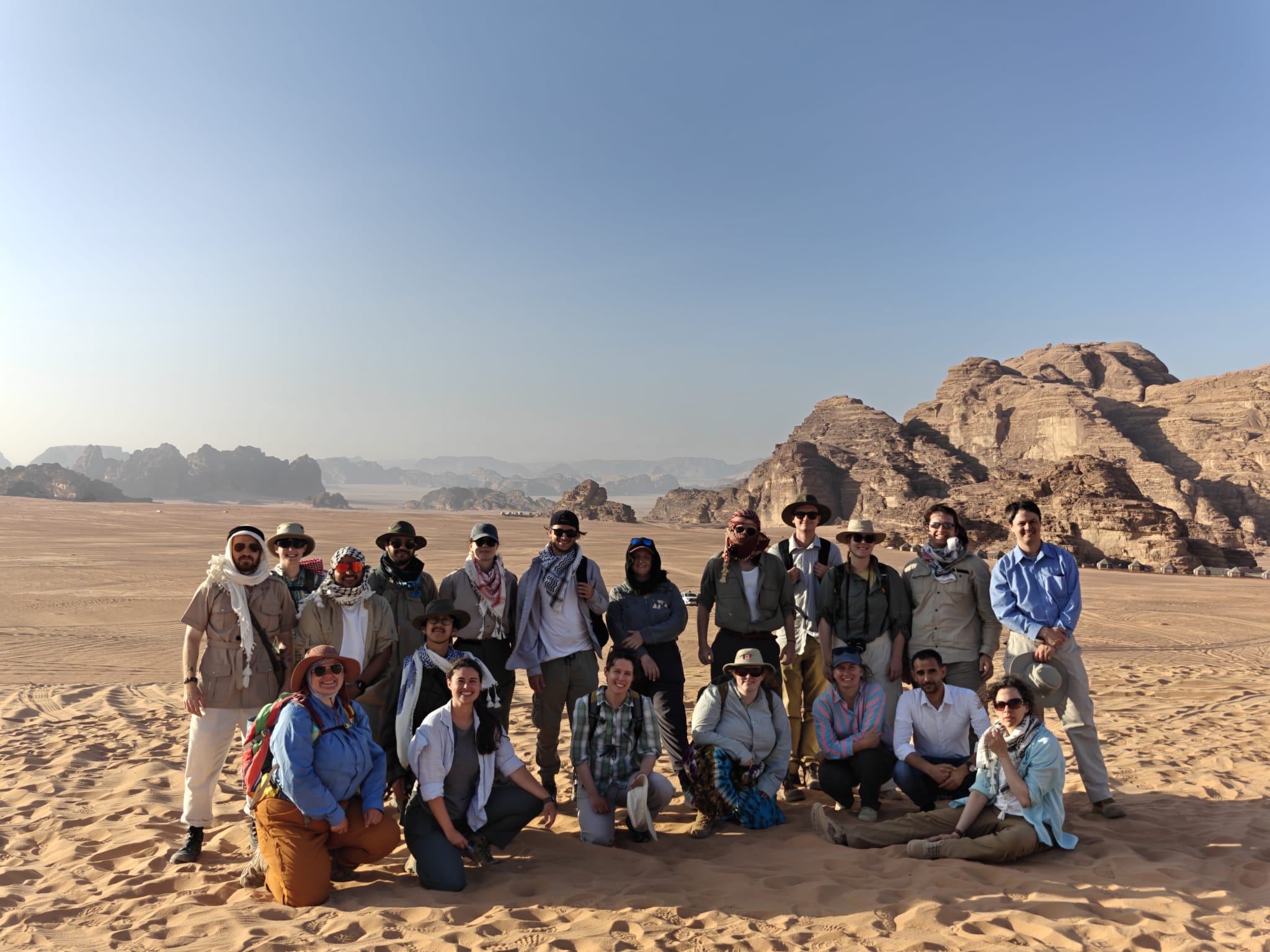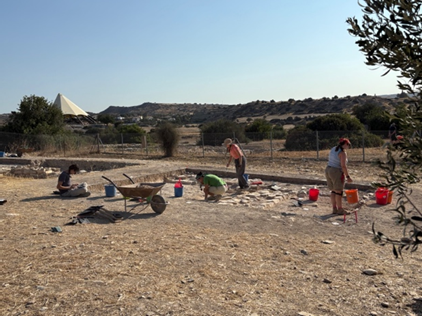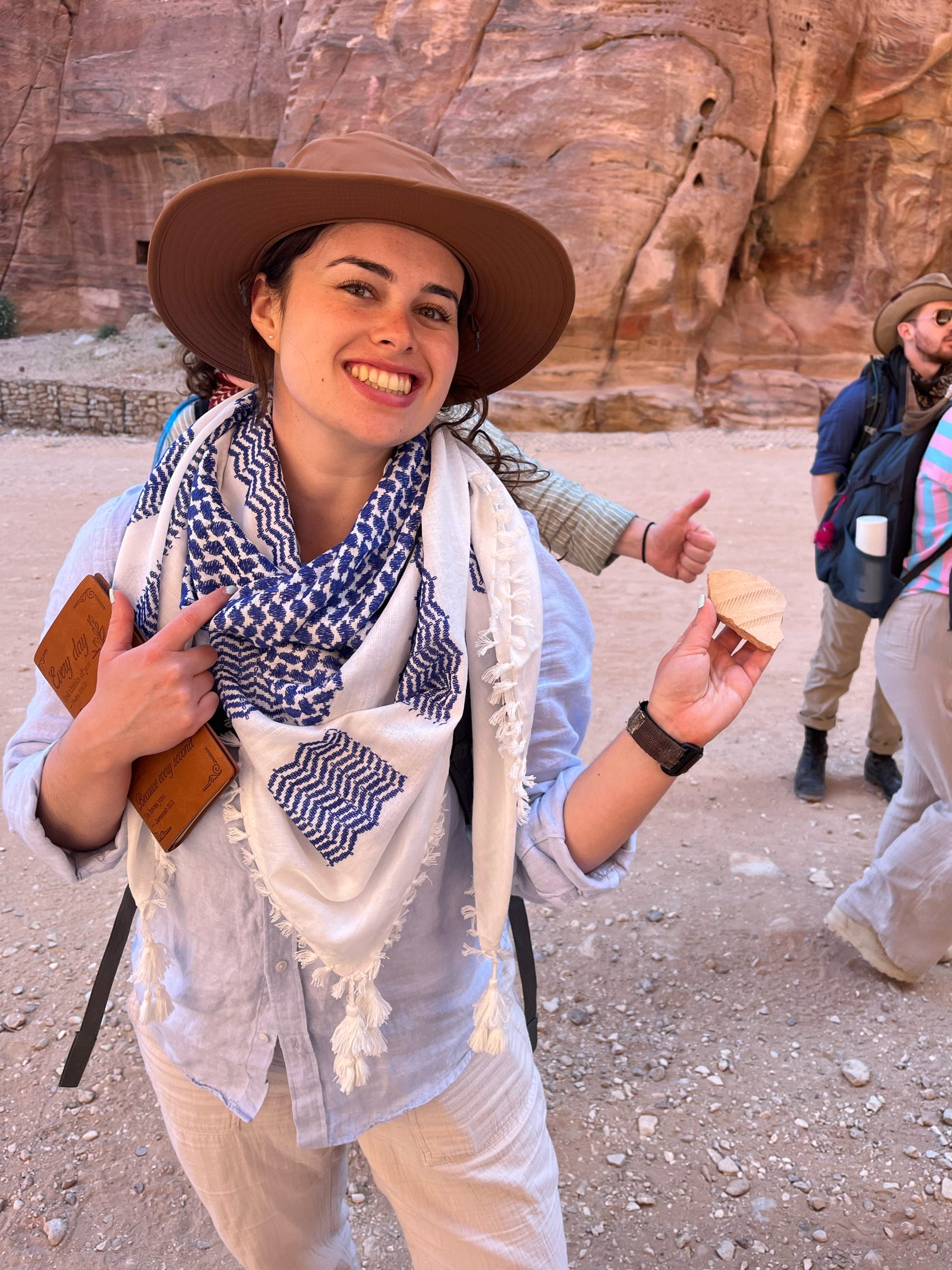
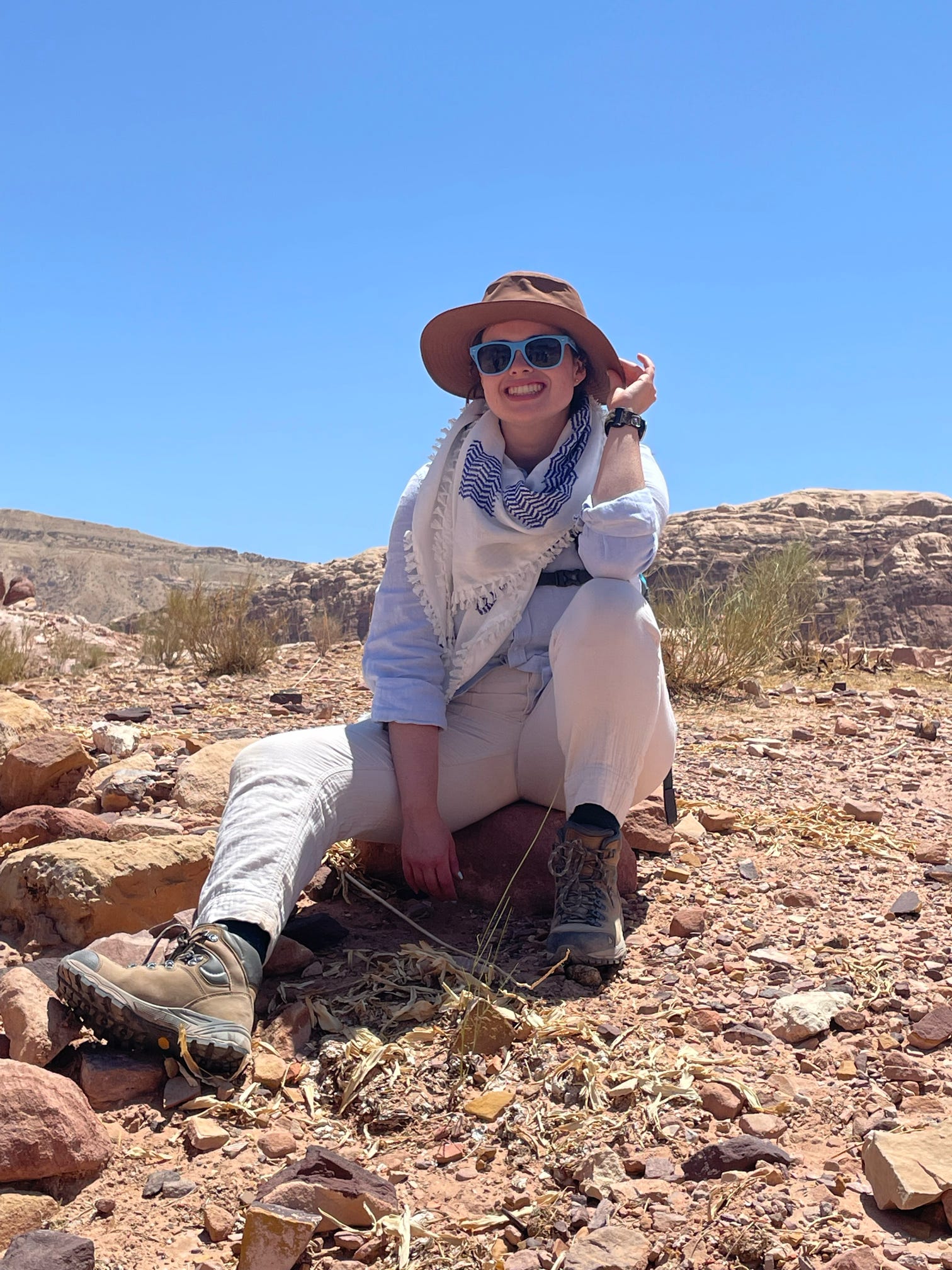
Prior to this field school, my only archaeological experience and exposure came from classes I had taken at the University of Alberta, volunteer work I had done with one of my professors and travels I had taken with my family. Never once had I stepped foot on a site intending to contribute to its archaeological knowledge – until now. After spending three weeks at the Humayma Archaeological Field School in Jordan under the supervision of Dr. Craig A. Harvey, I have become better equipped to understand the nuanced processes and work involved in modern archaeology. This is especially true for instances where archaeological surveying unexpectedly uncovers discoveries which require adjustments to the work. Through my time spent at the American Center of Research (ACOR) and at the archaeological site of al-Humayma, I developed valuable skills in photography, photogrammetry, and writing site reports. These ‘hard’ skills were complemented by the ‘soft’ skills I also cultivated during my time in Jordan. These included establishing social-cultural transparency and relationships with the Bedouin people and the Jordanian DOA (Department of Antiquities) to help protect the site of al-Humayma against looting. All in all, my time spent under the Jordanian sun was both mentally and physically stimulating, and I could not have asked for a better first experience at an archaeological field school.
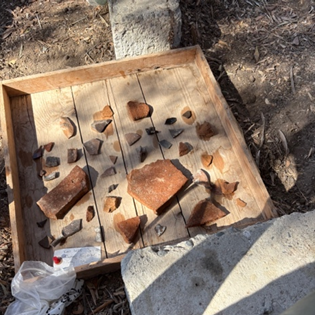
Spending my first week at ACOR, examining materials found at al-Humayma from previous excavations, contributed tremendously to my ability to both understand the site as well as work meaningfully at it. From late Nabataean fine wear to ARS (African Red Slip), and from stone cooking wear to terracotta pipes, it was through these materials and lectures (both formal and informal) that I gained a greater understanding of the site’s history and the artifacts found there. I am a very hands-on person, and I tend to retain information much better when I can see, hold, and feel in real time what it is I am learning about. If it were not for the modules on these materials, I would not have had the ability to examine the ground at al-Humayma so easily and discern a cup base from a perfume bottle rim – a skill I had no idea I could hone in just two weeks!
Digitally cataloguing the terracotta pipes was a particularly fantastic learning experience, as it gave me a better idea of how the past excavations of the site were conducted and the problem-solving involved in determining the categorization of certain artifacts. I remember there was one particular pipe sherd I worked on with Dr. Harvey, which we both agreed was likely a pipe whose type should be categorized into Group 6 (there are six group categories created for terracotta pipes at al-Humayma). What was interesting about this pipe was that it appeared identical to another pipe, also categorized in Group 6, and which came from the exact same area. To determine whether our hypothesis was correct, we needed to identify the pipe’s probe number. If the number was 8, we would have a match! Although looking through the field notes did not reveal where pipe probe 8 was, we were determined to find it elsewhere, as this would allow us to place our mystery pipe sherd definitely into Group 6. I may have left the field school before this discovery was made, but I am eager to stay in touch with Dr. Harvey regarding any discoveries he does make regarding this pipe’s categorization. As any archaeologist will tell you, nothing is perfect. There are no perfect types or categories to place things in, and often all we have is our best judgment, but this should not stop us from seeking to uncover and understand, to learn and change. By the time I had rotated through all the lab modules, I had learned this lesson and gained more knowledge about pottery, stone wear, and pipes than I thought possible! And through this learning, I began to understand the archaeological history of al-Humayma.
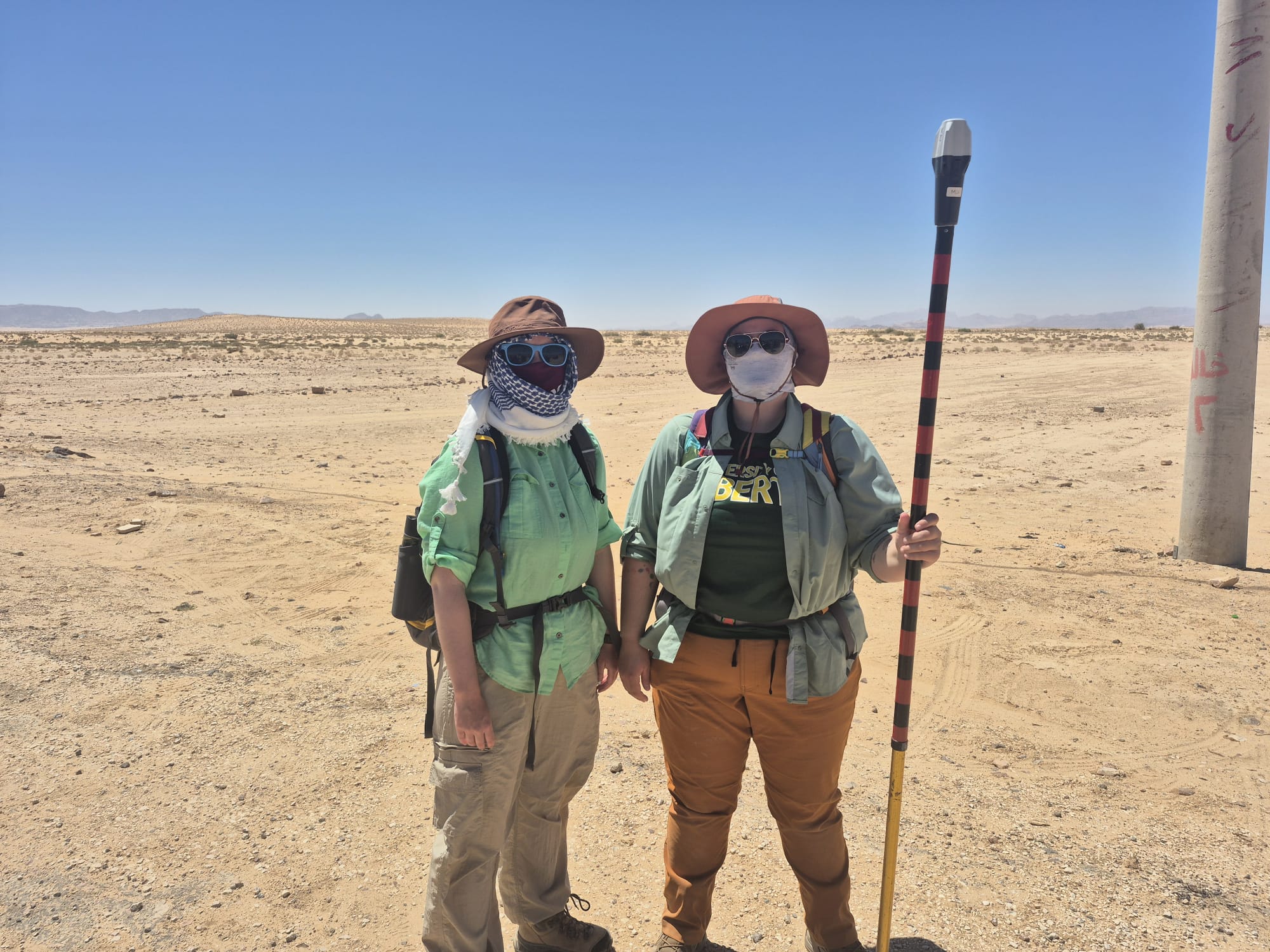
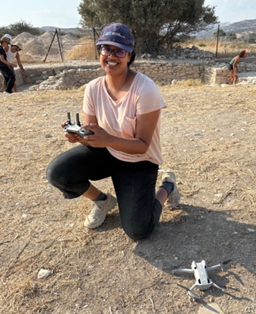
My fond experiences in the labs also extended to photography and photogrammetry. As Matthew Vincent, Project Director at ACOR, would often say, “The future of archaeology is in 3D modules.” Through Matt, I learned about RTK, how to use it in the field, and the important role it plays in creating 3D models of a site. With the field school’s MA student, Josh, I learned about RealityScan and how to do photogrammetry from small artifacts to large complexes. I was able to apply these skills in the field, helping Sophie, one of the field school’s supervisors, with the RTK of a monumental tomb structure and an unknown “latrine” structure, which were used to help with photogrammetry of those sites. It is incredible to see just how technology has improved our ability to do archaeological work, both in surveying and excavations. These are skills I will definitely continue to hone and use.
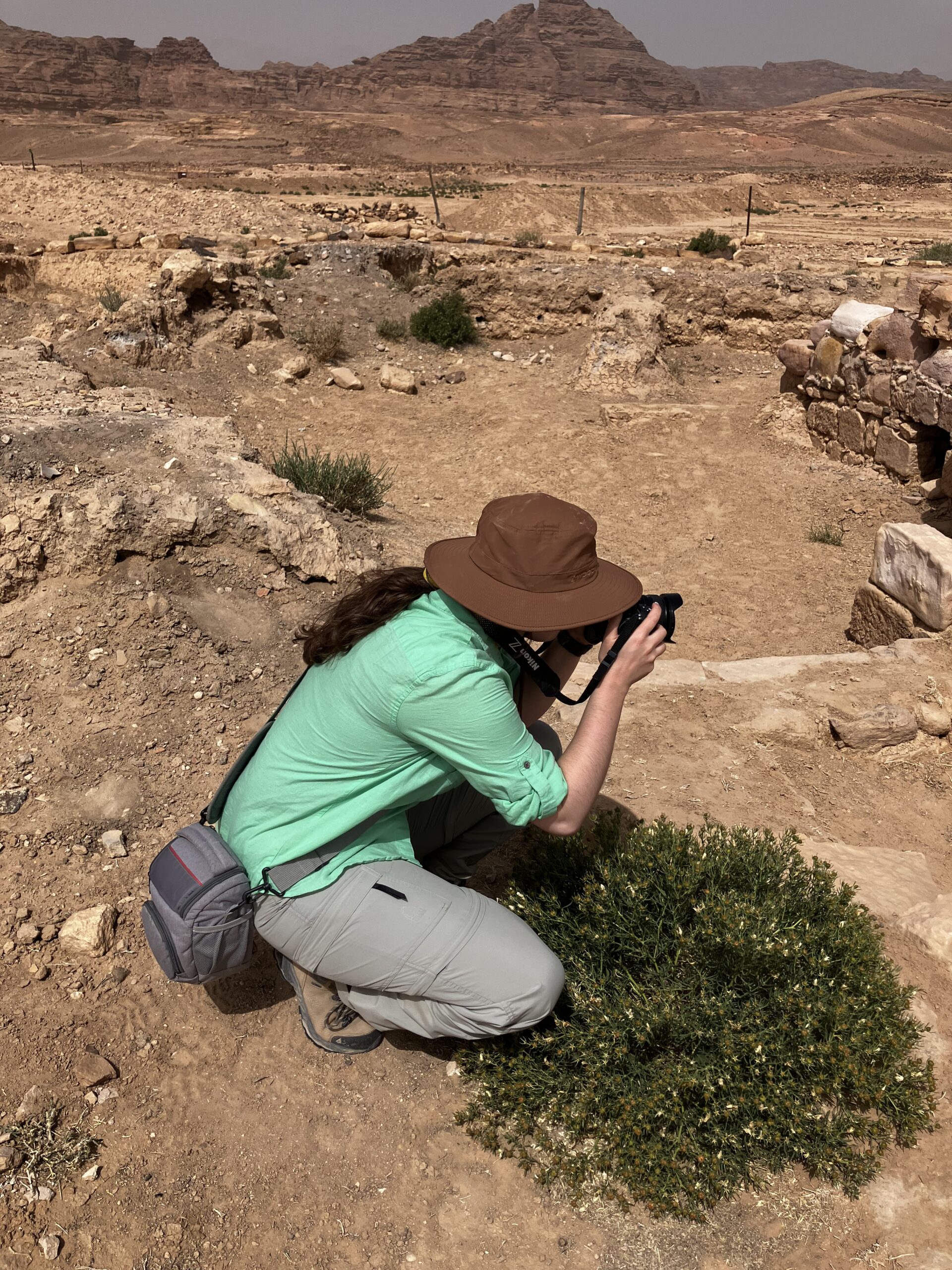
By far, my two favourite aspects of the field school were photography and the cultural interactions with the local Bedouin and the Jordanian DOA. For photography, I just seemed to take a shine to it – or perhaps it was the fact that I was always holding the camera! Either way, I immensely enjoyed taking photos of the sites and features, particularly appreciating the challenge of fighting the shadows and learning how to analyze what should/needed to be photographed. Concerning the cultural interactions, I wish I could have chatted with the DOAs and one of the local Bedouin men, Ali, more, getting a sense of their understanding and connection to the site. As someone particularly interested in socio-cultural anthropology, I enjoyed the connections our group made with Ali and the Bedouins, and I am curious where this relationship will lead and the potential it has to help maintain the sanctity of the site while involving the community. As mentioned above, the core skills I learned through this field school were made more meaningful through their connection to the research goals, cultural interactions and general nuances of archaeology that generally are not talked about nor considered in a classroom setting. As I reflect on my three weeks in Jordan, I see my biggest accomplishments, without a doubt, being developing my techniques in photography, learning how to use software for 3D scanning/modelling, and honing my ability to assess a site and take in-depth notes. Although I have some prior experience with photography and 3D scanning through my volunteer work, I have been able to learn more about the techniques involved with photography and photogrammetry. Before the field school, I would not have known the importance of shooting photos on “Aperture” for photogrammetry, or the proper way to take site photographs to use as references for future surveying and excavation. As well, I found that by the end of the last week, I was able to create in-depth notes which accurately identified and captured key features and aspects of the sites and complexes I worked on. As I continue my education and begin work in CRM, I see these skills becoming invaluable for helping determine sites and quickly assessing them. Most especially, my ability to do all of this on my own with little to no supervision – to have my director feel confident in my ability to be unsupervised and produce good work – has been the most profound accomplishment for me. This field school has definitely set me up for success for a future in archaeology by providing me invaluable experience working hands-on with materials, applying theory from class and volunteer work in a practical way, and, most especially, helping confirm that archaeology, with a specialization in heritage management, is the career I see myself pursuing whole heartedly.