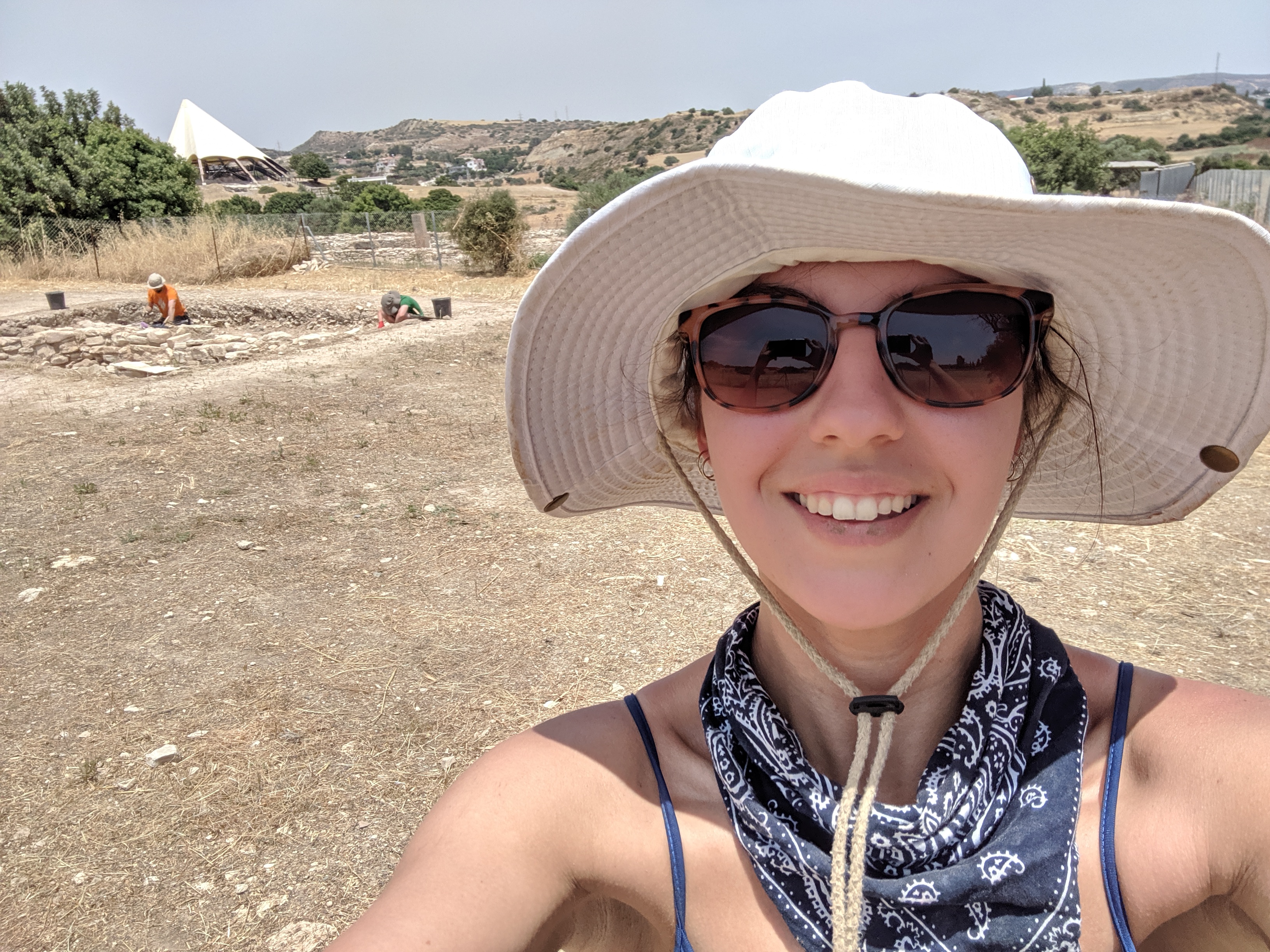
In June of this year, with the financial support of the Mary Louise Mussell Student Travel Fellowship, I travelled to Cyprus to excavate Kalavasos-Ayios Dhimitrios as part of the larger KAMBE Project (Kalavasos and Maroni Built Environments) directed by Dr. Fisher of The University of British Columbia, Dr. Kearns of the University of Chicago and Dr. Manning of Cornell University. My time spent in the field was, as I anticipated it would be, fundamentally life changing. The physical and mental exertion required each day was both exhausting and satisfying and I left Cyprus hoping to be given the opportunity to return the following season. In the following paragraphs, I will provide a brief overview of the site, our methods of excavation and, principally, my academic journey over the course of the season.
Kalavasos-Ayios Dhimitrios is a Late Bronze Age site located on the southern side of the island of Cyprus, near the Neolithic site Kalavasos-Tenta. It was first excavated by Dr. Todd and Dr. South in the 1970s and became part of the KAMBE Project in 2008; with the project’s aim being to assess the spatial relationship between urban sites Maroni and Kalavasos-Ayios Dhimitrios to better understand socio-economic interaction on the island during the Late Bronze Age. Kalavasos-Ayios Dhimitrios is most remarkable for its monumental architecture and use of ashlar masonry, which, thus far in its excavation, is best exemplified in Building X.
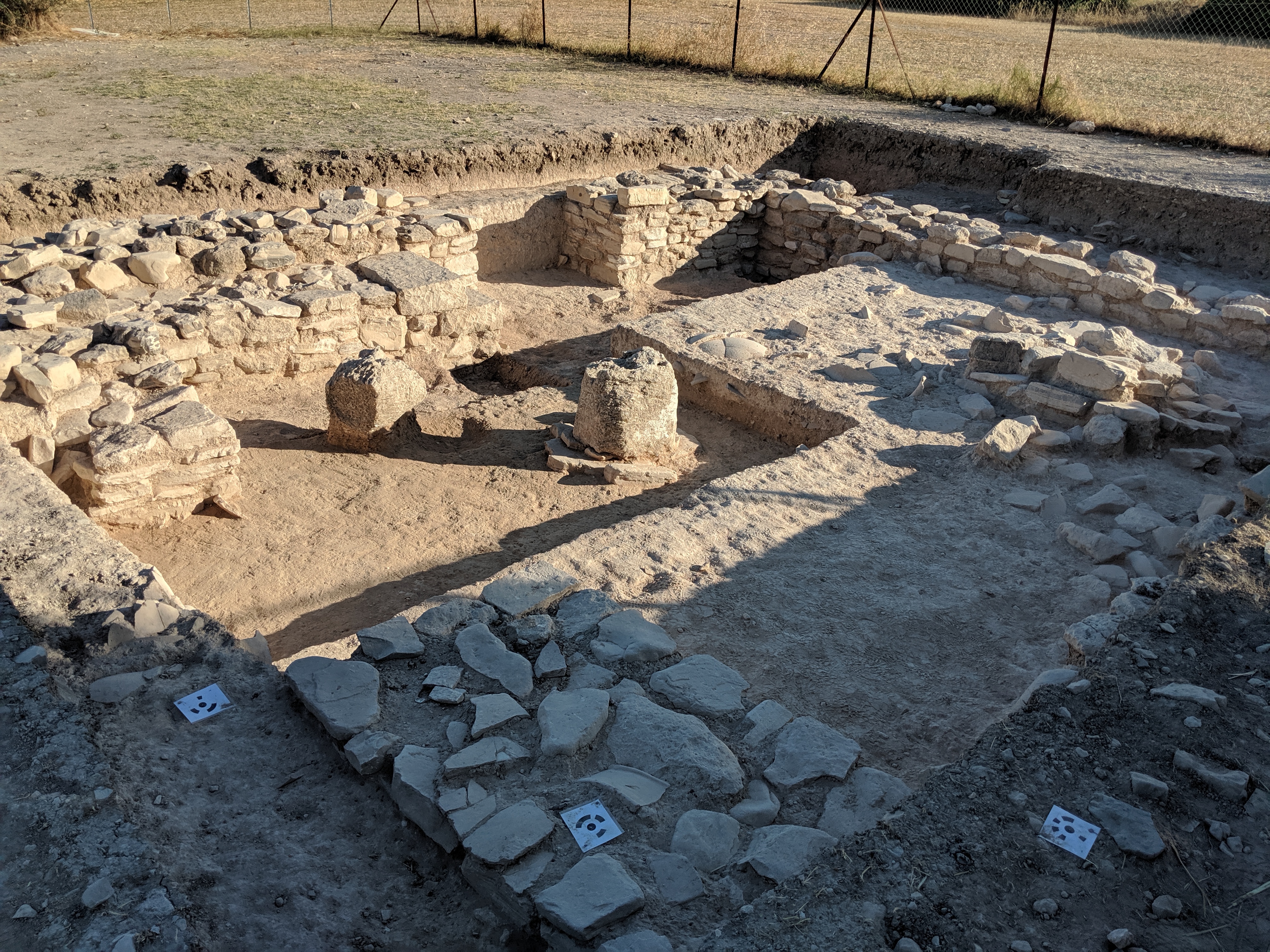
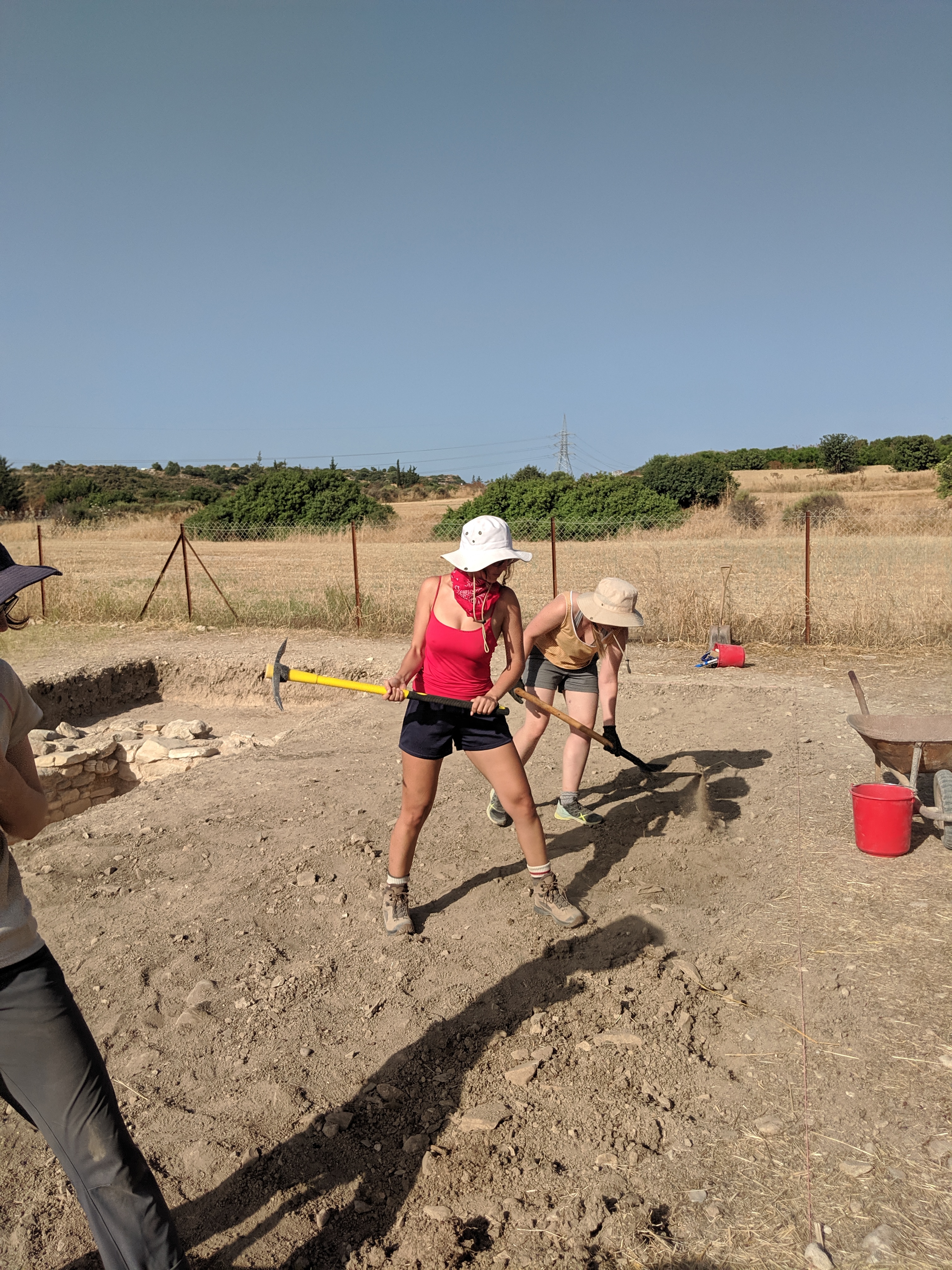
The 2019 season’s excavation focused primarily on Building XVI in Unit 7 and the plaster road in Unit 3, which were both situated to the south-west of the site. Building upon excavation from the 2015 season, we expanded Unit 7 by opening a new trench north-adjacent to the existing one to expose what we believed (correctly) would be the remaining interior of the north room. Unit 7 was in many ways the perfect stepping stone for beginner archaeologists like myself because it gave us experience both analyzing a previously excavated trench (the first half of the Building XVI’s north room) and opening a new one (the second half of the room). We learned how to measure and delineate the borders of a new trench and excavate and record each pass. We also learned how to adapt our excavation technique to our environment and circumstances; such as when we reduced our trench size to accommodate for time restriction. This reduction allowed us to reach the “floor” of the north room, a feat that would have been nearly impossible in the time given with our previous 6 x 4 metre trench. This resonated with me, as I now believe archaeology to be a rare discipline in which scientific method and adaptability hold equal importance.
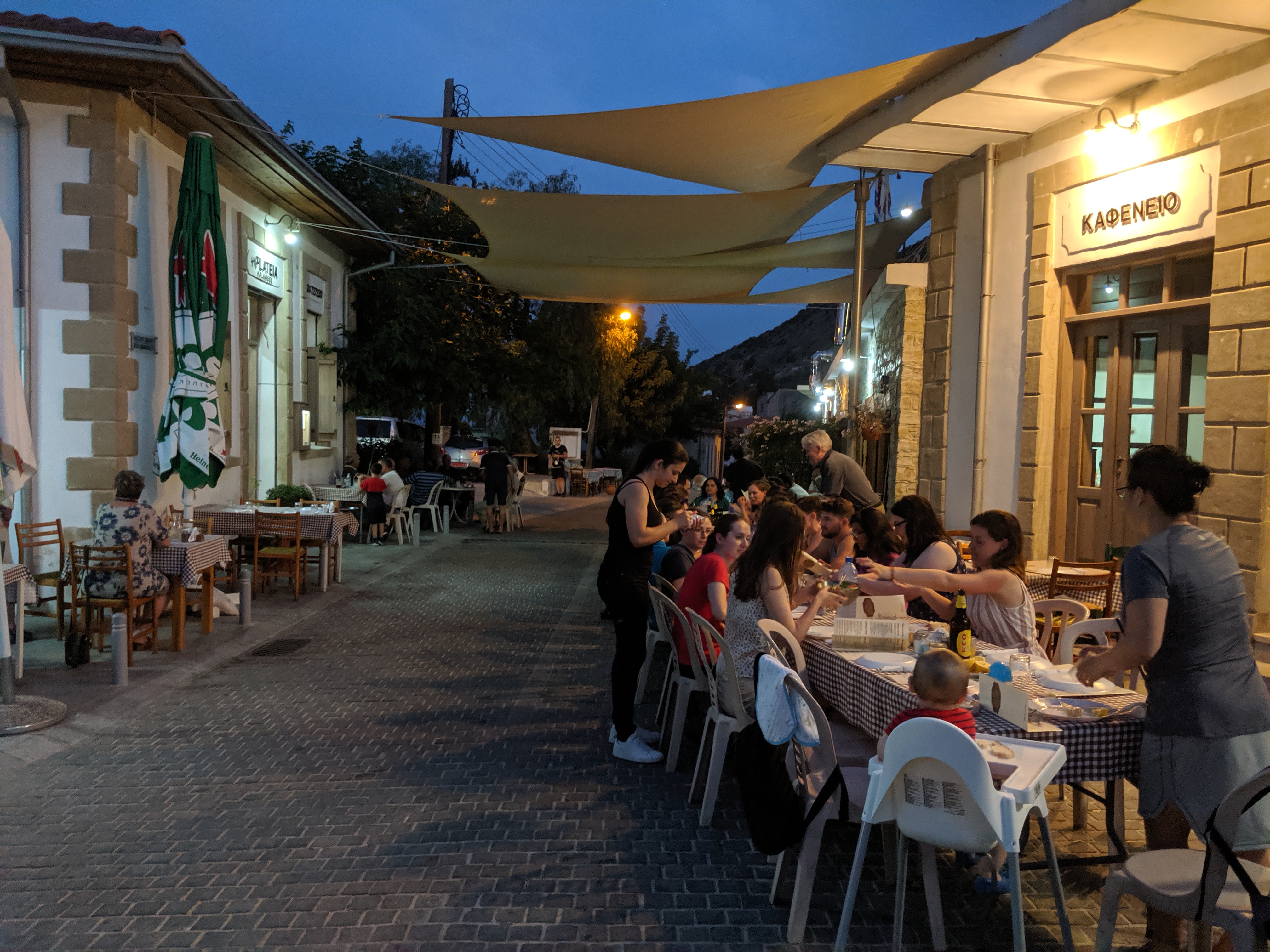
My education, however, did not stop at the end of each working day; the local Cypriots possess a distinctively Mediterranean culture and I thoroughly enjoyed learning the Greek language and customs, even if it meant occasionally stumbling over their syntax. I was also delighted to dine each night with students, like myself, from universities across North America and the KAMBE directors. I will admit, in the beginning it was a bit surreal for me to realize the person I had been casually chatting with over dinner was a professor I had cited multiple times in my own academic papers. There were specialists in broad topics such as Cypriot Archaeology, as well as specialists in narrower fields like Geoarchaeology and Dendrochronology. Never before had I ever been surrounded by so many diverse, yet like-minded people and I believe myself to be the wiser for knowing each one of them. Prior to my departure, I was certain that I would find myself in the field and I am glad to say that my instincts were correct. I grew to admire many aspects of the field; particularly the juxtaposition of physical labour and meticulous documentation that went into each excavated pass. I appreciate CASOR’s generous contribution to my first field school and I look forward to the future as I intend to immerse myself in archaeology any way I can.