Before this summer, I had already completed graduate coursework in the study of religion, the ancient Near East, and early Judaism, as well as courses dealing with Eastern Mediterranean archaeology. What I lacked was first-hand experience on an excavation in the Middle East. With the help of the CASOR Mary Louise Mussell Student Travel Fellowship, I participated this past July and August in the Horvat Midras Field School run by Dr. Orit Peleg-Barkat of the Institute of Archaeology of the Hebrew University in Jerusalem and Dr. Gregg G. Gardner of the Department of Classical, Near Eastern, and Religious Studies at the University of British Columbia (UBC). This program brought together mostly undergraduate students from the Hebrew University and UBC to work with Dr. Peleg-Barkat’s excavation staff and other volunteers at Horvat Midras in the Judaean Foothills in Israel.
At the site of Horvat Midras, located about 40 km southwest of Jerusalem and 30 km east- southeast of the Mediterranean coast at Ashkelon, there are archaeological remains from several different eras, most notably the Hellenistic, late Roman, and Byzantine periods. The site is particularly important for the window it opens onto a wealthy rural settlement in Roman Idumaea. This year, the third season of Peleg-Barkat’s excavation, the team excavated in three areas. At Area D, a monumental pyramid marks the tomb of wealthy Idumaean inhabitants from the Hellenistic period. In Area B, the focus was on residential quarters and subterranean complexes from the Byzantine period and earlier.
I worked mainly at Area A, on an enormous public building. Earlier excavators thought the structure was a synagogue, and a park sign by its front steps offers tourists and the interested public this interpretation. On the ground beside the sign is a hewn stone that clearly formed part of a niche, which according to the sign indicated a Torah shrine. During our excavations, a group of Orthodox Jewish men and youth paid the site a visit and sang and danced at the ancient entrance to the building (the steps of which had been exposed in a previous season). These visitors may have been disappointed to hear that the current excavators understand the building at Area A to be a late Roman temple, constructed after the Bar Kokhba revolt (ca. 132–135 CE) probably to serve the Roman citizenry at near-by Beit Guvrin. The assessment is based on the pottery assemblage as well as architectural features (e.g., the style of cornice pieces discovered at the site). One goal for the 2018 excavation season was to establish the perimeter of the building, which meant locating the eastern (back) wall.
Along with two archaeology students from the Hebrew University, I was assigned to the northeastern corner of the area, where we hoped to find the exterior wall. After clearing weeds, boulders, and buckets of topsoil, we documented and dismantled make-shift shelters used by pastoralists in the Ottoman and modern eras, and then we worked through a stratum containing ceramics and miscellaneous items (e.g., a smoking pipe and an iron tool, perhaps an adze) from the Mamluk period (ca. 1250–1517). This stratum also showed signs of secondary use of the remains of the Roman building. For example, several cornice pieces of the collapsed building had been oriented vertically, perhaps to serve as bases for wooden posts that supported a roof. The area supervisor suggested we might be looking at the remnants of a Mamluk stable. More buckets of dirt later, my square-mates and I arrived at the large stones that once formed the exterior wall of the Roman building. Time did not permit us to dig in my square to the base of the wall. However, the perimeter of the building has now been clearly identified.
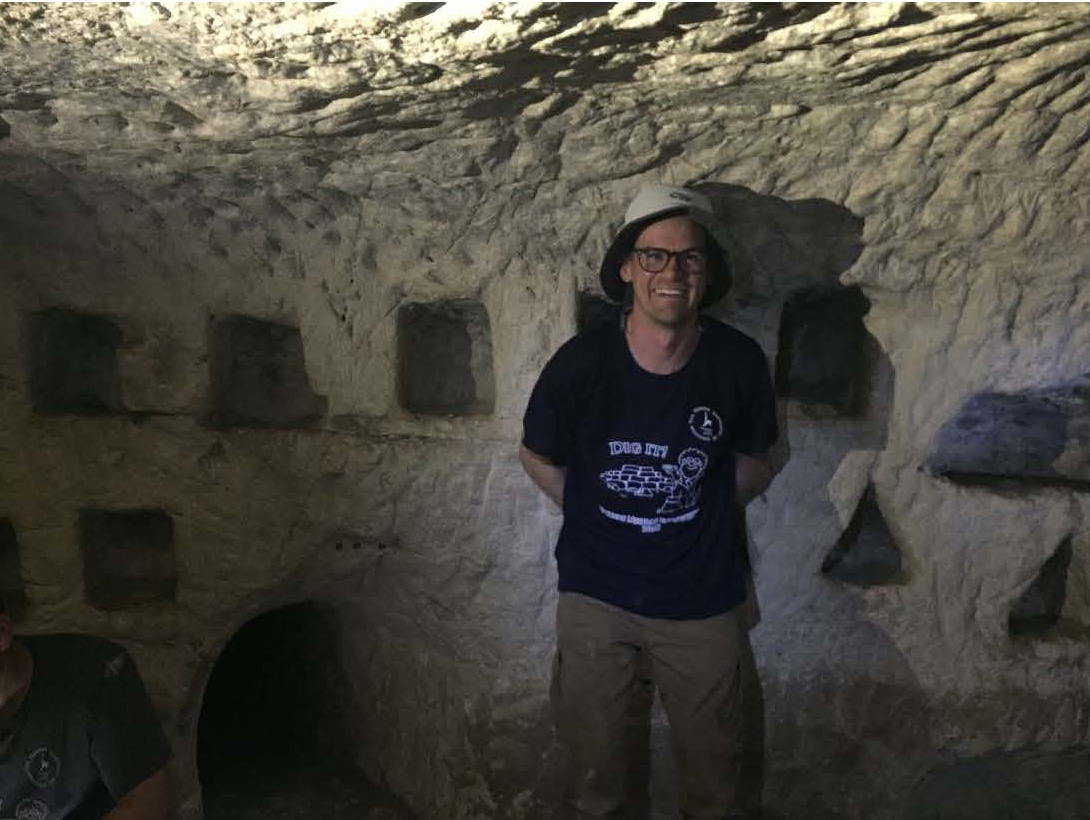
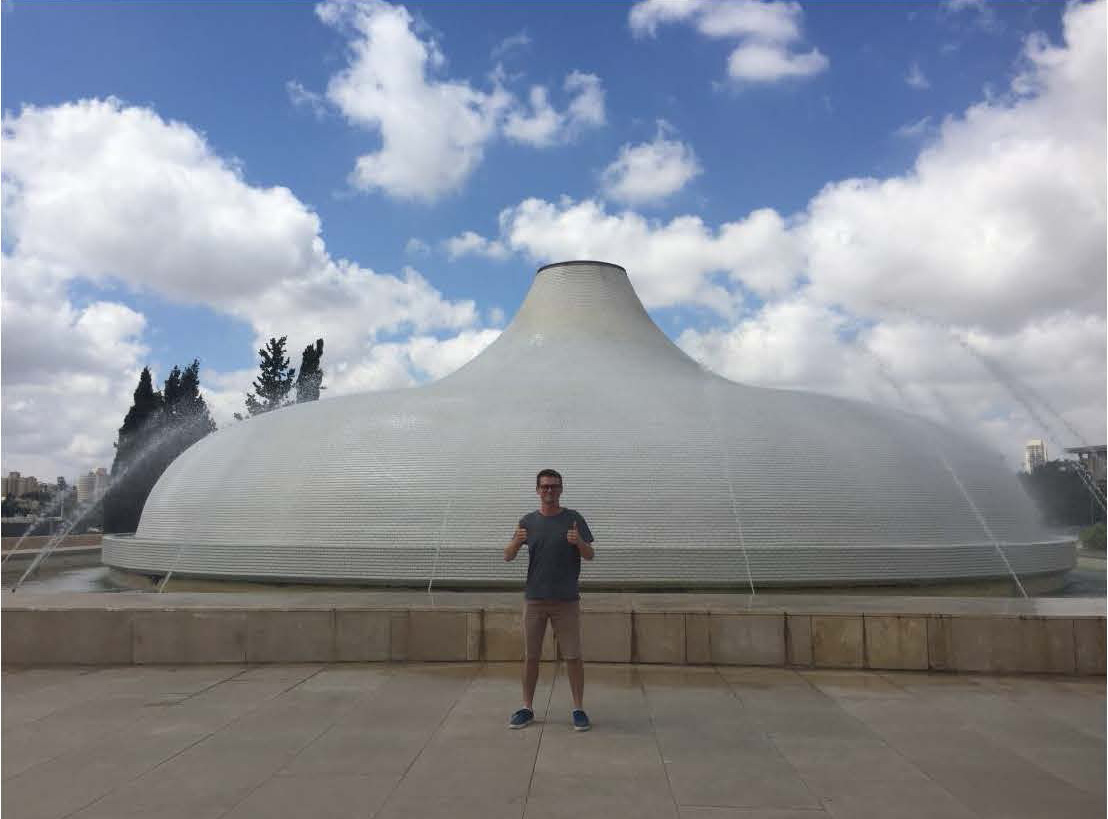
By far the highlight of the trip for me was exploring the caves of the Judaean Foothills. Prior to the Field School, I had no idea about the extent of these human-made underground networks— which contained oil presses, columbaria, storage facilities, purification installations, hideouts, and more. The program included visits to important local archaeological sites, such as Lachish and Maresha (Marissa), as well as to several key sites for the study of religion, with guided tours of Jerusalem (including the Old City and the Israel Museum), Masada, and modern Tel Aviv. This aspect of the program gave me a much better appreciation for the landscape and climate of the region. I took hundreds of photos, which I use already in my work as a Teaching Assistant at UBC. Dr. Gardner invited me to give a talk on my research in the evening lecture series that ran over the course of the dig. I was happy to share my knowledge, but I’m sure I learned at least as much from my undergraduate classmates, both those from the Hebrew University and from UBC. Apart from the formal aspects of the program, I enjoyed practicing Hebrew on my Israeli square-mates, who graciously endured my stammering in biblical Hebrew. The cross-cultural dimension of the trip was deeply rewarding. I am confident that my participation in the 2018 excavation season at Horvat Midras will have a positive and life-long impact on my career. I have an even greater appreciation for interdisciplinary approaches to the study of religion. This experience gave me a deeper understanding of archaeological method and practice, which gives me confidence to integrate material culture into my studies. I look forward to seeing how archaeology can inform my research over the next two years, as I complete my dissertation at UBC.